

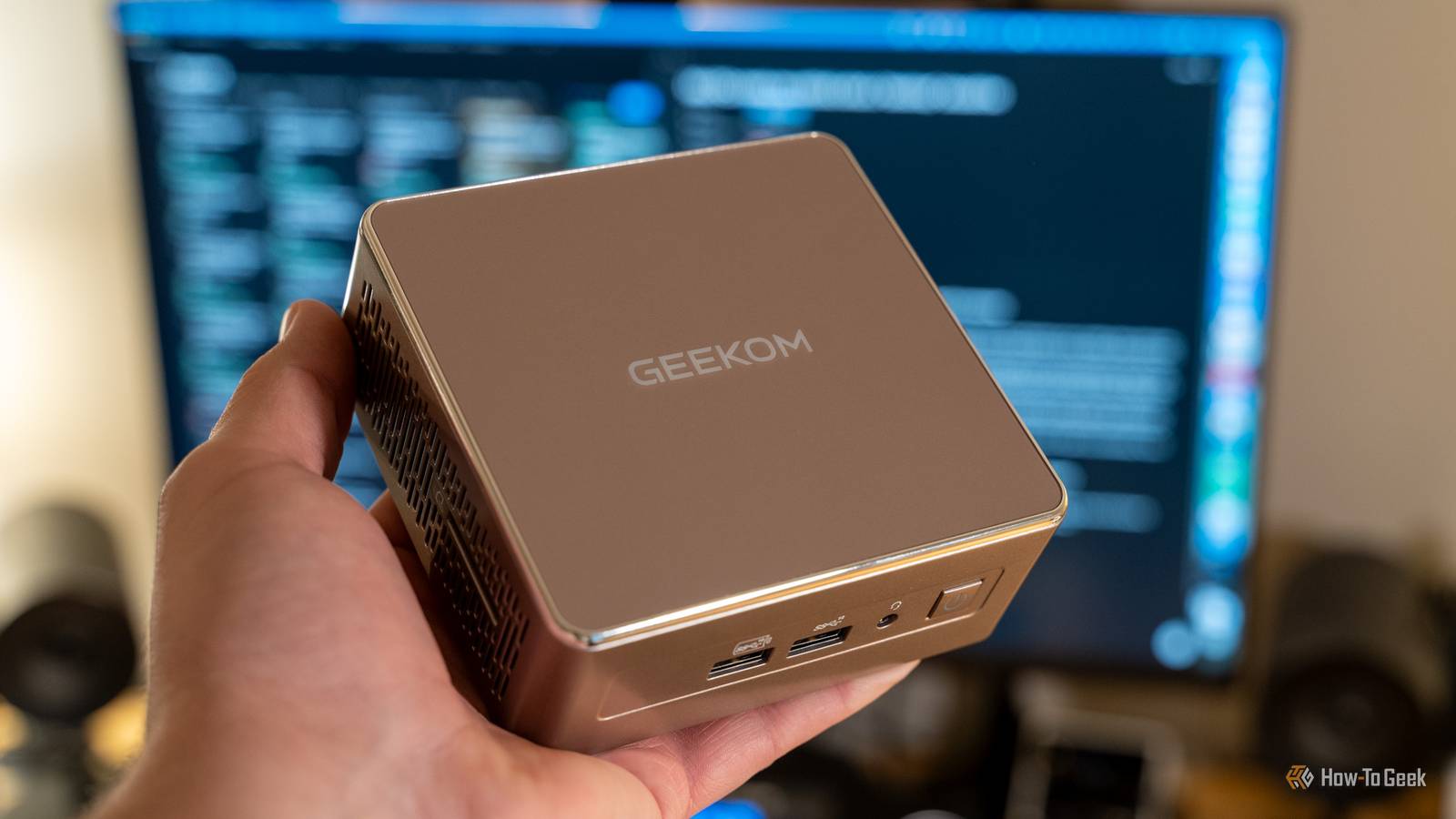
I used to think bigger was better when it came to computers, but I’ve begun to change my thinking on that. Mini PCs are more powerful now than ever before, and they have actually redefined what a desktop should be in my mind.
In the past, you needed a full desktop to have a decently powerful computer
Bigger means more powerful, right?

I remember it like it was yesterday. It was January 2017, and I was building my first “powerful” desktop. I chose the Intel X99 platform with an i7-6800K, 64GB of DDR4 RAM, and a GTX 1080. This was before the 1080 Ti came out, and I had no real need to push past the 6800K processor—though my boss at the time did build a system with the i7-6950X and a 1080 Ti a few months later.
When I built that X99 system, I went all out with an E-ATX motherboard and a massive beQuiet! case. If you’ve not heard of E-ATX, it’s an extended ATX motherboard—the largest consumer motherboard footprint available. The motherboard had four full-size PCIe x16 slots, with an additional x4 and x2 slot between the others. Yes, you could fit six PCIe cards on the motherboard. It also had a M.2 slot, which was a rarity in 2017 when I got it. This massive motherboard had plenty of room for impressive VRMs and power distribution for overclocking.
However, that massive motherboard (which cost me $538 back in 2017) and the i7-6800K (which cost $380) pale in comparison to modern computers. The 6800K had a Geekbench 1,235 single-core score, and a 5,674 multicore score. Today, you can get a $410 mini PC with a Ryzen 5 7430U that packs a Geekbench single-core score of 1,631 and a multicore score of 5,613. Here’s the kicker: the i7-6800K needed a 140W TDP to achieve those Geekbench numbers, while the Ryzen 5 7430U has a TDP of 15W.
Yes, the modern mini PC has better single-core performance and is within spitting distance of the multicore score—for less than what I spent on my motherboard. You no longer need ultra-high-end desktops for good performance.
- Brand
-
GEEKOM
- CPU
-
AMD Ryzen 5 7430U
The GEEKOM A5 mini PC packs 16GB of user-replaceable RAM, a user-swappable NVMe SSD, plus two other storage slots, giving you plenty of user-upgradability in this compact system. The Ryzen 5 processor packs plenty of power for general tasks, and it’s even great at lightweight gaming and CAD work too.
Modern mini PCs can be absolute powerhouses without taking up the same amount of space
It’s easier than ever for a small package to deliver big performance.

Apple’s M4 Mac mini is the poster child for a high-power mini PC. The tiny desktop really does pack a punch. On the Windows side of the aisle, you have mini PCs that are capable of housing up to Intel’s latest Core Ultra 9 processor with plenty of RAM and storage, all without taking up a large part of your desk.
The thing is, you don’t actually need the Core Ultra 9 or Ryzen 9 to get most work done. As I mentioned above, a mid-range Ryzen 5 now matches top-tier processors from several years ago.
Sure, you’re not going to be playing Call of Duty at 8K60 ultra settings on a mid-range PC, but you can absolutely do just about anything else. The power available in mid-range mini PCs can easily handle playing games like Minecraft or doing moderate CAD, graphic design, photo or video editing, and much more.
I actually have the GEEKOM A5 mini PC with the Ryzen 5 in it and will be deploying it in my homelab very soon. This tiny tot of a mini PC packs a punch for sure. The best part is, if you need more than a mid-range PC can offer, there are high-end mini PCs that destroy the specs of their mid-range brethren.
The Intel Ultra 9 285H mini PC I mentioned earlier has a Geekbench single-core score of 2,610 and a multicore score of 14,801. That’s about 80% faster on the single-core than the 6800K system I built, and it’s nearly 300% faster on the multicore score—all in a mini PC, not an E-ATX monster.
Mini PCs are almost just as upgradable as full-size desktops
RAM and SSD upgrades are all most people normally do anyway.

I’ve been custom-building my gaming desktops for over 10 years now, and I can count using zero fingers how many times I’ve done a mid-cycle CPU refresh. Regardless of the processor in my system, I never once have bought a better processor to throw in a rig. I either live with the CPU or upgrade the whole system.
Now, RAM, GPU, and storage? I upgrade or swap those components out regularly. My GEEKOM A5 has two SO-DIMM RAM slots, two NVMe slots, and a 2.5-inch SATA bay.
All of this means I can easily upgrade the storage or RAM by just unscrewing four screws on the bottom of the mini PC. Most mini PCs offer this, outside of Apple’s Mac mini.
With the ability to swap RAM and storage, a mini PC is just as upgradable as a full-size desktop to me. The core components are swappable, and that’s all that matters.
The one “downside” with a mini PC is the fact that it uses SO-DIMM RAM instead of full-size DIMMs, meaning you’re limited to just two sticks of RAM and the often lower specs SO-DIMM offers. However, that’s not a huge downside, as often you can get SO-DIMM for cheaper than full-size DIMMs, which can definitely be a plus.
Mini PCs aren’t low-power compromises anymore, they’re high-end performance-filled desktop replacements, taking up a fraction of the space (and power). Mini PCs are small enough to fit in the palm of your hand, and many actually can mount to VESA adapters, making them quite versatile.
With a mini PC packing the desktop-like performance they do now, I really see no reason why the average person needs to buy a full-size desktop. In fact, most full-size towers have smaller motherboards in them and the outer shell is large just for the sake of being large.
Instead of buying a full-size tower computer next time, just get a mini PC to save money and take up less room on your desk without sacrificing performance.
