

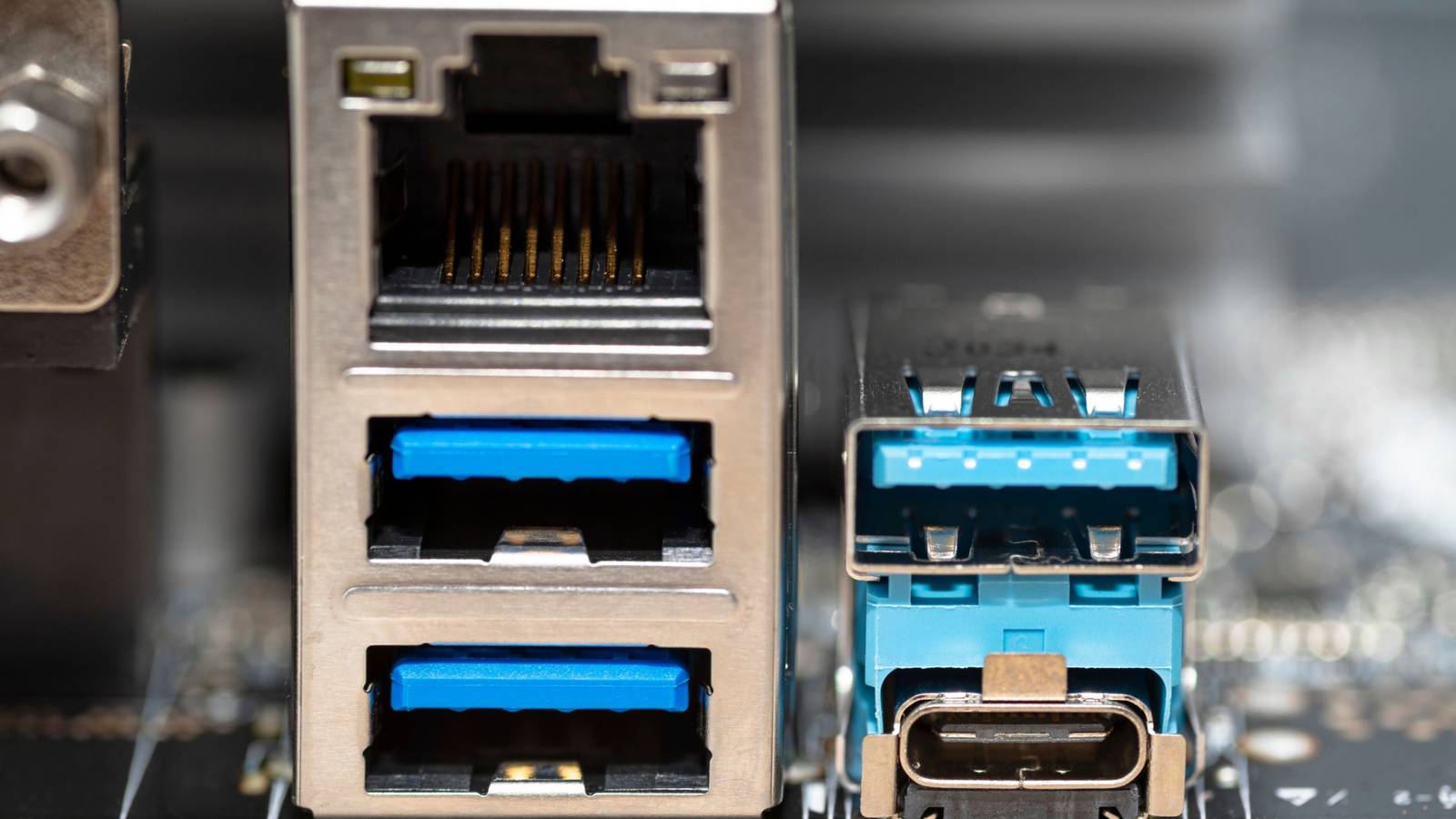
USB-C was supposed to be the one. One cable, one port, any device. Just plug it in and it should work. The reality has turned out to be a little different than promised.
Of course, for laptop users, you’d have to tear the USB-C ports from their cold dead fingers. While USB-C has its problems, no one can argue with how much of a benefit it has been to mobile devices. Thinner, stronger, with more space for hardware that really matters instead of a full-sized HDMI port you might use once in a blue moon.
For desktop users, the USB-C story has been a little different. If you look at the typical PC motherboard, even an expensive one, you might not see any USB-C ports at all! Even when USB-C is present, or you add it yourself, there are issues,
USB-C looks universal, but your motherboard tells a different story
The plug that hides a thousand faces

The pressure to implement USB-C on desktop PCs just isn’t there if I’m being honest. The space-saving benefits are lost on desktop PCs where you have plenty of room to spare, even on a “mini” PC.
Likewise, if someone wants to plug a USB-C device into a desktop PC, just use the right adapter or cable. Although the fastest USB-A standard isn’t as fast as the fastest USB-C speeds, it’s fast enough for most desktop users. After all, there’s no need to use external SSDs, eGPUs, or to connect displays using USB-C on a desktop PC.

Quiz
USB standards & connectors
Trivia Challenge
From clunky Type-A plugs to lightning-fast USB4 — test your knowledge of the universal serial bus revolution.
HistoryConnectorsSpeedsStandardsHardware
In what year was the original USB 1.0 specification officially released?
Correct! USB 1.0 was released in January 1996 by a consortium led by Intel, Compaq, Microsoft, and others. It aimed to replace the chaotic mix of serial ports, parallel ports, and PS/2 connectors that plagued early PCs.
Not quite — USB 1.0 launched in January 1996. It was developed by a consortium including Intel and Microsoft to simplify the frustrating tangle of legacy ports on personal computers at the time.
What is the maximum data transfer rate of USB 2.0, also known as ‘Hi-Speed’ USB?
Correct! USB 2.0 tops out at 480 Mbps, which is why it earned the ‘Hi-Speed’ label when it launched in 2000. That was a massive leap over USB 1.1’s 12 Mbps Full Speed ceiling, making it practical for external hard drives and cameras.
Not quite — the correct answer is 480 Mbps. USB 2.0 is branded ‘Hi-Speed’ and launched in 2000, offering a 40x improvement over USB 1.1’s Full Speed 12 Mbps mode, which made external storage far more viable.
Which USB connector type was specifically designed for use with mobile phones and cameras, featuring a distinctive 5-pin trapezoidal shape?
Correct! USB Mini-B was the go-to connector for early digital cameras and mobile phones before being largely replaced. It features a recognizable five-pin trapezoidal design and was formally specified in USB 2.0, though it has since been superseded by Micro-B and USB-C.
The correct answer is USB Mini-B. It was the standard connector for early digital cameras and many mobile phones, featuring a 5-pin trapezoidal shape. It was eventually displaced by the slimmer Micro-B connector, which allowed for thinner device designs.
USB 3.0 was later rebranded by the USB Implementers Forum. What is its current official name?
Correct! The USB-IF rebranded USB 3.0 as USB 3.2 Gen 1 to fit into a unified naming scheme. It still delivers the same 5 Gbps ‘SuperSpeed’ transfer rate — the confusing renaming was meant to streamline the standard’s versioning but arguably made it more complicated.
Not quite — USB 3.0 is now officially called USB 3.2 Gen 1. The USB Implementers Forum rebranded the entire USB 3.x family to create a unified naming structure, though the 5 Gbps SuperSpeed performance of the original USB 3.0 remains unchanged.
What key physical feature makes USB Type-C different from all previous USB connector types?
Correct! USB Type-C’s most celebrated feature is its symmetrical, reversible design — you can plug it in either way without fumbling. Introduced in 2014, it also supports far higher power delivery and data speeds than older connectors, making it a true universal solution.
The standout feature is its fully reversible design — you can insert a USB-C plug either way up, ending the frustration of guessing the correct orientation. Introduced in 2014, USB-C also supports higher power delivery and data speeds than its predecessors.
Which organization is responsible for developing and publishing the USB specification?
Correct! The USB Implementers Forum (USB-IF) is the non-profit organization formed by the original USB developers to maintain and promote the USB specification. Founded in 1995, it certifies compliant products and grants the right to use the official USB logo.
The correct answer is the USB-IF, or USB Implementers Forum. This non-profit was founded in 1995 by the companies that originally developed USB, including Intel and Microsoft. It maintains the specification, runs compliance programs, and certifies products to carry the USB logo.
What maximum power output did USB Power Delivery 3.1 introduce, enabling charging of high-performance laptops?
Correct! USB Power Delivery 3.1, released in 2021, dramatically raised the ceiling to 240 watts using Extended Power Range (EPR) mode. This is enough to charge even power-hungry gaming laptops and workstations over a single USB-C cable, replacing bulky proprietary chargers.
The answer is 240 watts. USB Power Delivery 3.1, introduced in 2021, added an Extended Power Range (EPR) mode that maxes out at 240W over a USB-C cable. Earlier PD versions were capped at 100W, which was insufficient for many high-performance laptops.
USB4, released in 2019, is based on which company’s proprietary technology that was donated to the USB-IF?
Correct! Intel donated the Thunderbolt 3 specification to the USB-IF, which became the foundation for USB4. This means USB4 at its fastest tier (40 Gbps) is technically compatible with Thunderbolt 3 devices, blurring the line between the two standards significantly.
The correct answer is Intel’s Thunderbolt 3. Intel donated its Thunderbolt 3 spec to the USB Implementers Forum, and it became the basis for USB4. The top USB4 speed tier of 40 Gbps mirrors Thunderbolt 3, and the two standards share a high degree of compatibility.
Your Score
/ 8
Thanks for playing!
Since USB-C isn’t a crucial feature, motherboard manufacturers tend to half-ass it when they do decide to put the hardware into their board designs.
Expect a mishmash of USB-C controllers, with some ports offering older lower speeds and some offering faster modern speeds, depending on which USB controller it happens to be connected to.
The real problem isn’t the ports you have—it’s the ones you can’t add
And they say desktops are easy to upgrade
USB-C ports on the motherboard itself are one thing, but most people would probably want to use the ports on the front. If your PC case has a USB-C port of two on the front panel, then there’s a cable on the inside that should connect to your motherboard’s corresponding header.
These front panel ports are typically limited to 10Gpbs or 20Gbps if you’re lucky. If that’s what your motherboard can offer via a USB header, then all is well. But, what if you want the latest USB4 speeds? Even if your motherboard supports that, the front panel doesn’t and buying a USB4 PCie card doesn’t help either.
This means you’ll have to route an external cable from the rear IO port to access those fast ports. It might not be the biggest issue in the world, but surely it’s time for case makers to offer front panel ports that support the latest technology, and for motherboard makers to give us the corresponding controllers built into the board itself, without the need for an expansion card.
Bandwidth bottlenecks make upgrades harder than they should be
Staying in your lane is harder than it sounds

So none of these minor issues bother you, and you’re happy to slap a PCIe card with the fastest USB-C you can afford into your desktop PC, your problems are over, right?
Well, not so fast. Even if you stick a shiny PCIe card with fast USB into your motherboard, you still need enough bandwidth from your motherboard to make full use of it. On modern computers, the number of PCIe lanes you have is determined by your CPU. The motherboard may have additional lanes provided by its own controller, but ultimately that controller needs to feed back into CPU lanes.
So adding that card might mean losing bandwidth for your GPU, losing access to built-in USB ports on your motherboard, or losing functionality in your SATA ports or M.2 slots.
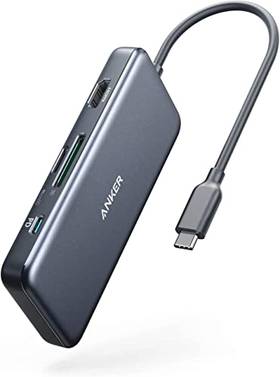
- Connection
-
USB-C
- Power supply included
-
No
- Weight
-
0.22 Pounds
- Dimensions
-
8.27″L x 2.13″W x 0.59″H
The Anker 341 USB-C Hub features seven different ports, including USB-C, USB-A, 4K HDMI, as well as microSD and SD card slots.
Standards fragmentation is killing the USB-C dream
None of this works the way it should
Unlike other USB port designs, USB-C isn’t actually a connection standard, but a port standard. It’s a connector that can host multiple standards. In some cases all of them and in others only one.
USB 3.2, USB4, and Thunderbolt offer different capabilities; DisplayPort Alt Mode, and USB-C PD are all optional extras. This is all a source of additional cost and friction for motherboard makers, so it’s easier to just provide the bare minimum of USB-C functionality, and make anything over and above that your problem while still getting to put “USB-C” on the feature list.
Don’t expect a quick fix from future motherboards
Personally, I don’t see this situation changing any time soon. It’s not just some transitional phase like PS/2 ports sitting alongside USB-A for a few years. No, there’s just no pressure on motherboard makers to ditch USB-A and older USB standards in favor of decking your computer out with fast USB-C ports that match the best that laptops have to offer.
It’s expensive and desktop motherboards still need to support a big list of legacy hardware that laptops don’t. Which is why you can expect plugging into a USB-C port on a desktop computer to be a disappointment more often than it is a delight.
