

Close Menu
    Facebook X (Twitter) Instagram
    Wifi PortalWifi Portal
    • Blogging
    • SEO & Digital Marketing
    • WiFi / Internet & Networking
    • Cybersecurity
    • Tech Tools & Mobile / Apps
    • Privacy & Online Earning
    Facebook X (Twitter) Instagram
    Wifi PortalWifi Portal
    Home»Cybersecurity»Russian hackers turn Kazuar backdoor into modular P2P botnet
    Cybersecurity

    Russian hackers turn Kazuar backdoor into modular P2P botnet

    adminBy adminMay 16, 2026No Comments3 Mins Read
    Facebook Twitter LinkedIn Telegram Pinterest Tumblr Reddit WhatsApp Email
    Russian hackers turn Kazuar backdoor into modular P2P botnet
    Share
    Facebook Twitter LinkedIn Pinterest Email

    Russian hackers turn Kazuar backdoor into modular P2P botnet

    The Russian hacker group Secret Blizzard has developed its long-running Kazuar backdoor into a modular peer-to-peer (P2P) botnet designed for long-term persistence, stealth, and data collection.

    Secret Blizzard, whose activity overlaps that of Turla, Uroburos, and Venomous Bear, has been associated with the Russian intelligence service (FSB) and is known for targeting government and diplomatic organizations, defense-related entities, and critical systems across Europe, Asia, and Ukraine.

    The Kazuar malware has been documented since 2017, and researchers found that its code lineage goes as far back as 2005. Its activity has been linked to the Turla espionage group working for the FSB.

    In 2020, researchers exposed its deployment in attacks targeting European government organizations. Three years later, it was seen deployed in attacks against Ukraine.

    “Leading” Kazuar

    Microsoft researchers analyzed a recent variant of Kazuar and observed that the malware now operates using three distinct modules: kernel, bridge, and worker.

    The Kernel module is the central coordinator that manages tasks, controls other modules, elects a leader, and orchestrates communications and data flow across the botnet.

    The leader is essentially one infected system within a compromised environment or network segment, which communicates with the command-and-control (C2) server, receives tasks, and forwards them internally to the other infected systems.

    Non-leader systems enter “silent” mode and don’t communicate directly with the C2. This results in better stealth and reduced detection surface.

    “The Kernel leader is the one elected Kernel module that communicates with the Bridge module on behalf of the other Kernel modules, reducing visibility by avoiding large volumes of external traffic from multiple infected hosts,” explains Microsoft.

    The process for selecting the leader is internal and autonomous, using uptime, reboot, and interruption counts.

    The Bridge module acts as the external communications proxy that relays traffic between the elected Kernel leader and the remote C2 infrastructure using protocols like HTTP, WebSockets, or Exchange Web Services (EWS).
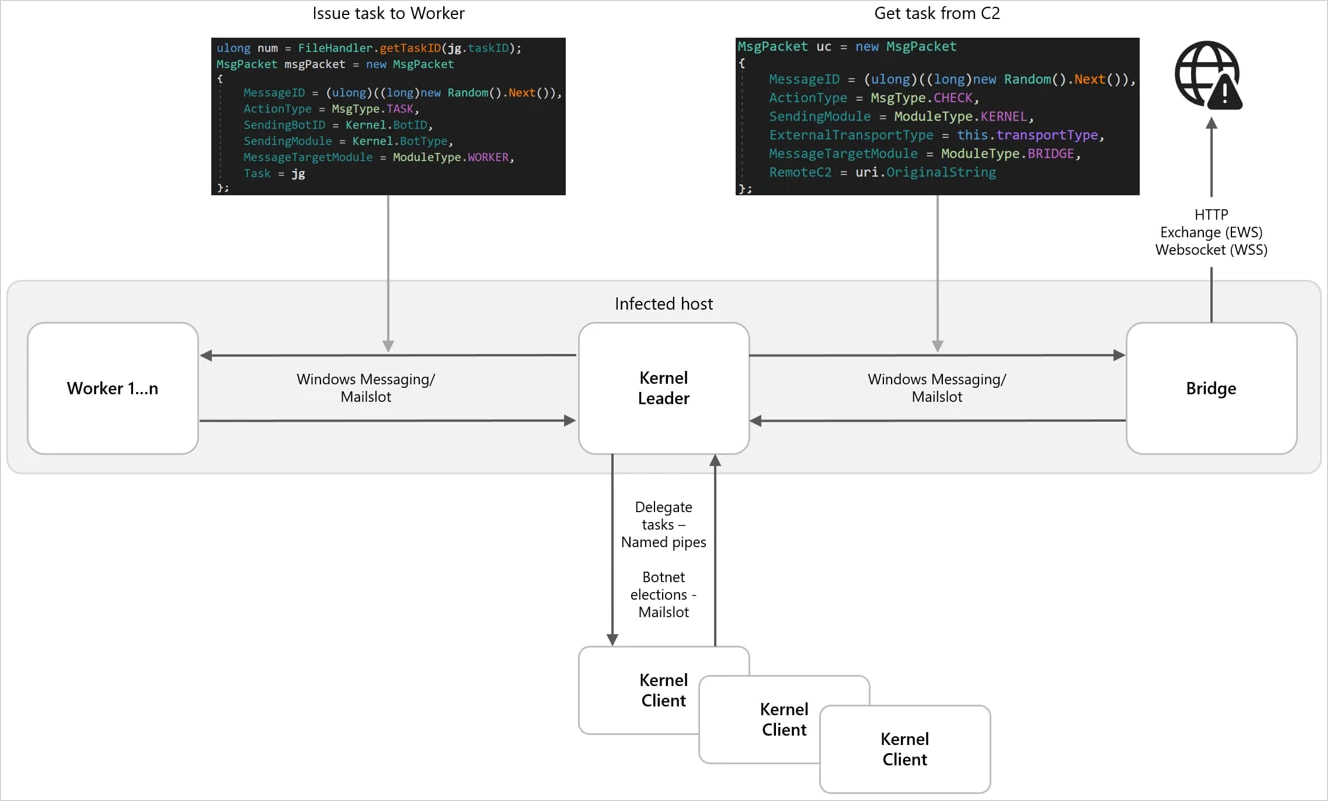
    Kazuar's internal communications diagram
    Kazuar’s internal communications diagram
    Source: Microsoft

    Internal communications rely on IPC (inter-process communication), including Windows Messaging, Mailslots, and named pipes, blending well with normal operational noise. The messages are AES-encrypted and serialized with Google Protocol Buffers (Protobuf).

    The Worker module performs the actual espionage operations, such as:

    • keylogging
    • capturing screenshots
    • harvesting data from the filesystem
    • performing system and network reconnaissance
    • collecting email/MAPI data (including Outlook downloads)
    • monitoring windows
    • stealing recent files

    The collected data is encrypted, staged locally, and later exfiltrated through the Bridge module.
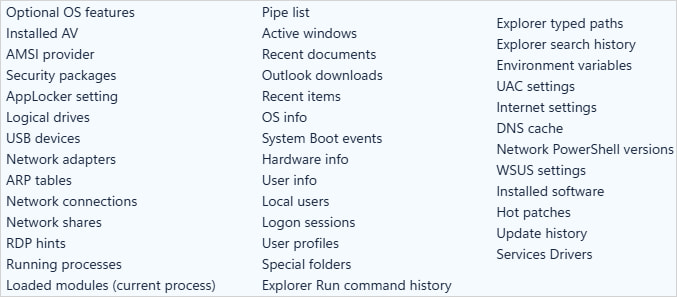
    Types of system info Kazuar collects
    Types of system info Kazuar collects
    Source: Microsoft

    Microsoft underlines Kazuar’s versatility, which now supports 150 configuration options allowing operators to enable/disable specific security bypasses, perform task scheduling, time the data theft and size of exfiltration chunks, perform process injection, manage tasks and command execution, and more.

    Regarding the security bypass options, Kazuar now offers Antimalware Scan Interface (AMSI) bypass, Event Tracing for Windows (ETW) bypass, and Windows Lockdown Policy (WLDP) bypass.

    Secret Blizzard typically seeks long-term persistence on target systems for intelligence collections. The actor exfiltrates documents and email content that has political importance.

    Microsoft recommends that companies focus their defense on behavioral detection rather than static signatures, as Kazuar’s modular and highly configurable nature makes the threat particularly evasive.


    article image

    Automated pentesting tools deliver real value, but they were built to answer one question: can an attacker move through the network? They were not built to test whether your controls block threats, your detection rules fire, or your cloud configs hold.

    This guide covers the 6 surfaces you actually need to validate.

    Download Now

    backdoor Botnet hackers Kazuar modular P2P Russian turn
    Share. Facebook Twitter Pinterest LinkedIn Tumblr Telegram Email
    Previous ArticleGoogle’s product packs are now a primary sales channel: Data
    Next Article SERP FAQ Removal & New Data Challenge Schema’s AI Search Value
    admin
    • Website

    Related Posts

    Encryption Consulting launches CertSecure Manager v3.3 with zero-touch certificate renewals

    May 20, 2026

    GitHub confirms breach of 3,800 repos via malicious VSCode extension

    May 20, 2026

    Grafana GitHub Breach Exposes Source Code via TanStack npm Attack

    May 20, 2026
    Add A Comment
    Leave A Reply Cancel Reply

    Search Blog
    About
    About

    At WifiPortal.tech, we share simple, easy-to-follow guides on cybersecurity, online privacy, and digital opportunities. Our goal is to help everyday users browse safely, protect personal data, and explore smart ways to earn online. Whether you’re new to the digital world or looking to strengthen your online knowledge, our content is here to keep you informed and secure.

    Trending Blogs

    How to Persuade Your Boss to Send You to Ahrefs Evolve in San Diego

    May 20, 2026

    Key AEO & Content Trends for 2026

    May 20, 2026

    Google adds llms.txt check to Chrome Lighthouse

    May 20, 2026

    Riverbed expands autonomous AI capabilities for Aternity platform

    May 20, 2026
    Categories
    • Blogging (82)
    • Cybersecurity (1,955)
    • Privacy & Online Earning (223)
    • SEO & Digital Marketing (1,210)
    • Tech Tools & Mobile / Apps (1,796)
    • WiFi / Internet & Networking (305)

    Subscribe to Updates

    Stay updated with the latest tips on cybersecurity, online privacy, and digital opportunities straight to your inbox.

    WifiPortal.tech is a blogging platform focused on cybersecurity, online privacy, and digital opportunities. We share easy-to-follow guides, tips, and resources to help you stay safe online and explore new ways of working in the digital world.

    Our Picks

    How to Persuade Your Boss to Send You to Ahrefs Evolve in San Diego

    May 20, 2026

    Key AEO & Content Trends for 2026

    May 20, 2026

    Google adds llms.txt check to Chrome Lighthouse

    May 20, 2026
    Most Popular
    • How to Persuade Your Boss to Send You to Ahrefs Evolve in San Diego
    • Key AEO & Content Trends for 2026
    • Google adds llms.txt check to Chrome Lighthouse
    • Riverbed expands autonomous AI capabilities for Aternity platform
    • What’s New in WordPress 7.0? (Features & Screenshots)
    • How Denis Yurchak Built Yadaphone to $17,500 a Month and 20,000 Users in Just Over a Year After the Skype Shut Down
    • How to do SEO for beginners
    • Google Introduces New Ad Formats In AI Mode
    © 2026 WifiPortal.tech. Designed by WifiPortal.tech.
    • Home
    • About Us
    • Contact Us
    • Privacy Policy
    • Terms and Conditions
    • Disclaimer

    Type above and press Enter to search. Press Esc to cancel.