


Close Menu
    Facebook X (Twitter) Instagram
    Wifi PortalWifi Portal
    • Blogging
    • SEO & Digital Marketing
    • WiFi / Internet & Networking
    • Cybersecurity
    • Tech Tools & Mobile / Apps
    • Privacy & Online Earning
    Facebook X (Twitter) Instagram
    Wifi PortalWifi Portal
    Home»Cybersecurity»Microsoft Teams phishing targets employees with A0Backdoor malware
    Cybersecurity

    Microsoft Teams phishing targets employees with A0Backdoor malware

    adminBy adminMarch 10, 2026No Comments3 Mins Read
    Facebook Twitter LinkedIn Telegram Pinterest Tumblr Reddit WhatsApp Email
    Microsoft Teams phishing targets employees with backdoors
    Share
    Facebook Twitter LinkedIn Pinterest Email

    Microsoft Teams phishing targets employees with backdoors

    Hackers contacted employees at financial and healthcare organizations over Microsoft Teams to trick them into granting remote access through Quick Assist and deploy a new piece of malware called A0Backdoor.

    The attacker relies on social engineering to gain the employee’s trust by first flooding their inbox with spam and then contacting them over Teams, pretending to be the company’s IT staff, offering assistance with the unwanted messages.

    To obtain access to the target machine, the threat actor instructs the user to start a Quick Assist remote session, which is used to deploy a malicious toolset that includes digitally signed MSI installers hosted in a personal Microsoft cloud storage account.

    According to researchers at cybersecurity company BlueVoyant, the malicious MSI files masquerade as Microsoft Teams components and the CrossDeviceService, a legitimate Windows tool used by the Phone Link app.
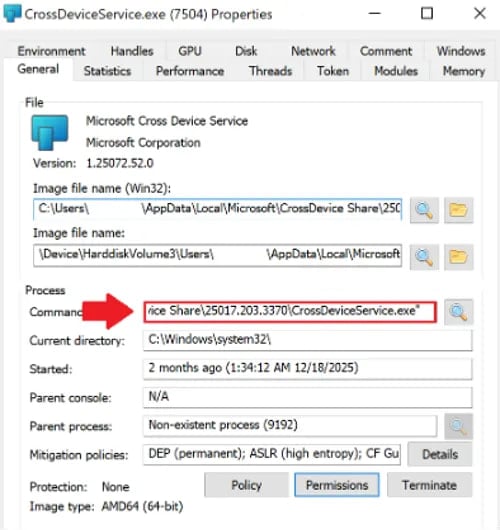
    Commandline argument for CrossDeviceService.exe
    Command line argument to install the malicious CrossDeviceService.exe
    Source: BlueVoyant

    Using the DLL sideloading technique with legitimate Microsoft binaries, the attacker deploys a malicious library (hostfxr.dll) that contains compressed or encrypted data. Once loaded in memory, the library decrypts the data into shellcode and transfers execution to it.

    The researchers say that the malicious library also uses the CreateThread function to prevent analysis. BlueVoyant explains that the excessive thread creation could cause a debugger to crash, but it does not have a significant impact under normal execution.

    The shellcode performs sandbox detection and then generates a SHA-256-derived key, which it uses to extract the A0Backdoor, which is encrypted using the AES algorithm.
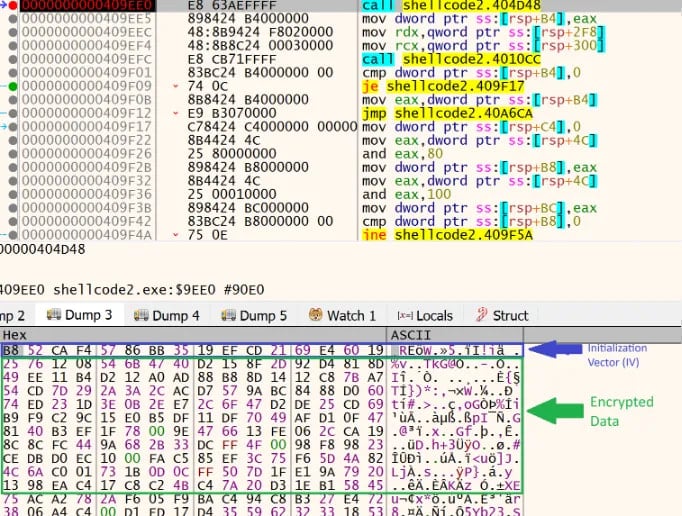
    Encrypted payload in the shellcode
    Encrypted payload in the shellcode
    Source: BlueVoyant

    The malware relocates itself into a new memory region, decrypts its core routines, and relies on Windows API calls (e.g., DeviceIoControl, GetUserNameExW, and GetComputerNameW) to collect information about the host and fingerprint it.

    Communication with the command-and-control (C2) is hidden in DNS traffic, with the malware sending DNS MX queries with encoded metadata in high-entropy subdomains to public recursive resolvers. The DNS servers respond with MX records containing encoded command data.
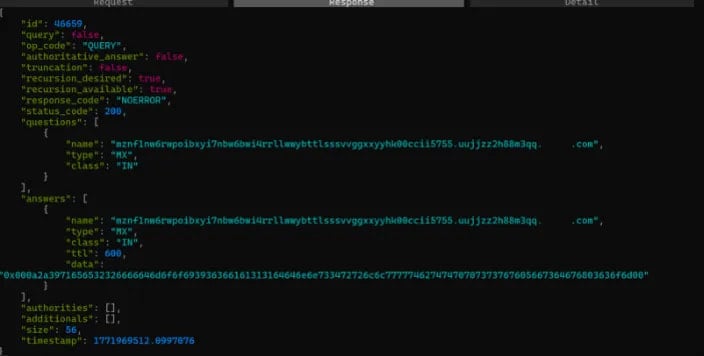
    Captured DNS communication
    Captured DNS communication
    Source: BlueVoyant

    “The malware extracts and decodes the leftmost label to recover command/configuration data, then proceeds accordingly,” explains BlueVoyant.

    “Using DNS MX records helps the traffic blend in and can evade controls tuned to detect TXT-based DNS tunneling, which may be more commonly monitored.”

    BlueVoyant states that two of the targets of this campaign are a financial institution in Canada and a global healthcare organization.

    The researchers assess with moderate-to-high confidence that the campaign is an evolution of tactics, techniques and procedures associated with the BlackBasta ransomware gang, which has dissolved after the internal chat logs of the operation were leaked.

    While there are plenty of overlaps, BlueVoyant notes that the use of signed MSIs and malicious DLLs, the A0Backdoor payload, and using DNS MX-based C2 communication are new elements.


    tines

    Malware is getting smarter. The Red Report 2026 reveals how new threats use math to detect sandboxes and hide in plain sight.

    Download our analysis of 1.1 million malicious samples to uncover the top 10 techniques and see if your security stack is blinded.

    A0Backdoor Employees Malware Microsoft Phishing Targets teams
    Share. Facebook Twitter Pinterest LinkedIn Tumblr Telegram Email
    Previous ArticleGoogle Marketing Live 2026 set for May 20
    Next Article Conflicting definitions and timelines causing cybersecurity regulation morass, industry reps say
    admin
    • Website

    Related Posts

    China-Linked APT GopherWhisper Abuses Legitimate Services in Government Attacks

    April 25, 2026

    Researchers Uncover Pre-Stuxnet ‘fast16’ Malware Targeting Engineering Software

    April 25, 2026

    Compromised everyday devices power Chinese cyber espionage operations

    April 25, 2026
    Add A Comment
    Leave A Reply Cancel Reply

    Search Blog
    About
    About

    At WifiPortal.tech, we share simple, easy-to-follow guides on cybersecurity, online privacy, and digital opportunities. Our goal is to help everyday users browse safely, protect personal data, and explore smart ways to earn online. Whether you’re new to the digital world or looking to strengthen your online knowledge, our content is here to keep you informed and secure.

    Trending Blogs

    China-Linked APT GopherWhisper Abuses Legitimate Services in Government Attacks

    April 25, 2026

    5 things you never thought a $5 ESP32 could do

    April 25, 2026

    Why GEO is a reputation problem

    April 25, 2026

    Your SSD is slowing down, and Windows has been quietly hiding the fix

    April 25, 2026
    Categories
    • Blogging (68)
    • Cybersecurity (1,506)
    • Privacy & Online Earning (183)
    • SEO & Digital Marketing (924)
    • Tech Tools & Mobile / Apps (1,790)
    • WiFi / Internet & Networking (246)

    Subscribe to Updates

    Stay updated with the latest tips on cybersecurity, online privacy, and digital opportunities straight to your inbox.

    WifiPortal.tech is a blogging platform focused on cybersecurity, online privacy, and digital opportunities. We share easy-to-follow guides, tips, and resources to help you stay safe online and explore new ways of working in the digital world.

    Our Picks

    China-Linked APT GopherWhisper Abuses Legitimate Services in Government Attacks

    April 25, 2026

    5 things you never thought a $5 ESP32 could do

    April 25, 2026

    Why GEO is a reputation problem

    April 25, 2026
    Most Popular
    • China-Linked APT GopherWhisper Abuses Legitimate Services in Government Attacks
    • 5 things you never thought a $5 ESP32 could do
    • Why GEO is a reputation problem
    • Your SSD is slowing down, and Windows has been quietly hiding the fix
    • Researchers Uncover Pre-Stuxnet ‘fast16’ Malware Targeting Engineering Software
    • Google Clock 8.8 APK Download by Google LLC
    • Compromised everyday devices power Chinese cyber espionage operations
    • Why Great Content Is No Longer Enough & What Beats It In AI Search
    © 2026 WifiPortal.tech. Designed by WifiPortal.tech.
    • Home
    • About Us
    • Contact Us
    • Privacy Policy
    • Terms and Conditions
    • Disclaimer

    Type above and press Enter to search. Press Esc to cancel.