


Close Menu
    Facebook X (Twitter) Instagram
    Wifi PortalWifi Portal
    • Blogging
    • SEO & Digital Marketing
    • WiFi / Internet & Networking
    • Cybersecurity
    • Tech Tools & Mobile / Apps
    • Privacy & Online Earning
    Facebook X (Twitter) Instagram
    Wifi PortalWifi Portal
    Home»Cybersecurity»Google Chrome adds infostealer protection against session cookie theft
    Cybersecurity

    Google Chrome adds infostealer protection against session cookie theft

    adminBy adminApril 12, 2026No Comments3 Mins Read
    Facebook Twitter LinkedIn Telegram Pinterest Tumblr Reddit WhatsApp Email
    Google Chrome adds infostealer protection against session cookie theft
    Share
    Facebook Twitter LinkedIn Pinterest Email

    Google Chrome adds infostealer protection against session cookie theft

    Google has rolled out Device Bound Session Credentials (DBSC) protection in Chrome 146 for Windows, designed to block info-stealing malware from harvesting session cookies.

    macOS users will benefit from this security feature in a future Chrome release that has yet to be announced.

    The new protection has been announced in 2024, and it works by cryptographically linking a user’s session to their specific hardware, such as a computer’s security chip – the Trusted Platform Module (TPM) on Windows and the Secure Enclave on macOS.

    Wiz

    Since the unique public/private keys for encrypting and decrypting sensitive data are generated by the security chip, they cannot be exported from the machine.

    This prevents the attacker from using stolen session data because the unique private key protecting it cannot be exported from the machine.

    “The issuance of new short-lived session cookies is contingent upon Chrome proving possession of the corresponding private key to the server,” Google says in an announcement today.

    Without this key, any exfiltrated session cookie expires and becomes useless to an attacker almost immediately.
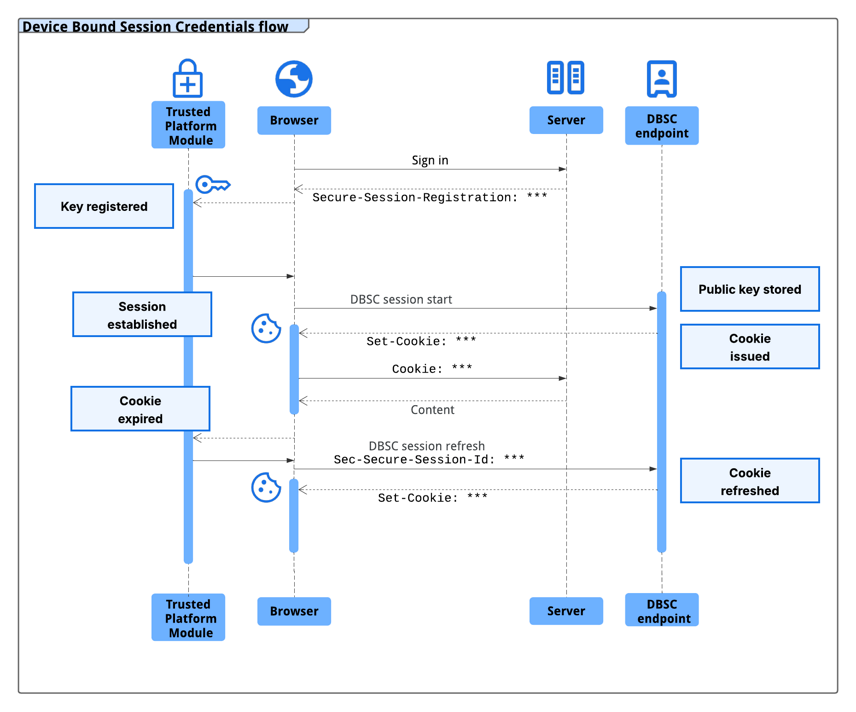
    The Device Bound Session Credentials (DBSC) flow
    Browser-server interaction in the context of the DBSC protocol
    source: Google


    A session cookie acts as an authentication token, typically with a longer validity time, and is created server-side based on your username and password.

    The server uses the session cookie for identification and sends it to the browser, which presents it when you access the online service.

    Because they allow authenticating to a server without providing credentials, threat actors use specialized malware called infostealer to collect session cookies.

    Google says that multiple infostealer malware families, like LummaC2, “have become increasingly sophisticated at harvesting these credentials,” allowing hackers to gain access to users’ accounts.

    “Crucially, once sophisticated malware has gained access to a machine, it can read the local files and memory where browsers store authentication cookies. As a result, there is no reliable way to prevent cookie exfiltration using software alone on any operating system” – Google

    The DBSC protocol was built to be private by design, with each session being backed by a distinct key. This prevents websites from correlating user activity across multiple sessions or sites on the same device.

    Additionally, the protocol enables minimal information exchange that requires only the per-session public key necessary to certify proof of possession, and does not leak device identifiers.

    In a year of testing an early version of DBSC in partnership with multiple web platforms, including Okta, Google observed a notable decline in session theft events.

    Google partnered with Microsoft for developing the DBSC protocol as an open web standard and received input “from many in the industry that are responsible for web security.”

    Websites can upgrade to the more secure, hardware-bound sessions by adding a dedicated registration and refresh endpoints to their backends without sacrificing compatibility with the existing frontend.

    Web developers can turn to Google’s guide for DBSC implementation details. Specifications are available on the World Wide Web Consortium (W3C) website, while an explainer can be found on GitHub.


    tines

    Automated pentesting proves the path exists. BAS proves whether your controls stop it. Most teams run one without the other.

    This whitepaper maps six validation surfaces, shows where coverage ends, and provides practitioners with three diagnostic questions for any tool evaluation.

    adds Chrome cookie Google Infostealer protection session theft
    Share. Facebook Twitter Pinterest LinkedIn Tumblr Telegram Email
    Previous ArticleHere are 4 things I do to make a cheap phone feel more premium
    Next Article Week in review: Windows zero-day exploit leaked, Patch Tuesday forecast
    admin
    • Website

    Related Posts

    Exploited Vulnerability Exposes Nginx Servers to Hacking

    April 15, 2026

    n8n Webhooks Abused Since October 2025 to Deliver Malware via Phishing Emails

    April 15, 2026

    Google rolls out worldwide agentic restaurant booking via AI Mode

    April 15, 2026
    Add A Comment
    Leave A Reply Cancel Reply

    Search Blog
    About
    About

    At WifiPortal.tech, we share simple, easy-to-follow guides on cybersecurity, online privacy, and digital opportunities. Our goal is to help everyday users browse safely, protect personal data, and explore smart ways to earn online. Whether you’re new to the digital world or looking to strengthen your online knowledge, our content is here to keep you informed and secure.

    Trending Blogs

    How To Become An AI Search Authority In SEO [Webinar]

    April 16, 2026

    Android 17 stops apps from demanding access to all your contacts

    April 16, 2026

    Exploited Vulnerability Exposes Nginx Servers to Hacking

    April 15, 2026

    Why AI engines cite certain brands (and how marketers can use it)

    April 15, 2026
    Categories
    • Blogging (63)
    • Cybersecurity (1,334)
    • Privacy & Online Earning (168)
    • SEO & Digital Marketing (819)
    • Tech Tools & Mobile / Apps (1,597)
    • WiFi / Internet & Networking (224)

    Subscribe to Updates

    Stay updated with the latest tips on cybersecurity, online privacy, and digital opportunities straight to your inbox.

    WifiPortal.tech is a blogging platform focused on cybersecurity, online privacy, and digital opportunities. We share easy-to-follow guides, tips, and resources to help you stay safe online and explore new ways of working in the digital world.

    Our Picks

    How To Become An AI Search Authority In SEO [Webinar]

    April 16, 2026

    Android 17 stops apps from demanding access to all your contacts

    April 16, 2026

    Exploited Vulnerability Exposes Nginx Servers to Hacking

    April 15, 2026
    Most Popular
    • How To Become An AI Search Authority In SEO [Webinar]
    • Android 17 stops apps from demanding access to all your contacts
    • Exploited Vulnerability Exposes Nginx Servers to Hacking
    • Why AI engines cite certain brands (and how marketers can use it)
    • I replaced these 4 popular Android apps with much better, lesser-known ones
    • Walmart: Shopping & Savings 26.14 APK Download by Walmart
    • n8n Webhooks Abused Since October 2025 to Deliver Malware via Phishing Emails
    • Google rolls out worldwide agentic restaurant booking via AI Mode
    © 2026 WifiPortal.tech. Designed by WifiPortal.tech.
    • Home
    • About Us
    • Contact Us
    • Privacy Policy
    • Terms and Conditions
    • Disclaimer

    Type above and press Enter to search. Press Esc to cancel.