

Close Menu
    Facebook X (Twitter) Instagram
    Wifi PortalWifi Portal
    • Blogging
    • SEO & Digital Marketing
    • WiFi / Internet & Networking
    • Cybersecurity
    • Tech Tools & Mobile / Apps
    • Privacy & Online Earning
    Facebook X (Twitter) Instagram
    Wifi PortalWifi Portal
    Home»Cybersecurity»Exploit available for new DirtyDecrypt Linux root escalation flaw
    Cybersecurity

    Exploit available for new DirtyDecrypt Linux root escalation flaw

    adminBy adminMay 18, 2026No Comments3 Mins Read
    Facebook Twitter LinkedIn Telegram Pinterest Tumblr Reddit WhatsApp Email
    Linux
    Share
    Facebook Twitter LinkedIn Pinterest Email

    Linux

    A recently patched local privilege escalation vulnerability in the Linux kernel’s rxgk module now has a proof-of-concept exploit that allows attackers to gain root access on some Linux systems.

    Named DirtyDecrypt and also known as DirtyCBC, this security flaw was also autonomously found and reported by the V12 security team earlier this month, when the maintainers informed them that it was a duplicate that had already been patched in the mainline.

    “We found and reported this on May 9, 2026, but was informed it was a duplicate by the maintainers,” V12 said. “It’s a rxgk pagecache write due to missing COW guard in rxgk_decrypt_skb. See poc.c for more details.”

    While there is no official CVE ID associated with this security flaw, according to Will Dormann (principal vulnerability analyst at Tharros), the information from the security researchers aligns with the details of CVE-2026-31635, which was patched on April 25.

    Successful exploitation requires running a Linux kernel with the CONFIG_RXGK configuration option, which enables RxGK security support for the Andrew File System (AFS) client and network transport.

    This limits the attack surface to Linux distributions that closely follow the latest upstream kernel releases, including Fedora, Arch Linux, and openSUSE Tumbleweed. However, V12’s proof-of-concept exploit has only been tested against Fedora and the mainline Linux kernel.
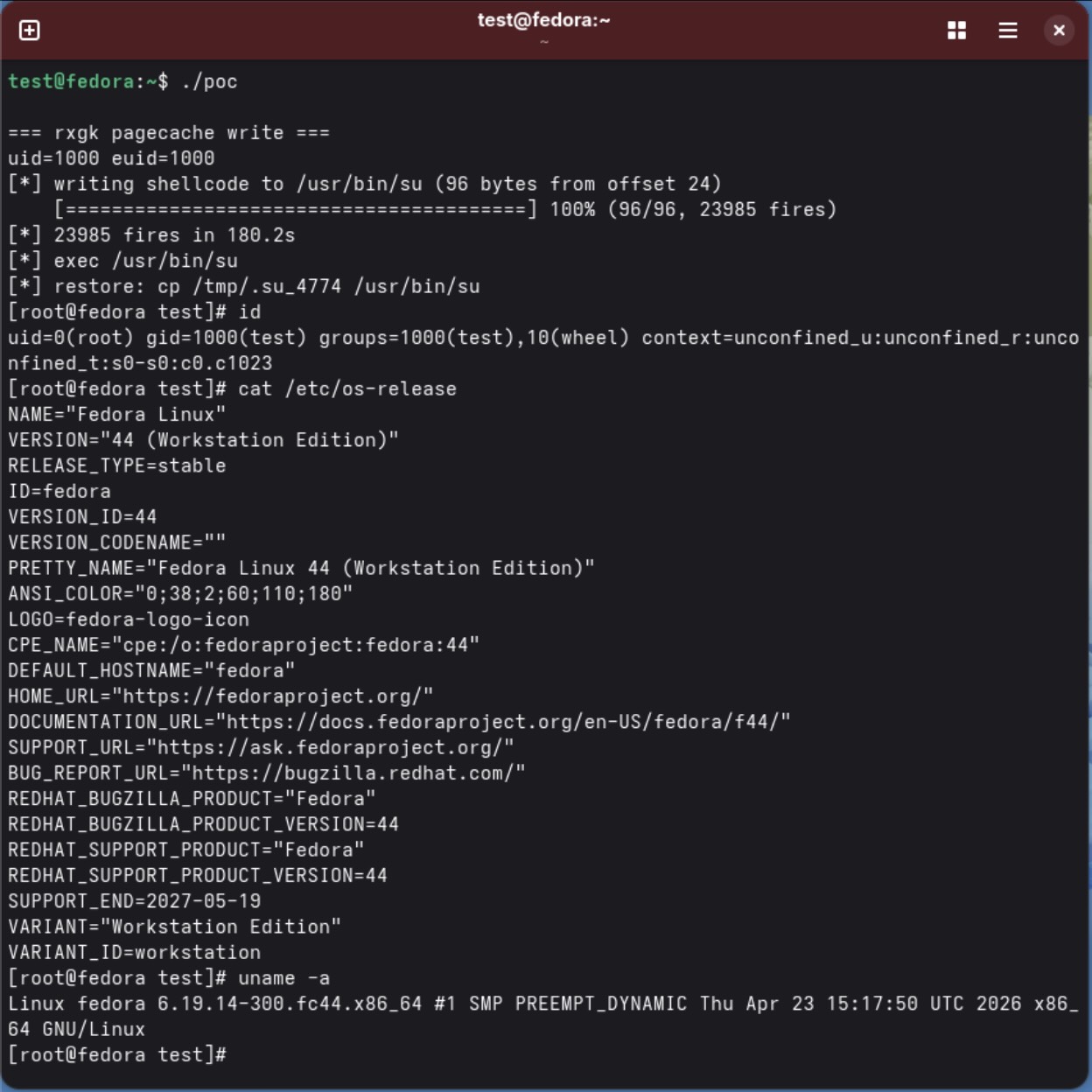
    DirtyDEcrypt exploit test
    DirtyDecrypt exploit Fedora test (Will Dormann)

    DirtyDecrypt belongs to the same vulnerability class as several other root-escalation flaws disclosed in recent weeks, including Dirty Frag, Fragnesia, and Copy Fail.

    Linux users on distros potentially affected by DirtyDecrypt are advised to install the latest kernel updates as soon as possible.

    However, those who can’t immediately patch their devices should use the same mitigation used for Dirty Frag (however, this will also break IPsec VPNs and AFS distributed network file systems):

    
    sh -c "printf 'install esp4 /bin/false\ninstall esp6 /bin/false\ninstall rxrpc /bin/false\n' > /etc/modprobe.d/dirtyfrag.conf; rmmod esp4 esp6 rxrpc 2>/dev/null; echo 3 > /proc/sys/vm/drop_caches; true"

    These disclosures follow recent reports that attackers are now actively exploiting the Copy Fail vulnerability in the wild.

    The Cybersecurity and Infrastructure Security Agency (CISA) added Copy Fail to its list of flaws exploited in attacks on May 1 and ordered federal agencies to secure their Linux devices within two weeks, by May 15.

    “This type of vulnerability is a frequent attack vector for malicious cyber actors and poses significant risks to the federal enterprise,” the U.S. cybersecurity agency warned.

    In April, Linux distros rolled out patches for another root-privilege escalation vulnerability (dubbed Pack2TheRoot) in the PackageKit daemon that had gone unnoticed for almost 12 years.


    article image

    Automated pentesting tools deliver real value, but they were built to answer one question: can an attacker move through the network? They were not built to test whether your controls block threats, your detection rules fire, or your cloud configs hold.

    This guide covers the 6 surfaces you actually need to validate.

    Download Now

    DirtyDecrypt Escalation exploit Flaw Linux root
    Share. Facebook Twitter Pinterest LinkedIn Tumblr Telegram Email
    Previous ArticleNew Windows ‘MiniPlasma’ zero-day exploit gives SYSTEM access, PoC released
    Next Article Attackers accessed, downloaded code from Grafana Labs’ GitHub
    admin
    • Website

    Related Posts

    Encryption Consulting launches CertSecure Manager v3.3 with zero-touch certificate renewals

    May 20, 2026

    GitHub confirms breach of 3,800 repos via malicious VSCode extension

    May 20, 2026

    Grafana GitHub Breach Exposes Source Code via TanStack npm Attack

    May 20, 2026
    Add A Comment
    Leave A Reply Cancel Reply

    Search Blog
    About
    About

    At WifiPortal.tech, we share simple, easy-to-follow guides on cybersecurity, online privacy, and digital opportunities. Our goal is to help everyday users browse safely, protect personal data, and explore smart ways to earn online. Whether you’re new to the digital world or looking to strengthen your online knowledge, our content is here to keep you informed and secure.

    Trending Blogs

    How to Persuade Your Boss to Send You to Ahrefs Evolve in San Diego

    May 20, 2026

    Key AEO & Content Trends for 2026

    May 20, 2026

    Google adds llms.txt check to Chrome Lighthouse

    May 20, 2026

    Riverbed expands autonomous AI capabilities for Aternity platform

    May 20, 2026
    Categories
    • Blogging (82)
    • Cybersecurity (1,955)
    • Privacy & Online Earning (223)
    • SEO & Digital Marketing (1,210)
    • Tech Tools & Mobile / Apps (1,796)
    • WiFi / Internet & Networking (305)

    Subscribe to Updates

    Stay updated with the latest tips on cybersecurity, online privacy, and digital opportunities straight to your inbox.

    WifiPortal.tech is a blogging platform focused on cybersecurity, online privacy, and digital opportunities. We share easy-to-follow guides, tips, and resources to help you stay safe online and explore new ways of working in the digital world.

    Our Picks

    How to Persuade Your Boss to Send You to Ahrefs Evolve in San Diego

    May 20, 2026

    Key AEO & Content Trends for 2026

    May 20, 2026

    Google adds llms.txt check to Chrome Lighthouse

    May 20, 2026
    Most Popular
    • How to Persuade Your Boss to Send You to Ahrefs Evolve in San Diego
    • Key AEO & Content Trends for 2026
    • Google adds llms.txt check to Chrome Lighthouse
    • Riverbed expands autonomous AI capabilities for Aternity platform
    • What’s New in WordPress 7.0? (Features & Screenshots)
    • How Denis Yurchak Built Yadaphone to $17,500 a Month and 20,000 Users in Just Over a Year After the Skype Shut Down
    • How to do SEO for beginners
    • Google Introduces New Ad Formats In AI Mode
    © 2026 WifiPortal.tech. Designed by WifiPortal.tech.
    • Home
    • About Us
    • Contact Us
    • Privacy Policy
    • Terms and Conditions
    • Disclaimer

    Type above and press Enter to search. Press Esc to cancel.