

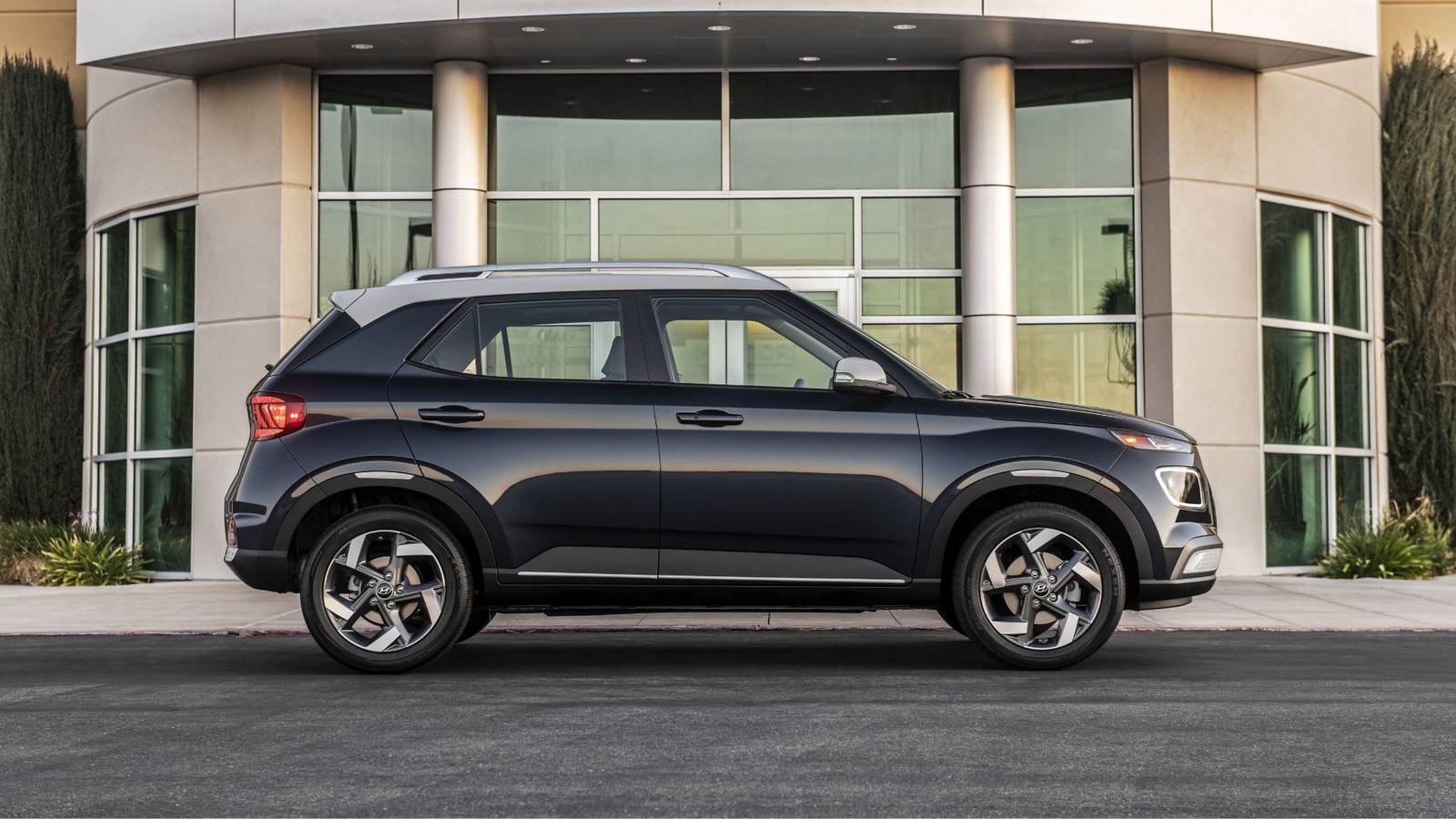
The Nissan Versa is gone, and just like that, the Hyundai Venue takes the crown as America’s cheapest new car at $22,150. It’s not exactly fresh—this thing’s been around for a while—but it still nails the basics with a boxy design, a simple infotainment setup, and just enough punch for everyday driving.
The Venue is light, which helps make the most of its modest 116 horsepower, and the fuel economy is solid at 31 mpg combined. You also get Hyundai’s long warranty for peace of mind, though you’ll have to live with a CVT and no all-wheel drive.
Even with prices climbing everywhere else, the Venue hasn’t exactly been flying off dealer lots. So the real question isn’t what it costs to get in—but how far that “cheap” label actually stretches once you start adding everything on.
All prices here include destination and freight and reflect the 2026 model year. Accessories are priced as listed, but dealer installation can add extra depending on where you go.

New cars are so expensive that a six-figure salary barely cuts it
The modern car market is leaving average buyers behind.
Breaking down the 2026 Hyundai Venue, trim by trim
What you get at each price point
The Venue lineup keeps things pretty simple for 2026, with just two main trims: SE and SEL. But Hyundai splits the SEL into two versions—a standard one and an SEL with a 2-Tone Roof—which makes it look more complicated than it really is.
Here’s where it gets a little weird: the 2-Tone Roof version actually costs $225 less than the regular SEL. That’s because Hyundai dropped last year’s Limited trim and rolled most of its gear into the SEL, while reserving the upgraded seat materials for the 2-Tone model.
Go with the SEL with a 2-Tone Roof, and you get a cloth-and-H-Tex seat combo instead of plain cloth. You also lose the sunroof that comes on the regular SEL, which is an odd trade-off—but that’s how the lineup shakes out.
|
Trim |
MSRP |
|---|---|
|
SE |
$22,150 |
|
SEL w/ 2-Tone Roof |
$24,200 |
|
SEL |
$24,425 |
There’s not a huge jump in price to move up a trim, but for anyone watching every dollar, that extra $2,050 still matters. So let’s look at what comes standard on the higher trim and what you’re actually getting for the money.
Even at the base level, the Venue isn’t exactly barebones. You get automatic headlights with high beams, an eight-inch touchscreen with Apple CarPlay and Android Auto, six speakers, two USB ports, lane-keeping assist, 15-inch alloy wheels, a tilt-and-telescoping steering wheel, and a 4.2-inch digital gauge display.
Now that the differences between the SEL and the SEL w/ 2-Tone Roof are sorted out, here’s what you gain by stepping up from the SE to the SEL:
- Heated front seats and heated side mirrors
- Proximity Key with push-button start
- Leather-wrapped steering wheel and shift knob
- Automatic climate control
- Driver’s auto-up power window
- Drive Mode Select (Normal, Sport, Snow)
- Wireless charging pad
- Underfloor cargo storage
- Rear-seat dual USB charging ports
- Power sunroof
- Roof rails
- Blind-Spot Collision Warning
- Rear Cross-Traffic Collision Warning
- 17-inch alloy wheels
- Rear disc brakes
That’s a lot of nice upgrades for $2,275, but none of it is really essential. If you’re trying to squeeze the most features out of every dollar, the SEL trim is probably your best bet.

Here Are 10 of the Cheapest New Cars You Can Buy Right Now in The U.S.
If you’re looking for a budget-friendly ride, here are 10 new cars that deliver style, value, and practicality without breaking the bank.
Here’s what you can pick from
And how each one stacks up
The Venue doesn’t overwhelm you with options—it mostly comes down to paint and interior colors. There are eight exterior shades to choose from, including a couple of blues, a green, and the usual black, white, and gray lineup.
Most of those colors won’t cost you a dime, either, aside from Ultimate Red, which adds $500. If you go for the 2-Tone version, your exterior choices shrink to just three combinations: Lunar White or Ecotronic Gray with a black roof, or Denim Blue paired with a white roof.
Inside, SE and SEL models come with black or gray cloth. The SEL w/ 2-Tone Roof sticks with black for the Cloth/H-Tex setup on most colors, but Denim Blue gets a matching denim-inspired cloth and leatherette combo—not actual denim, just a fun look that stands out from the crowd.
When it comes to dealer-installed accessories, the list is pretty short — just 11 add-ons to choose from:
- Cargo net — $60
- Cargo tray — $130
- Carpeted floor mats — $240
- Crossbar kit — $375
- First aid kit — $45
- All-season fitted liners — $250
- Mudguards — $145
- Rear bumper applique — $80
- Rear seat cup holder — $70
- Roadside assistance kit — $75
It’s a pretty sensible list overall. The most expensive item, the $375 crossbar kit, is really only necessary if you plan on hauling gear up top that can’t work with the standard raised roof rails.
The $240 carpeted floor mats feel a bit steep, especially since some brands charge less—and a few even include them for free. But compared to automakers that drown you in pages of add-ons, this lineup is refreshingly simple, straightforward, and fairly priced.

Hyundai’s sports sedan delivers BMW-like thrills without the price tag
A sports sedan that proves fun doesn’t have to be expensive.
When you add it all together
Here’s how high it can go

If you went with the SEL trim and checked every accessory box—including the only extra-cost paint—here’s what the total would look like:
|
Venue SEL |
$24,425 |
|---|---|
|
Paint |
$500 |
|
Accessories |
$1,470 |
|
Total MSRP |
$26,395 |
Not bad at all, honestly. If you’re keeping an eye on the price, skipping that $500 red paint drops the fully loaded Venue under $26,000—and that’s even if you went all-in on every accessory at the dealership.

This Is the Best Budget-Friendly Minivan for Families
With roomy seating, family-friendly features, and a price that won’t break the bank, this minivan checks all the right boxes for modern families.
What the monthly payment could look like
Let’s run the numbers

If you’re not paying cash for the Venue, financing is the next big cost to consider. Using an auto loan calculator and assuming a 10 percent down payment, 5 percent interest, a five-year term, and taxes and fees rolled into the loan, here’s what that fully loaded Venue would cost you month to month and overall:
|
Vehicle price |
$26,395 |
|---|---|
|
Loan term |
60 months |
|
Interest rate |
5 percent |
|
Down payment |
$2,640 |
|
6 percent sales tax |
$1,584 |
|
Registration, title, etc. |
$2,500 |
|
Monthly payment |
$525 |
|
Total loan interest |
$3,682 |
|
Total cost |
$34,161 |
Of course, your actual numbers will depend on things like your state’s taxes and fees, your credit score, loan term, down payment, trade-in value, and any incentives from the manufacturer or dealer. The Venue’s age and slower sales pace may also give you a bit more room to negotiate compared to some of Hyundai’s newer, hotter sellers.
These figures are just an example, but you can plug in your own details to get a more accurate estimate using the calculator.

This Used Luxury Crossover Now Costs Less Than a New Honda Civic
A used luxury crossover now offers premium comfort and value for less than a brand-new Civic.
The big question
Does loading it up still make sense?

Given how strong the base price is, how much value the SEL adds, and how reasonable the accessory pricing stays, a fully loaded Venue makes a pretty convincing case—at least at MSRP. Of course, whether it’s right for you will depend on deals, incentives, and what else is on the market when you’re shopping.
For comparison, the next cheapest vehicle in America at MSRP, the Chevrolet Trax, comes in at $28,885 when similarly equipped—a difference of $4,460. The Trax offers more space, more power, and more tech, but it doesn’t match Hyundai’s long powertrain warranty.
Every option has its trade-offs, but the Venue’s pricing holds up well whether you stick with the base model or check every box.
Sources: Hyundai, Calculator.net, CarBuzz
