


Answer engine optimization (AEO) is a marketing strategy designed to help brands appear more consistently and accurately within AI-driven answer engines such as ChatGPT, Perplexity, and Copilot.

According to Adobe Express, 77% of Americans have used ChatGPT as a search tool. Although Google still owns a large share of traditional search, it’s becoming clearer that discovery no longer happens in a single place.
The challenge is that AI answer engines don’t function like traditional search engines. They’re probabilistic in nature and don’t rely on fixed rankings or predictable clicks. This means marketers need to rethink how content performance is measured. That starts with understanding which AEO metrics actually reflect visibility and influence in AI-driven discovery. Tools like HubSpot AEO can help teams track metrics like visibility, share of voice, and citations consistently.
This guide explains what AEO metrics are, how they differ from SEO KPIs, and which AEO metrics matter most in 2026.
Table of Contents
What are AEO metrics, and how do they differ from SEO KPIs?
AEO metrics measure how often, prominently, and accurately a brand appears in AI-generated responses across large language models (LLMs) and answer engines.
Answers cite multiple sources, paraphrase content, or recommend brands, often without linking directly to a website. As a result, AEO metrics focus on presence and impact. These metrics track:
- Brand inclusion and prominence in AI-generated answers, rather than page rank.
- Variable citation order and weighting.
- Influence over evaluation and conversion, even without direct clicks.
- Downstream impact, such as increased branded search, assisted conversions, or sales acceleration.
SEO KPIs, by contrast, are anchored to rankings, clicks, and page-level traffic. Traditional search engines return a list of links in response to a user’s query, which makes content performance relatively straightforward to measure based on position hierarchy and click-through rates.
Contrary to popular belief, SEO is still incredibly important for discovery. AEO helps teams target an additional discovery where decisions are already happening.
For leadership teams already tracking SEO outcomes and other marketing metrics, AEO metrics build on those foundations by extending measurement into AI-driven discovery and decision-making.
Read: HubSpot’s overview of the SEO metrics that matter most to leaders provides a useful baseline for marketers to track and plan their content marketing efforts.
AEO Metrics You Should Track
Many marketers are asking, ‘How can I measure AEO success when links to sources don’t always exist?” The answer is to measure influence across prompts and AI-generated answers, not just clicks. AEO metrics serve as performance indicators marketers can use to inform their AI search optimization strategies. Below are the AEO success metrics marketers should prioritize.
1. Brand Inclusion Rate in AI-Generated Answers
Brand inclusion rate measures how frequently a brand is mentioned, cited, or referenced in AI-generated responses for relevant prompts and topics. This metric addresses a foundational AEO question: Is the brand present when AI engines respond to buyer questions? Inclusion can occur through:
- Direct citations with a link
- Paraphrased references
- Brand-name recommendations without links
What I use this metric for: As a fractional content strategist with a focus on AI search optimization, I find it helpful to establish a baseline for a brand’s inclusion rate before optimizing AI search visibility strategies.
With the right AEO strategy, a brand should see its inclusion rate increase over time. If inclusion decreases, it indicates the AI search optimization strategy should be revisited.
Best for: Early-stage AEO programs and executive-level visibility reporting.
HubSpot Pro Tip: HubSpot AEO‘s Brand Visibility Dashboard makes it easy to monitor brand inclusion rate across ChatGPT, Perplexity, and Gemini. It tracks how often your brand appears in AI-generated answers for your priority prompts and how that score changes over time as you implement optimizations.
2. Citation Frequency and Source Attribution
Citation frequency tracks how often a brand’s owned content is used or cited as a source in AI-generated answers. This metric answers the question, “How many times did the model say ‘according to X’ or link back to us?”
Citation frequency reflects:
- Explicit links
- Named references
- Source call-outs
Answer engines rely on authoritative, structured sources when generating responses. A high citation frequency is a clue that an answer engine considers a brand a source with topical authority.
What I use this metric for: I use citation frequency to identify and prioritize updates to pages that should be performing better in AI-generated answers. If a blog post was previously included in an answer but is no longer visible, I review the content for freshness and authority.
Best for: Content strategists and SEO teams optimizing for topical authority signals.
HubSpot Pro Tip: HubSpot AEO‘s Citation Analysis surfaces which domains, content types, and source channels AI engines are pulling from for prompts in your category. This makes it possible to track citation frequency and identify which pages or content types are earning the most AI citations over time.
3. AI Share of Voice (AI SoV)
AI share of voice measures how often a brand appears in AI-generated answers compared to competitors for a defined set of prompts, topics, or buying-stage questions. The formula to calculate this metric is simple:
AI Share of Voice = (Number of brand citations ÷ Total citations) × 100
Rather than evaluating visibility in isolation, this shows relative presence across answer engines and helps teams understand whether they are gaining or losing ground over time.
Because AI engines are probabilistic, AI share of voice is not a deterministic metric. Measuring AI SoV consistently over time allows teams to establish a more reliable average and understand true visibility trends.
What I use this metric for: I find this metric to be especially useful for leadership reporting because it translates AEO signals — citations, mentions, and prominence — into a single competitive view.
Best for: Competitive benchmarking and executive-level reporting.
Expert Commentary: I updated a single content piece using the FSA framework (freshness, structure, and authority) to track how AI SoV changed over 24 hours. Within that timeframe, AI SoV jumped from 25% to 63.16%, then settled at 43.25%. The average AI SoV for the tracked prompt is around 40%.
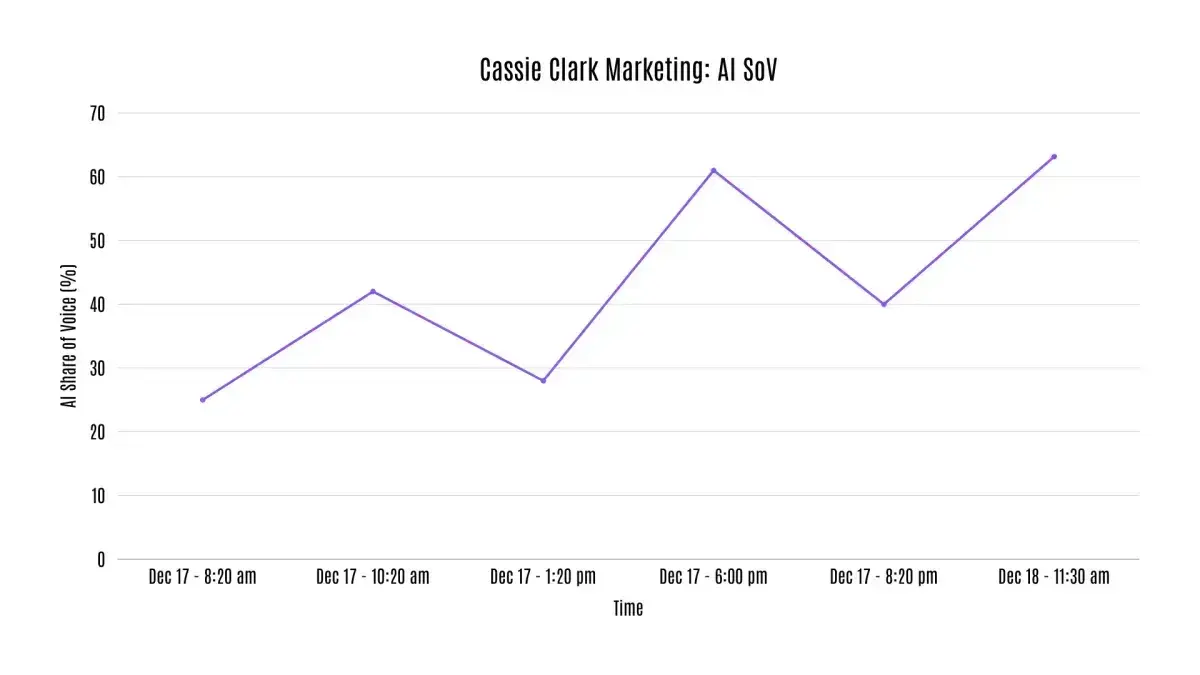
This case study demonstrates that AI SoV is not static and that metrics can be volatile. Determining the average AI SoV provides a more complete overview than a snapshot from a single prompt. With this metric, marketers understand where they’re losing influence in their answers and inform where they need to focus their AI search-optimization efforts.
HubSpot Pro Tip: HubSpot AEO’s Competitor Analysis tracks share of voice relative to competitors across the same prompt set. It shows how a brand’s relative presence shifts over time and where competitors are being cited instead of your brand.
4. Answer Prominence and Positioning
Answer prominence evaluates where and how a brand appears within an AI-generated response. This includes whether the brand is positioned as a primary recommendation, supporting option, or secondary mention.
Unlike rankings, prominence reflects narrative weight. Brands positioned at the top of the recommendation list, framed positively, or referenced repeatedly, exert greater influence on user perception, even without clicks.
What I use this metric for: This metric is especially useful for prompts such as “Recommend a…” or “What’s the best…”. When evaluating a brand’s positioning in AI-generated answers, I assess its position on a recommendation list. Prominence aligns closely with perceived trust and expertise.
Best for: Competitive analysis and category leadership tracking.
HubSpot Pro Tip: HubSpot AEO‘s Prompt Tracking lets teams monitor answer prominence at the individual prompt level. It shows whether the brand appears as a primary recommendation, supporting option, or is absent entirely for each tracked query.
5. Sentiment and Framing Within AI Responses
AI engines like ChatGPT do not simply list brands. Instead, they describe them. Tracking sentiment helps identify misalignment between brand positioning and AI interpretation.
Marketers can track sentiment by noting whether AI-generated mentions frame the brand positively, neutrally, or negatively. Pay attention to the descriptors, qualifiers, and contextual language the AI engine uses to talk about the brand.
What I use this metric for: When tracking sentiment and framing, I document the language AI engines use to describe a brand and its competitors in a spreadsheet. If a brand’s summary reflects the same positioning language as on landing pages and use-case content, I know the strategy is working.
Best for: Brand and product marketing alignment.
HubSpot Pro Tip: HubSpot AEO includes a Sentiment Analysis feature that measures how positively or negatively your brand is described in AI-generated responses on a scale from -100% to +100%. Use it to track sentiment drift after product launches, messaging changes, or shifts in third-party coverage rather than relying on manual spot checks.
6. AI-Assisted Engagement Signals
AI-assisted engagement tracks downstream behaviors influenced by AI exposure, including increases in branded search, direct traffic, demo requests, and assisted conversions.
Even when AI engines don’t send referral traffic, they often help influence evaluation paths. This sometimes looks like users researching options using tools like ChatGPT or Gemini, then searching for the brand directly in Google.
What I use this metric for: I’ve found the most reliable way to track AI-assisted engagement signals is to review Google Search Console, GA4, and other websites and digital marketing analytics tools. In many cases, an increase in branded keyword searches can be traced back to exposure in AI-generated answers.
I also like to pair quantitative data with qualitative feedback. Asking prospects how they heard about a product or service can give direct confirmation. If a lead says, “ChatGPT recommended the brand,” that’s the most truthful indicator that an AEO strategy works.
Best for: Growth and revenue teams reporting impact beyond clicks.
HubSpot Pro Tip: HubSpot’s Content Hub allows users to monitor and track content performance. These metrics help marketers understand visibility, both in AI answer engines and across the customer journey.
7. Content Reuse and Paraphrase Detection
Content reuse measures how often AI engines paraphrase or summarize a brand’s content without direct citation.
While harder to track, reuse indicates that content is being absorbed into AI-generated knowledge graphs. This reflects semantic authority and the strength of training signals.
What I use this metric for: I’ve found that the more a model trusts a brand, the more often it repeats their content word-for-word in related prompts. When this begins to occur, it indicates that the brand is building strong entity authority.
Best for: Advanced AEO programs.
HubSpot Pro Tip: Content reuse is inherently harder to track and often requires manual monitoring and qualitative analysis when there is no dedicated tooling. Pair paraphrase detection with entity-level optimization and structured data to improve consistency and reuse in AI-generated answers.
AEO Tracking and Dashboard Tools
AEO measurement works best when visibility data and downstream signals are tracked together. The tools below support scalable AEO KPI tracking and provide deeper coverage of HubSpot tools that connect AEO insights to content and performance reporting.
1. HubSpot AEO
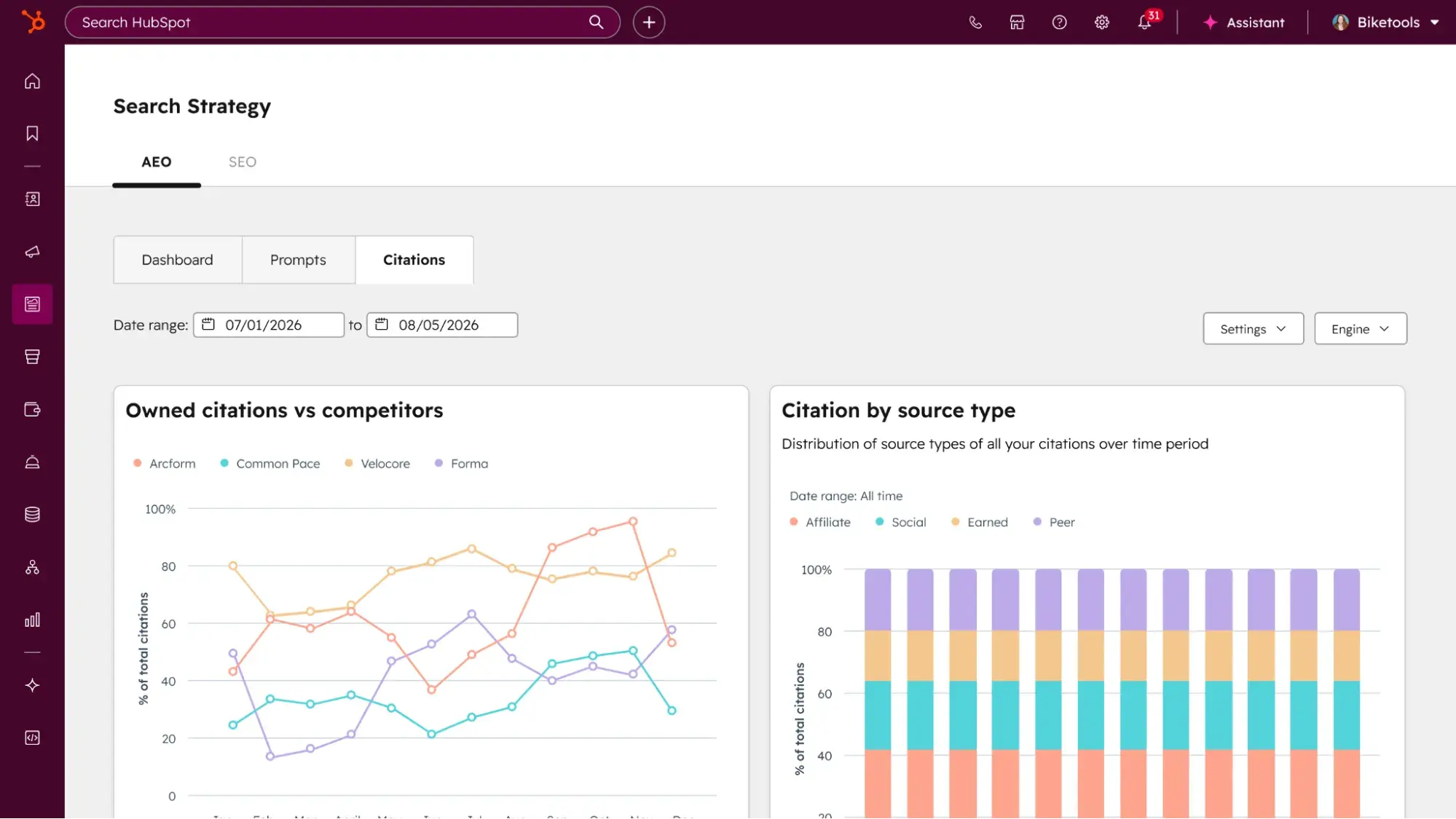
HubSpot AEO monitors and optimizes brand presence across leading answer engines, including ChatGPT, Perplexity, and Gemini. For marketing teams establishing an AEO practice, it provides direct measurement of the core indicators identified in this guide — from brand inclusion and AI share of voice to citation frequency and prompt-level sentiment.
HubSpot AEO centralizes measurement within a single dashboard, rather than relying on manual probe queries or fragmented visibility signals. This allows teams to track performance trends consistently and link visibility shifts directly to content and strategy updates.
Pricing: HubSpot AEO is available within Marketing Hub Pro and Enterprise, or as a standalone tool for $50/month.
What I like: Most AEO measurements require a combination of manual testing and spreadsheet tracking. HubSpot AEO consolidates core metrics—inclusion, share of voice, prominence, sentiment, and citations—into a unified view. This enables teams to monitor performance consistently rather than episodically. For marketers reporting AEO impact to leadership, a centralized dashboard makes it significantly easier to demonstrate directional progress over time.
2. XFunnel
XFunnel is a platform that measures AI search visibility, including brand inclusion, citation frequency, and overall AI search performance across multiple AI engines. It allows teams to test how brands surface in AI-generated answers for specific prompts and topics, rather than relying on assumptions or one-off checks.
AEO performance is inherently probabilistic, and the same prompt can generate different answers across models, sessions, or time periods. XFunnel enables users to easily repeat testing across a consistent prompt set, making AI visibility measurable rather than anecdotal.
XFunnel also helps validate whether schema, entity signals, and content structure are being recognized and reused by AI engines.
Pricing: Contact directly for a pricing quote.
What I like: XFunnel’s prompt-level tracking makes changes in AEO visibility observable over time. Instead of relying on screenshots or isolated examples, it enables teams to monitor relative movement and patterns, making it easier to link optimization work to measurable shifts in AI-generated responses.
3. HubSpot AEO Grader
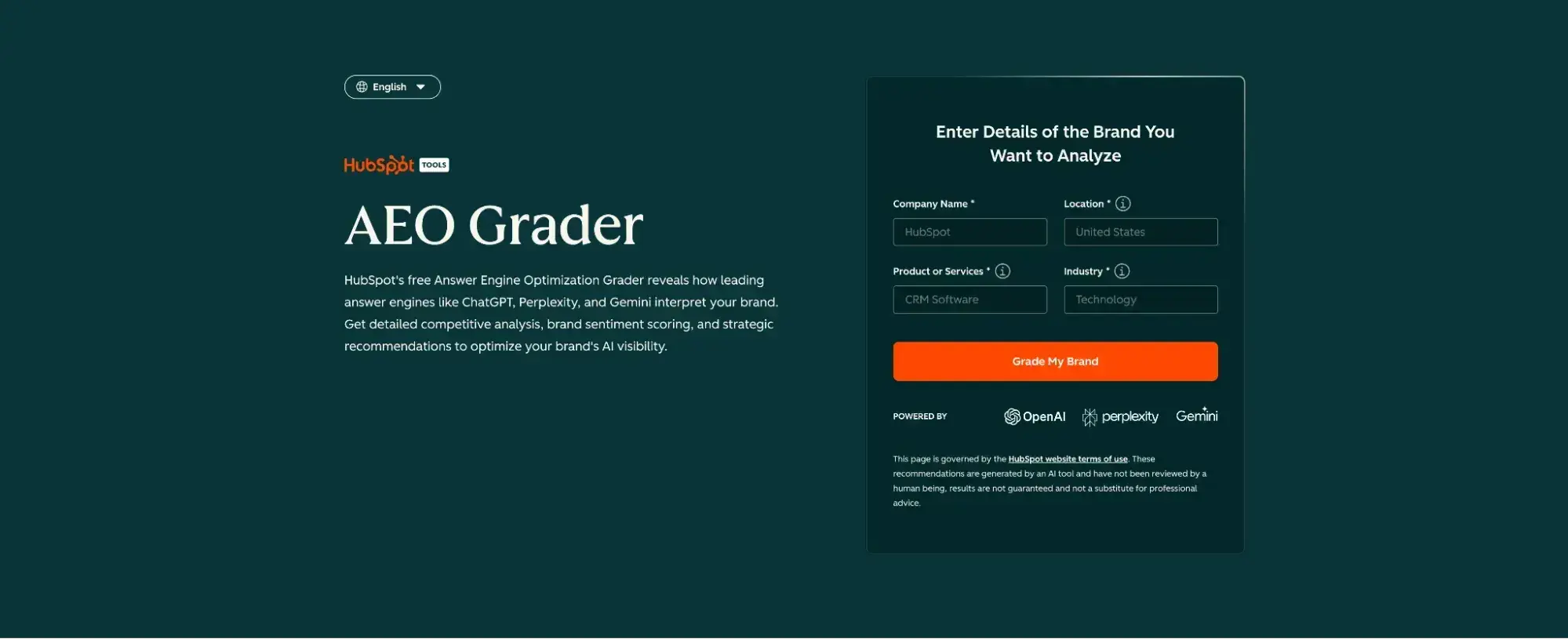
HubSpot’s AEO Grader is a diagnostic tool that evaluates a site’s readiness for answer engine optimization.
AEO performance often breaks down at the technical and structural level. The grader helps surface whether foundational signals, such as schema markup, content structure, and accessibility, are in place and functioning as intended. This makes it easier to identify gaps that may prevent AI engines from accurately interpreting or reusing content.
What I like: The AEO Grader is a good starting point. It provides a clear snapshot of whether the fundamentals are in place before teams invest time in deeper AEO testing or content updates. I also like that it frames AEO readiness in concrete, fixable terms rather than abstract recommendations.
4. HubSpot’s SEO Marketing Software
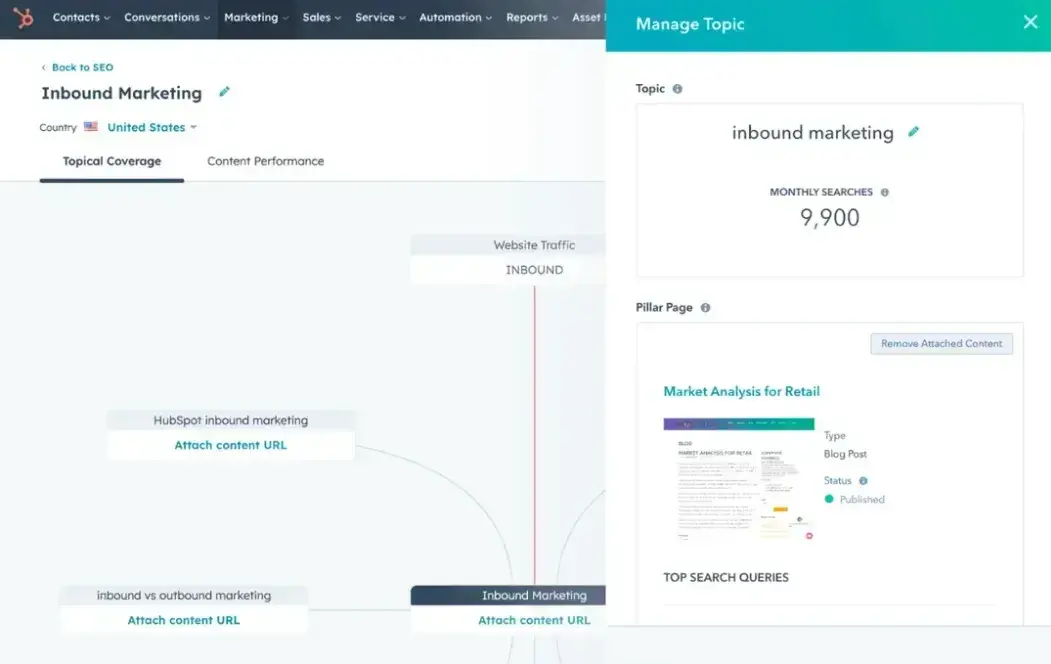
HubSpot’s SEO Marketing Software lives inside Marketing Hub and supports content optimization, performance tracking, and technical SEO recommendations across a site’s pages.
While these tools are designed for traditional SEO, several core capabilities directly support a brand’s AEO efforts. Structured content guidance, internal linking recommendations, and ongoing performance analysis all help reinforce the authority and clarity AI engines rely on when generating answers.
For teams already investing in SEO, HubSpot’s SEO Marketing Software provides a practical way to extend existing workflows into AEI measurement without introducing a separate system.
What I like: These tools integrate optimization and performance tracking into a single place. Instead of treating AEO as a separate initiative, teams can strengthen the underlying signals that support both traditional search and AI search visibility. It also makes AEO progress easier to explain to stakeholders who are already familiar with SEO reporting.
5. HubSpot’s Content Hub and AI Content Generator
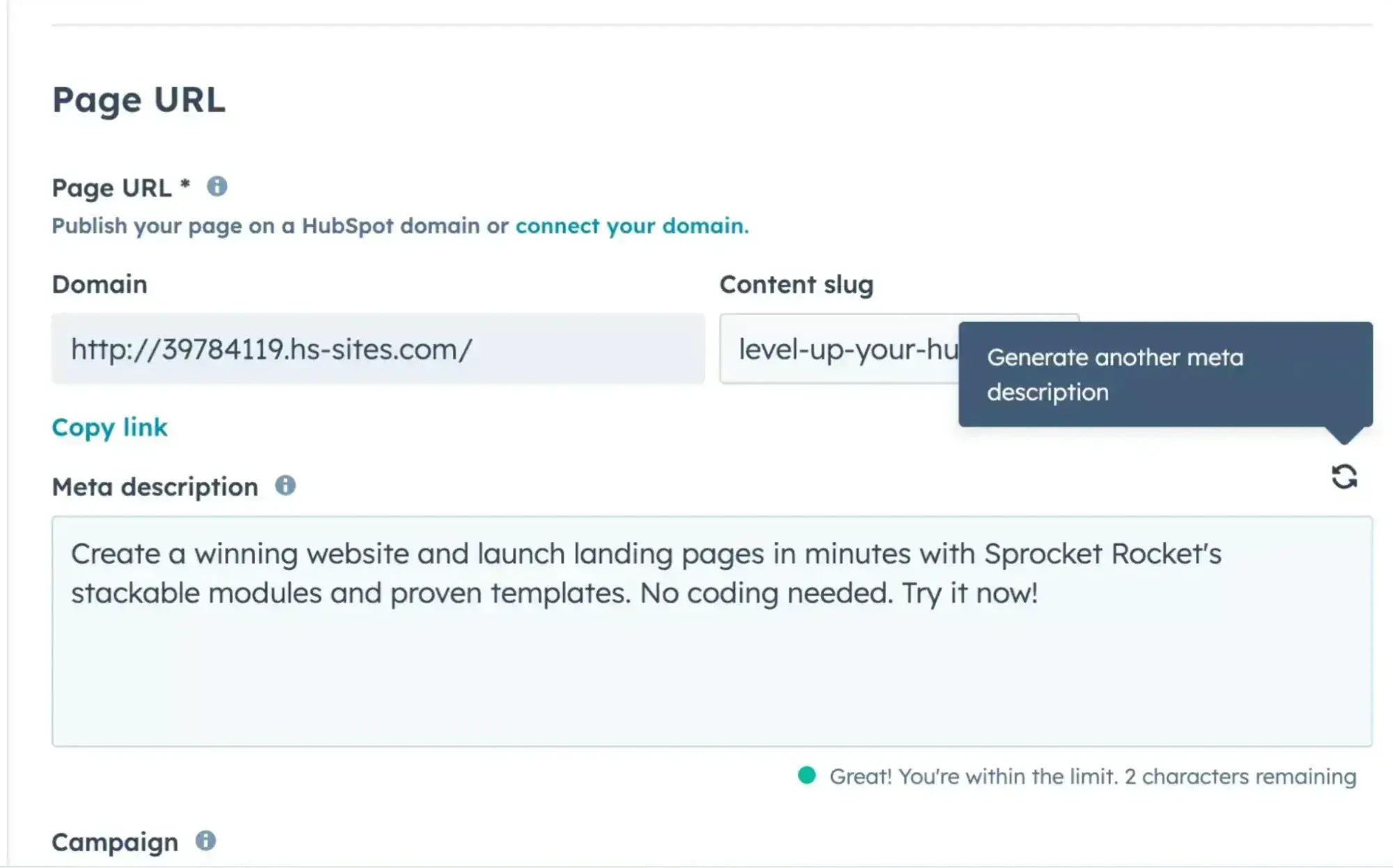
HubSpot Content Hub is a CMS that provides SEO suggestions during content creation, helping teams publish pages that are structured, optimized, and easier to maintain over time. While SEO and AEO are different initiatives, AI search visibility depends heavily on how content is structured, not just what it says.
Paired with HubSpot’s AI Content Generator, Content Hub supports schema-ready publishing and structured content workflows that improve how AI engines interpret, categorize, and reuse information. When content is consistently formatted and enriched with structured data, AI engines are more likely to surface it accurately in generated answers.
What I like: I appreciate that Content Hub provides structure to the writing process. Instead of retrofitting schema or formatting after the fact, teams can create content with AEO built in. That reduces technical debt and makes it easier to maintain consistency as content scales
6. Google Search Console
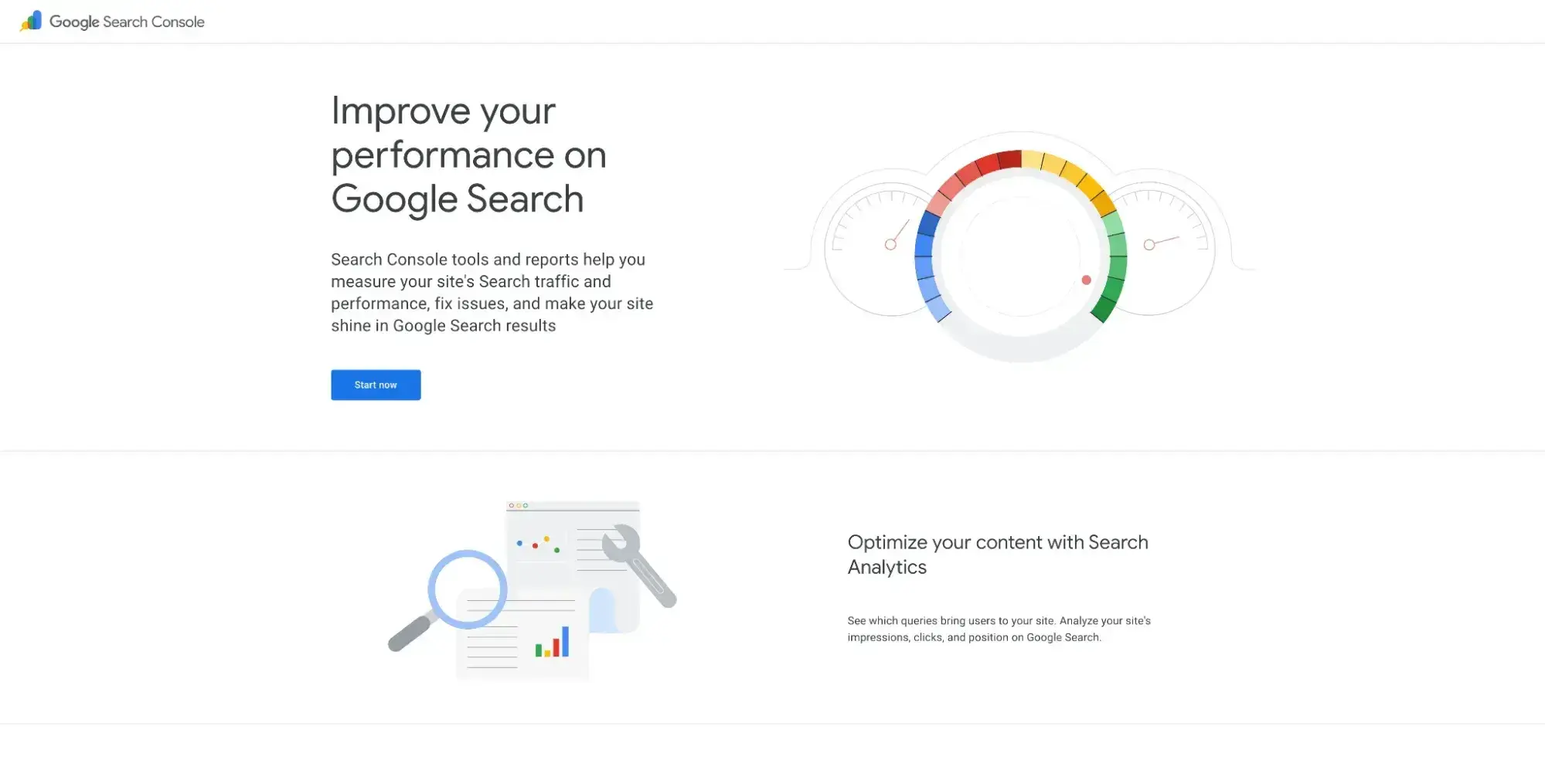
Google Search Console is a free analytics tool that provides visibility into how a site performs in Google Search, including impressions, clicks, queries, and indexing status. While Google Search Console does not track AI-generated answers directly, it plays an important role in measuring the downstream impact of AEO efforts.
Increases in branded search queries, impressions, and clicks often follow exposure in AI answer engines, especially when users evaluate options in tools like ChatGPT or Gemini and then search for a brand by name.
What I like: I use Search Console as a signal check, not a source of truth for AEO. When reviewed alongside AEO metrics, changes in branded and high-intent query patterns help identify which prompts are influencing real user behavior.
I also find it especially useful for surfacing high-intent queries that reflect downstream impact from AI-driven discovery and for connecting AEO work to metrics leadership teams already recognize.
7. Manual Tracking and Qualitative Review
Manual tracking involves reviewing AI-generated answers directly and documenting patterns that tools don’t consistently capture. These patterns include content reuse, paraphrasing, and the specific language AI engines use to describe brands.
What I do: I use spreadsheets to track recurring prompts, brand mentions, reused language, and framing patterns over time. While this approach is manual, it provides understanding and clarity where tooling falls short. It also helps validate whether AEO strategies are influencing how AI engines describe and recommend a brand, without relying on guesswork.
How to Set Up Attribution for AEO Metrics
Measuring AEO performance is only useful if it is linked to real business outcomes, and setting up attribution for AEO requires a different mindset than traditional SEO reporting. Rather than seeking direct referrals, teams should focus on how AI-driven discovery influences downstream behavior. Here’s how.
Step 1: Define AEO-assisted conversions.
Begin by defining which conversion events are plausibly influenced by AI-driven discovery. These are rarely net-new actions and more often signal evaluation already in progress.
Look for:
- Increases in branded search
- Pricing page visits
- Demo requests
- Sales conversations that reference third-party recommendations.
HubSpot Pro Tip: In HubSpot, these AEO-assisted conversion events can be defined and reviewed alongside existing lifecycle stages, making it easier to align AI-driven influence with revenue-relevant actions.
Step 2: Segment AI-influenced traffic.
AI platforms rarely provide clean referral data, making segmentation critical. Use custom channels, assisted attribution, or campaign tagging where possible to group downstream behaviors that follow AI exposure.
HubSpot Pro Tip: Teams using HubSpot often create custom channels or views to group AI-influenced traffic, enabling consistent downstream behavior review even when direct referrer data is missing.
Step 3: Align AEO metrics with existing attribution models.
AEO should complement, not disrupt, existing attribution frameworks. Use blended or multi-touch models to account for influence earlier in the buyer journey. This approach avoids defaulting to last-click logic, which consistently undervalues AI-influenced discovery.
HubSpot Pro Tip: HubSpot’s attribution reporting supports multi-touch and blended models. This can help account for AI-driven discovery earlier in the buyer journey without falling back on last-click bias.
Step 4: Report AEO alongside SEO and demand metrics.
AEO metrics are most effective when reported alongside SEO, demand generation, and pipeline metrics. When treated as an upstream influence layer, AEO helps explain changes in branded demand and deal quality without positioning it as a standalone revenue metric.
HubSpot Pro Tip: Reporting AEO metrics in HubSpot dashboards enables teams to contextualize AI visibility alongside SEO performance, demand generation, and pipeline data that leadership already monitors.
Frequently Asked Questions About AEO Metrics
How often should we update our AEO metrics and content?
Most teams benefit from reviewing AEO metrics monthly and updating core content quarterly. Monthly reviews help identify shifts in brand inclusion, citation frequency, and share of voice across AI engines, while quarterly updates allow teams to respond to meaningful trends rather than day-to-day variance.
In high-volatility categories, such as AI tools, fintech, or healthcare, more frequent prompt testing and content refreshes may be necessary to stay competitive.
How do we label and track AI referrals in analytics?
To track AI referrals in analytics, teams should rely on a combination of custom source definitions, assisted-conversion reporting, and branded or high-intent query analysis in tools such as Google Search Console and GA4.
Tracking these signals together helps identify downstream behavior influenced by AI-driven discovery, even when direct attribution is unavailable.
What is a good baseline for AEO visibility?
A practical AEO baseline starts with measuring brand inclusion rate and citation frequency across a defined prompt set tied to core use cases and buying-stage questions. From there, teams can establish an average AI share of voice across those prompts and track changes in prominence and sentiment over time. Most teams find that consistent inclusion across priority prompts — even at a modest rate — provides enough signal to identify optimization opportunities and report directional progress to leadership.
Does AEO replace SEO?
AEO does not replace SEO. SEO establishes crawlability, structure, and authority, all of which AI engines rely on when generating answers. AEO extends measurement beyond rankings and clicks to capture how that authority is interpreted, summarized, and surfaced within AI-driven discovery and evaluation workflows.
What if we see no direct clicks from AEO?
A lack of direct clicks does not mean AEO isn’t working. Many AEO outcomes show up as assisted signals, such as increased branded search, higher-intent queries, or shorter sales cycles.
In AI-driven discovery, influence often happens before a user ever visits a website, which is why AEO metrics should be evaluated alongside demand and pipeline indicators, not in isolation.
Turning AEO Metrics Into Actionable Insight
AEO metrics are designed to measure visibility and influence in AI-driven discovery, where traditional rankings and referral paths don’t always apply. By tracking answer engine optimization metrics, marketing teams can report impact beyond rankings and traffic.
Tools like HubSpot AEO, HubSpot’s SEO Tools, Content Hub, AEO Grader, and XFunnel make AEO tracking more accessible and actionable. When paired with clear attribution models, these metrics help teams connect AI visibility to real business outcomes with greater confidence and consistency.
