

There’s a common misconception that GEO is a technical problem.
Just scroll through LinkedIn or X for 30 seconds, and you’ll find the next viral GEO hack.
- Like “create an AI info page” so LLMs can easily understand your brand.
- Maybe “create markdown versions of your content” to skyrocket AI visibility.
- Perhaps “get an automated Claude audit” that scans your robots.txt and automatically generates an llms.txt file for you.
But most of these tactics have limited impact because they don’t address how LLMs actually decide which brands to recommend.
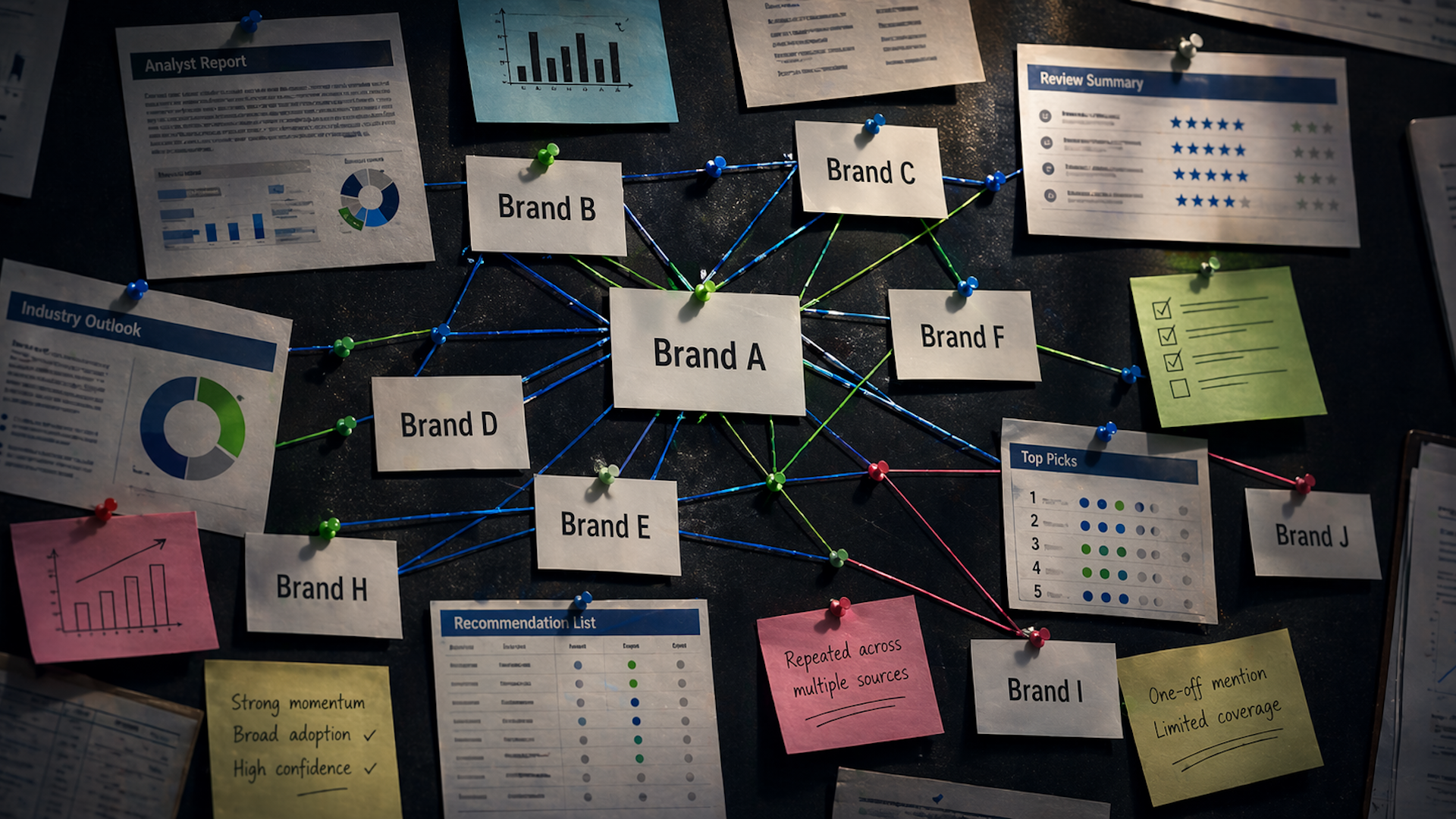
GEO performance is shaped less by technical tweaks and more by how consistently your brand is positioned, categorized, and validated across the web.
If GEO performance is driven by positioning and consensus, it’s no surprise that many widely promoted tactics fall short.
Just search [GEO tactics for LLM visibility], and you’ll see the same tired ideas.
The recommendations below aren’t wrong, but they’re mostly table stakes. Many have misinterpreted this advice and taken these ideas to extremes.

Useless FAQ insertions
Google’s own documentation recommends implementing FAQs with schema.
But all the hype around FAQs for GEO has led brands to make poor choices about which FAQs to include in their content.
Instead of answering questions that actually matter, they end up slapping useless questions at the bottom of the page because they think it “helps with GEO.”
Meanwhile, it accomplishes nothing for the end user. Here’s one such example:

Putting ‘key takeaways’ at the top of every article
Another glorified tactic that isn’t inherently bad, but the upside is overhyped.
Short answer summaries can improve readability for humans, but there’s no strong public evidence that a “key takeaways” block materially improves AI visibility on its own.
Over-formatting pages for LLM readability
This would mean forcing every page into rigid Q&A patterns, stuffing bullet points into every section, and jamming HTML tables into sections where they don’t belong.
Some assume LLMs need heavy formatting assistance in order to retrieve content, so they resort to copywriting tricks like “chunking” which can overcomplicate the editorial process.
Dig deeper: How to chunk content and when it’s worth it
Chasing Reddit for GEO
Others are obsessed with chasing Reddit for GEO, and it’s causing brands to spam Reddit.
This is bad for countless reasons already outlined by Eli Schwartz, but it further supports the argument that GEO isn’t a technical problem.
Reddit represents the voice of real people, and that’s why moderators are vigilantly hunting down inauthentic activity like astroturfing or “SEO shaping” on threads where software evaluation is happening.
Your customers search everywhere. Make sure your brand shows up.
The SEO toolkit you know, plus the AI visibility data you need.
Start Free Trial
Get started with

GEO is a brand positioning problem
GEO is a strategic issue at the executive level, not an SEO issue at the operational level.
The biggest GEO upside doesn’t come from technical optimization — but rather, the coordination of brand positioning, messaging, and reputation management across on-site and off-site channels.
Everyone assumes the SEO team should be 100% responsible for all aspects of GEO, yet they control only a limited portion of how LLMs form their opinions of a brand.
| SEO team | On-site content pages, blogs, comparison guides, resource pages, etc. |
| Brand team / PMM | Homepage messaging, product pages, solutions pages, pricing. |
| PR team | External validation, press, and news. |
| Partnerships | Affiliates, analysts, resellers, etc. |
| Customer marketing | Reddit, social media, and review websites. |
Ross Hudgens recently posted about this problem. If none of these sources aligns with a consistent narrative, it will be challenging for LLMs to reach a consensus about your brand.
GEO is a category alignment problem
Let’s examine [best AI SDR agents] where Coldreach has the No. 1 ranking position with an AI citation.
Despite a high web ranking plus earning the URL citation, there’s no recommendation for their brand regarding the best AI SDR agents.
This tactic worked phenomenally well during the traditional SEO golden era when rankings and clicks were the goal.
AI, being the great normalizer, has reduced the effectiveness of this playbook dramatically.

Get the newsletter search marketers rely on.
Listicles won’t brute force your brand into AI recommendations
The main difference between SEO vs GEO is that you can’t bulldoze your way into brand recommendations for a topic your brand lacks recognition for.
We just saw that above with the best AI SDR agents example.
Here’s another example: [best insider threat management] where the URL citations are earned by Exabeam, SpyCloud, and Pathlock.
None of these brands is recommended in the answer summary, yet they are all deploying listicles.
AI is the great neutralizer of this tactic, since it just scrapes and summarizes their listicles and recommends every other brand.
This is another reason why reporting on “citations” as a GEO success metric is a failure in isolation, given that there’s no corresponding brand recommendation.
Instead, the AI Overview recommends the brands that actually deserve to be there, such as Teramind, Proofpoint, DTEX, etc.

Most brands have no idea how they’re actually represented across LLMs
Despite the unavoidable element of randomness in AI answers, you should reverse-engineer how LLMs piece together information about your brand.
Start with bottom of funnel prompts like:
- “What’s the best Generative Engine Optimization (GEO) solution for an enterprise B2B company in the [industry] with [features]?”
Then evaluate the answers and sources systematically.
New research by Kevin Indig found that web search position has the greatest impact on LLM citation rates. This is further validation that GEO is fundamentally connected to traditional SEO, as LLMs rely on web search (grounding) to generate answer summaries, especially for bottom-of-funnel product evaluation queries.
The key takeaway is that if your pages aren’t ranking highly in traditional SEO, third parties and external websites may control the narrative about your brand.

Most high-volume, high-competition categories are dominated by third parties
It’s useful to understand which product categories are dominated by third parties versus first-party so you can prioritize marketing efforts accordingly.
In this example of [best employee monitoring software], the brand recommendation rate is around 90% meanwhile the citation rate is around 15%.
This suggests the brand is well covered across third-party pages where LLMs are extracting relevant information.

If we examine the SERP, it’s clear that third-party sources account for the overwhelming majority of citations.
Citations are coming from affiliates such as Business.com, CurrentWare, PC Mag, Gartner, and other reputable sources.
The key takeaway: if your brand wants to compete in high-volume categories, you may be forced to play the affiliate game.
What this means for your GEO strategy
Technical website hygiene still matters. If you have a vibe-coded, JavaScript-heavy website with poor internal linking and flat architecture, you’re unlikely to perform well in GEO.
Things like XML sitemaps, page indexing, site taxonomy, and internal linking structure are still crucial for retrieval-augmented generation and training data ingestion.
However, these are the fundamental pillars of SEO that only create the foundation for GEO to be built upon, rather than accelerating GEO itself.
GEO is a brand positioning and category alignment exercise, not a technical SEO audit.
Questions you should be asking about GEO:
- Are LLMs actually recommending our brand, or only citing our pages?
- When our brand appears in AI answers, what category is it bucketed into? And is that the category we want to own?
- Do LLMs associate our brand with the right buyer, use case, and problem set? Or are they grouping us with legacy competitors?
- Are third-party sites, review platforms, Reddit threads, and analyst pages shaping more of our AI visibility than our own content?
- Is there a consistent positioning narrative across our homepage, product pages, comparative content, review websites, and third-party affiliates?
- Are we trying to force visibility with listicles and formatting tricks instead of earning recommendation status through market and category alignment?
- Do we know which prompts matter most at the bottom of the funnel, and have we tested how our brand appears for those prompts?
- Within our flagship category, are AI answers being shaped mostly by first-party sites or by affiliates and review platforms?
- If third parties dominate the category, do we have a plan to earn stronger coverage there?
- What is the role of YouTube in our niche? How often does YouTube influence LLM answers, and are we represented there?
- Are we publishing content that actually helps buyers understand our positioning and differentiators?
- Or are we just adding FAQ blocks and “key takeaways” because it looks like productive GEO work?
- What outdated, inaccurate, or weak brand associations keep resurfacing in AI answers? Which team owns fixing those associations once we find them?
Stop chasing GEO hacks
The core GEO problem is whether LLMs believe your brand belongs in the answer.
LLMs need to reach consensus on your brand, shaped by reputation, category alignment, and repeated confirmation across the web.
Technical SEO provides the foundation, but it doesn’t help LLMs reach a conclusion about your brand’s market positioning.
The bigger opportunity is to align messaging across every surface that influences how LLMs interpret your brand and why it deserves to be recommended.
That means GEO isn’t a siloed optimization problem, but rather an ecosystem visibility problem.
It’s time to stop chasing GEO hacks, because AI is neutralizing ineffective and outdated techniques once and for all.
Contributing authors are invited to create content for Search Engine Land and are chosen for their expertise and contribution to the search community. Our contributors work under the oversight of the editorial staff and contributions are checked for quality and relevance to our readers. Search Engine Land is owned by Semrush. Contributor was not asked to make any direct or indirect mentions of Semrush. The opinions they express are their own.
