

If a brand is not visible in answer engines, it’s missing critical early-stage influence. According to McKinsey, 50% of consumers now use answer engines, and more than 70% rely on it to ask questions and gather information. That means a growing share of discovery occurs within AI tools and before users click through to websites.
![Free AEO Grader: See Your Brand's Visibility in Answer Engines [Free Tool]](https://no-cache.hubspot.com/cta/default/53/d4233c10-60b6-46d7-9852-c71dde8507b6.png)
But how do marketers know how their site is performing in these new search models? Marketers track performance using AEO tools such as Profound and Bluefish AI. These AI visibility platforms help marketing teams monitor, measure, and improve how their brand appears in AI-driven search experiences.
As AEO becomes a priority, many teams are evaluating Profound vs. Bluefish AI for AEO to determine which platform delivers the strongest visibility, safest brand positioning, and clearest ROI. This guide breaks down what each tool offers, how they differ, and which solution best supports your AEO strategy.
Table of Contents
What is Profound?
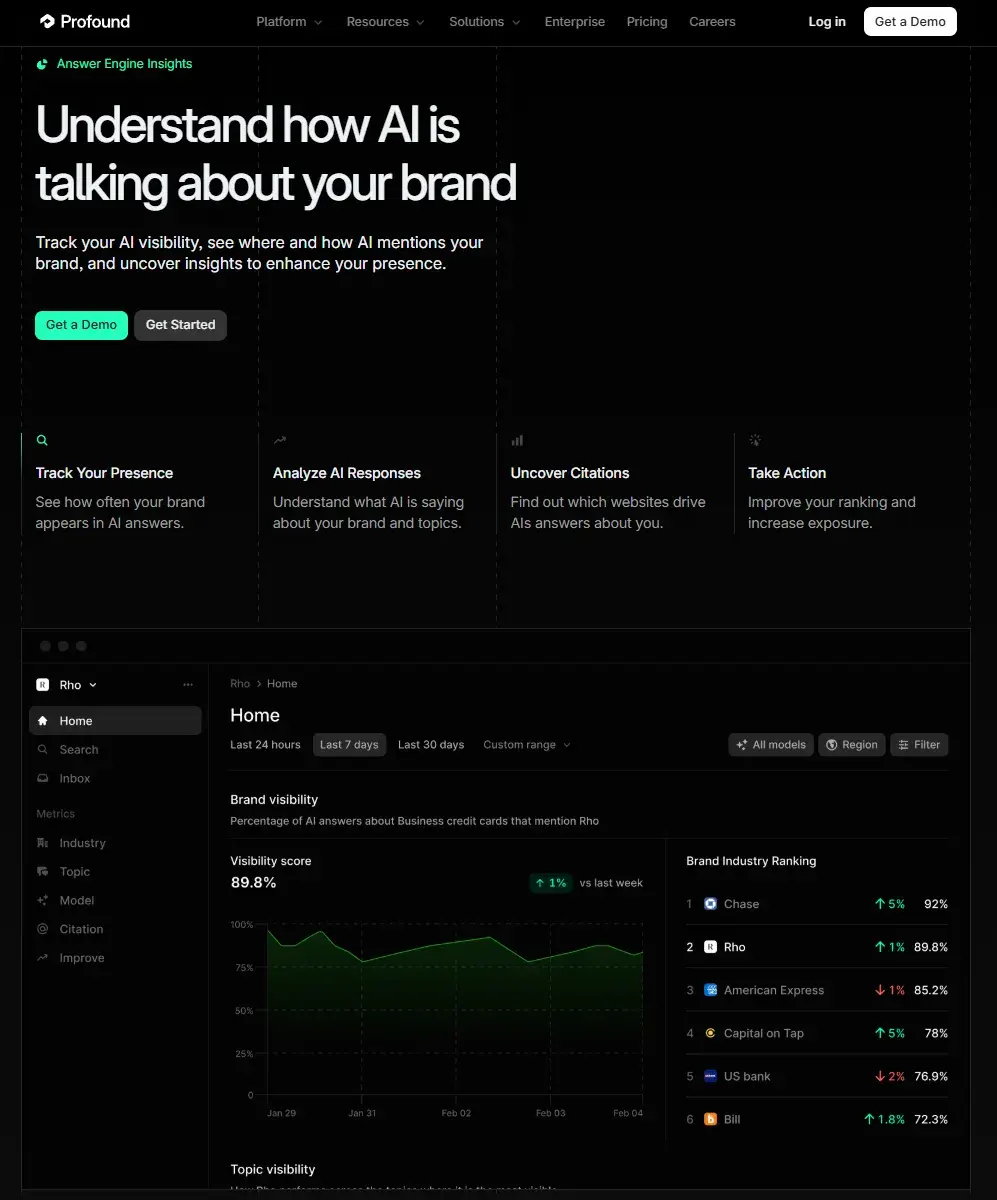
Profound is an enterprise-grade AI search visibility and Answer Engine Optimization platform designed to help brands understand and improve how they appear inside AI-generated answers.
At its core, Profound specializes in AI visibility tracking and citation analysis. The platform monitors how brands are referenced across major AI systems, tracks citation sources, and surfaces prompt-level insights so teams can see exactly where and why they appear in AI responses.
For marketing and SEO leaders, Profound stands out for its depth of data, enterprise-ready reporting, and workflow integrations. It connects AI search visibility to measurable business outcomes, helping teams move from passive monitoring to active optimization.
As AI answers increasingly replace traditional blue links, platforms like Profound give brands the infrastructure to measure, attribute, and improve their presence inside AI-driven search experiences.
What is Bluefish?
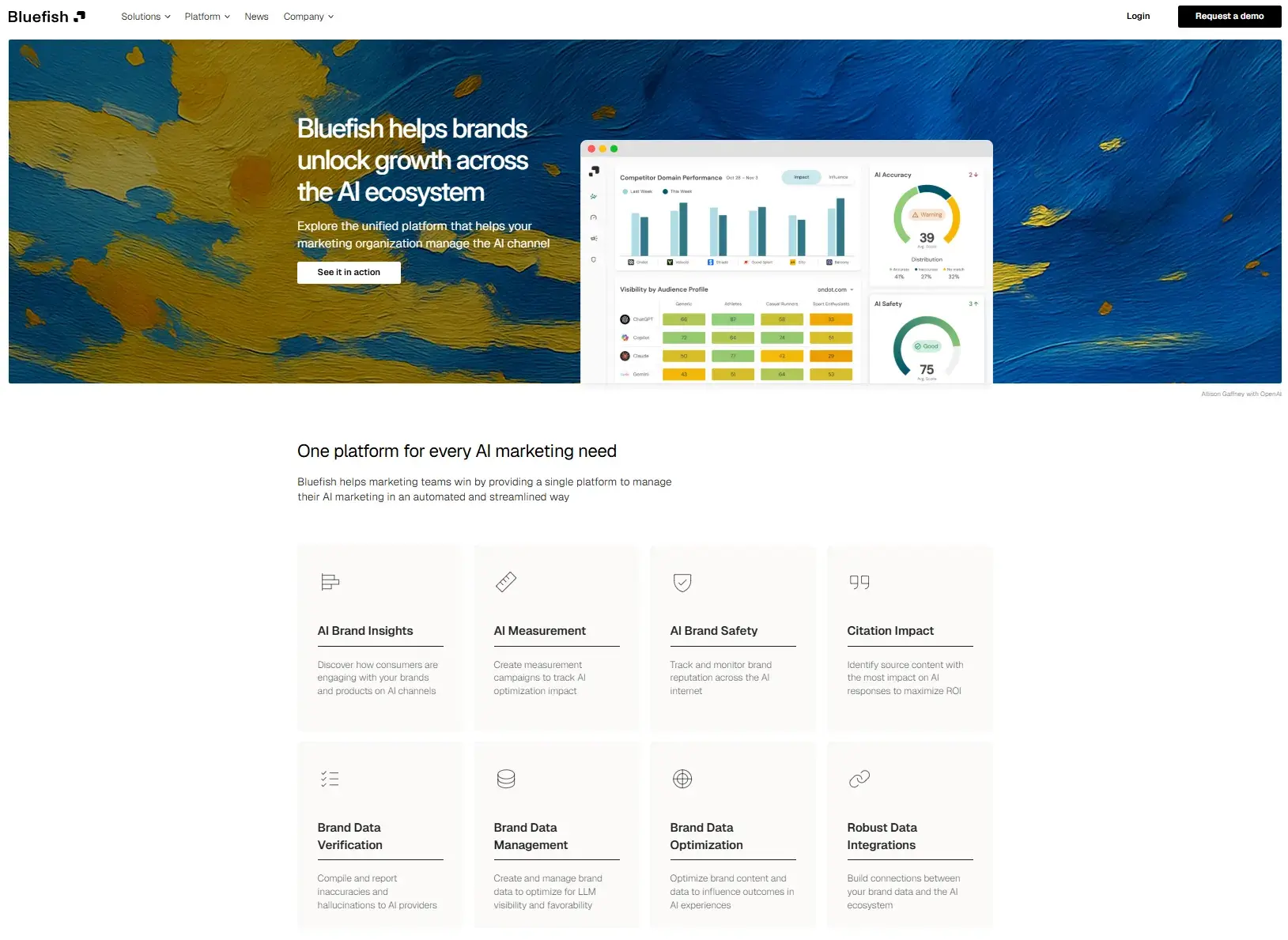
Bluefish AI is an AI visibility and brand safety platform built to help organizations monitor how their brand is referenced in AI-powered search and generated answers while prioritizing risk management and accuracy.
Bluefish AI goes beyond basic visibility metrics and emphasizes protecting brand integrity. It alerts teams when their brand is misrepresented, associated with harmful content within search generative experiences (SGE), or appearing in AI responses that could pose reputational risk.
For risk-sensitive industries, such as healthcare, finance, legal, and enterprise brands operating at scale, Bluefish AI provides context-rich insights, governance workflows, and signal filtering that help marketers stay in control of how AI systems cite and present their content.
As AI-generated answers become part of the customer journey, tools like Bluefish offer a differentiated lens on visibility that couples optimization with oversight, helping teams not just track presence but manage the risk around that presence.
Profound vs. Bluefish AI for AEO: At a Glance
Before committing to an enterprise platform, many teams start with free AEO tools to benchmark.
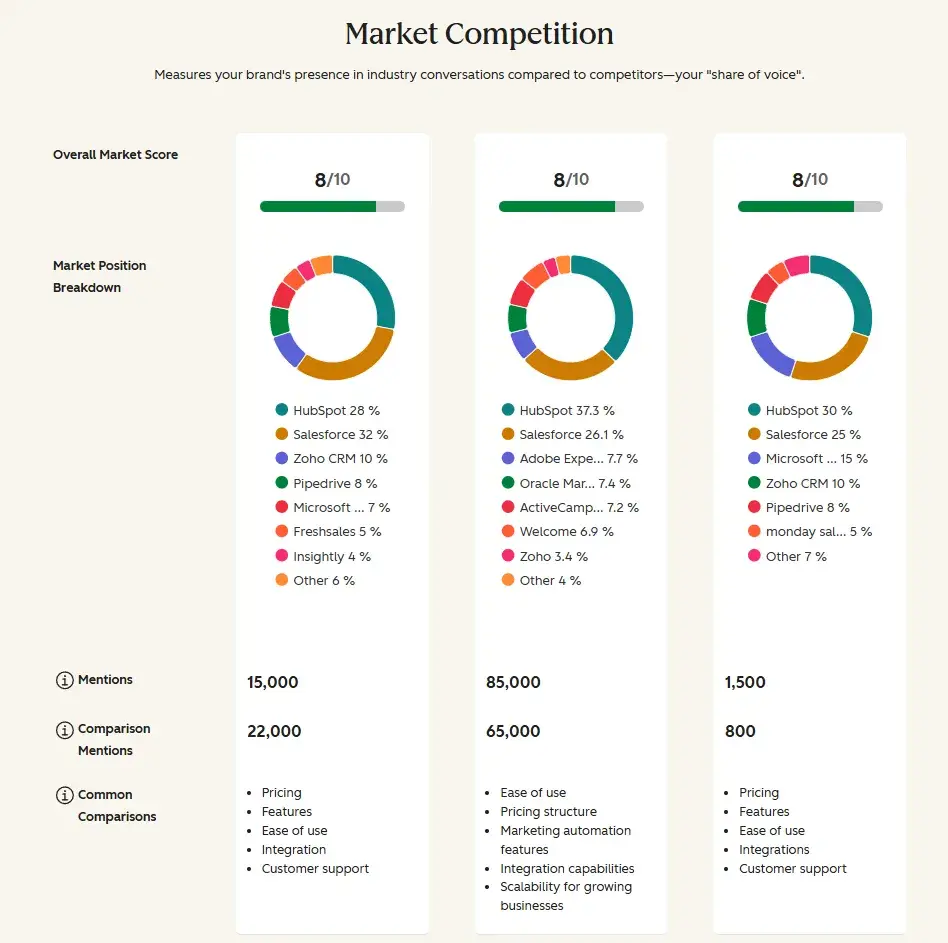
HubSpot’s AEO Grader offers a free snapshot of how major answer engines represent any brand, giving marketing leaders a fast, practical way to assess AI visibility before investing in a tool like Profound or Bluefish AI. Here’s what it looks like:
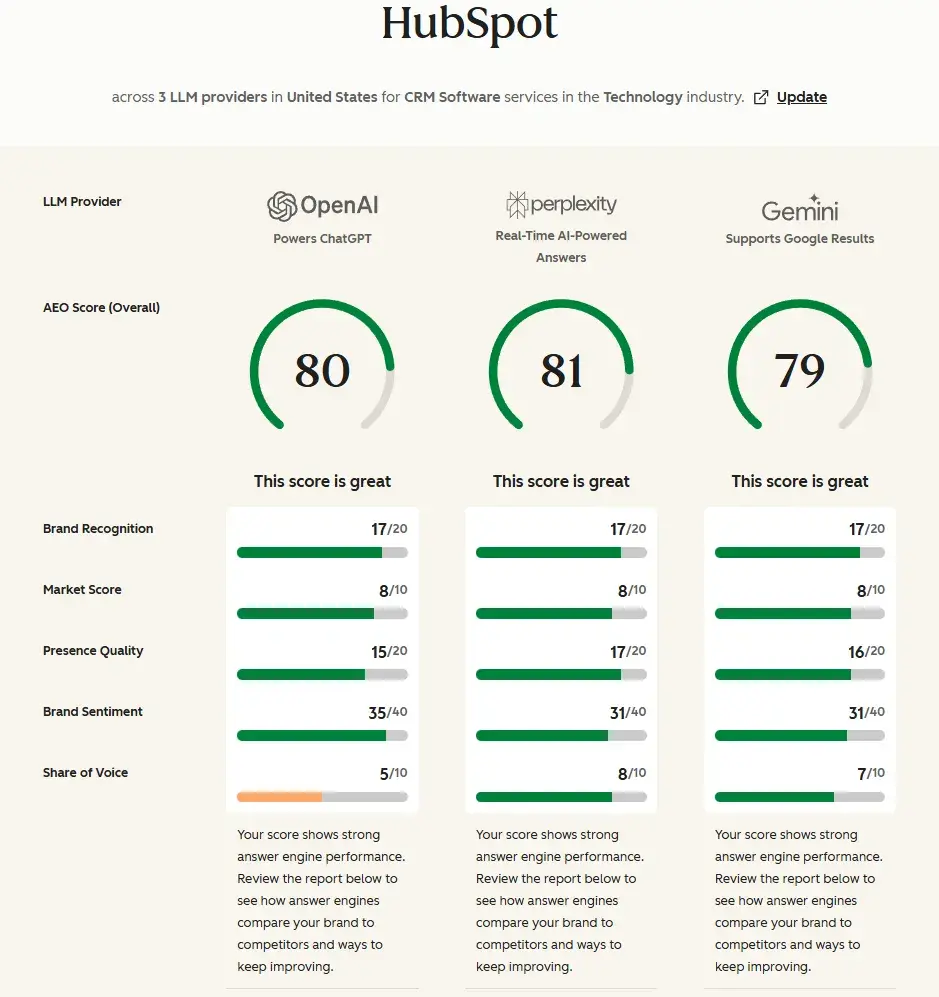
The platform unlocks a detailed breakdown of how a user’s brand performs across AI systems. Marketers can review competitive positioning, visibility scores, and how often their brand is cited compared to others in their space.
The Market Competition score highlights where a brand stands, while built-in recommendations outline specific actions to improve AI visibility, from content strategy adjustments to authority-building opportunities.
The tool also provides:
- Brand recognition metrics (market position, mention depth, source quality).
- Strength and trajectory analysis across AI platforms.
- Contextual themes associated with your domain.
- Sentiment analysis showing how positively AI engines reference your brand.
HubSpot AEO Grader helps marketers benchmark AI visibility before choosing a platform, making it a useful first step in evaluating Profound vs Bluefish AI for GEO (generative engine optimization) and determining where deeper investment is justified.
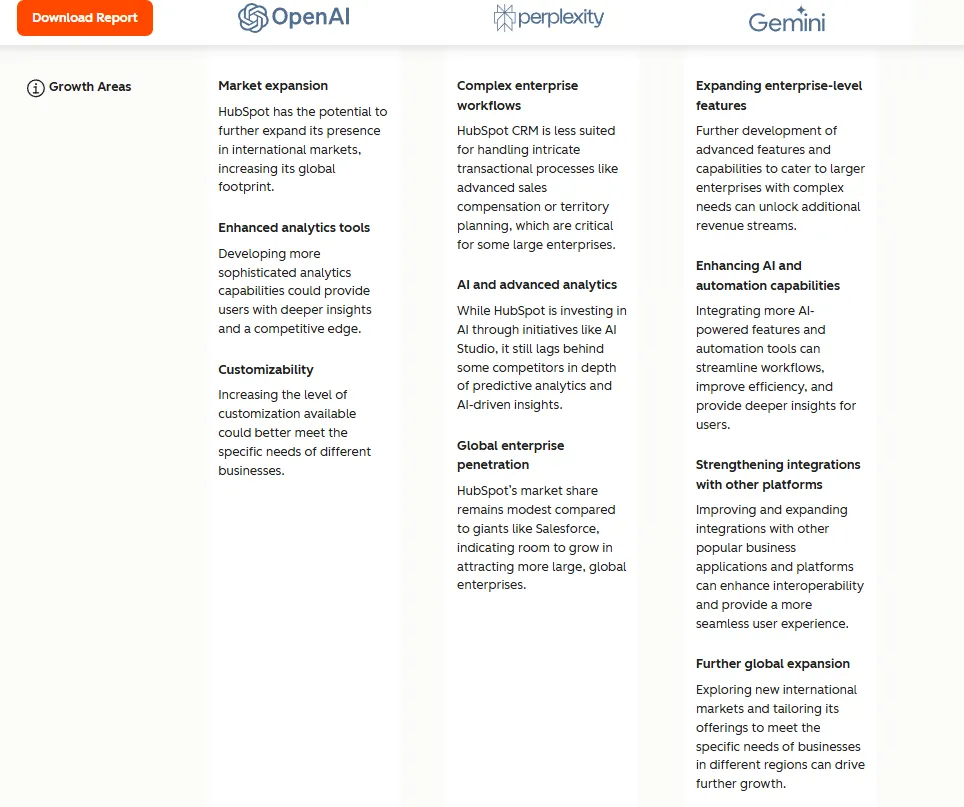
The free grader tool will also provide marketers with actions. Marketers can start resolving AEO issues using free tools before “graduating” to paid tools like Profound or Bluefish. Here’s what the detailed actions look like:
Profound vs. Bluefish Compared
Here’s a comparison of four key factors to help teams decide between Profound AI vs. Bluefish AI for AEO.
Supported AI Engines and Platform Coverage
For marketers investing in AEO, platform coverage is critical. Buyers search on multiple platforms and move between Google AI Overviews, ChatGPT, Perplexity, Gemini, and other AI systems. If a monitoring platform tracks only a limited subset, marketers are making decisions with incomplete data.
How Bluefish AI Handles Platform Coverage
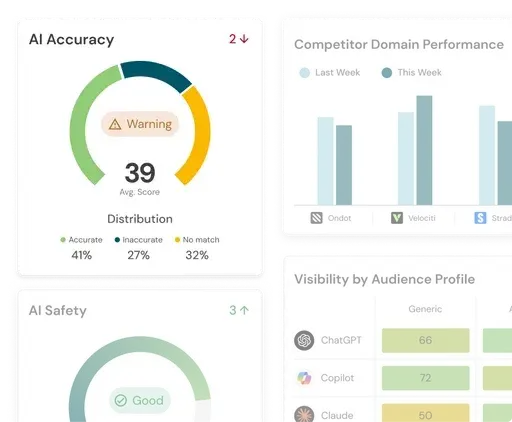
Bluefish AI focuses on monitoring brand representation across major generative AI platforms, particularly those influencing consumer research and enterprise risk exposure.
Its coverage prioritizes widely used AI engines where misinformation or brand misrepresentation could pose reputational risk. Rather than emphasizing exhaustive engine lists, Bluefish centers its tracking around high-impact environments and alert-driven monitoring.
This approach supports organizations that care less about experimental model coverage and more about safeguarding presence in the most commercially relevant AI ecosystems.
How Profound Handles Platform Coverage
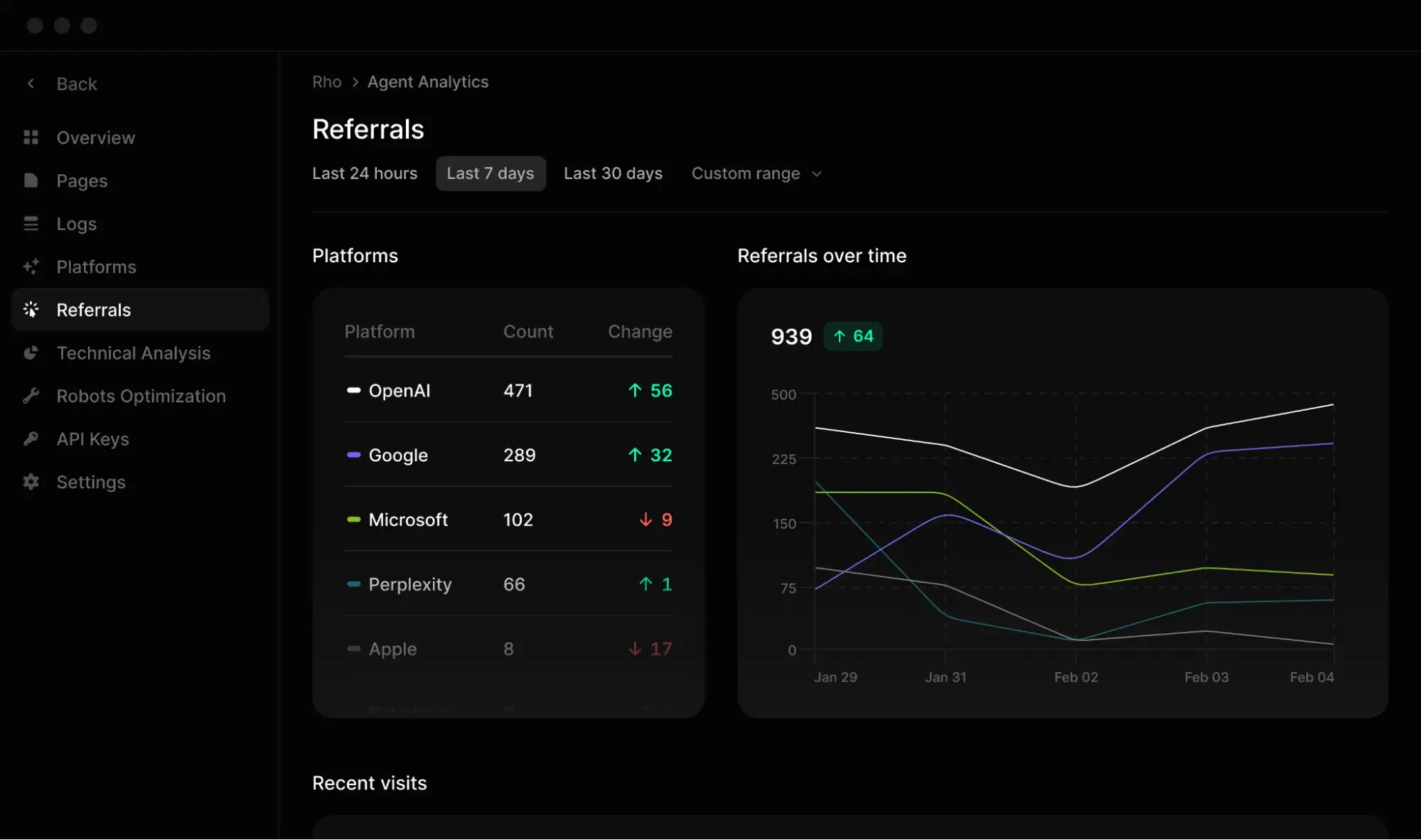
Profound takes a broader visibility-first approach compared to Bluefish AI. Profound supports Google AI Overviews, ChatGPT (including Search), Perplexity, Claude, Gemini, Microsoft Copilot, Grok, DeepSeek, and other emerging models.
Using front-end capture and prompt-level tracking, Profound enables marketers to analyze how responses appear across multiple engines, compare citation order, and monitor competitive share of voice at scale. This makes it particularly strong for teams running proactive, multi-engine AEO programs.
Who wins?
- Profound wins for brands that want the widest engine coverage and future-proof monitoring across established and emerging AI systems.
- Bluefish AI wins for brands whose priority is monitoring high-impact platforms with a strong emphasis on brand risk and representation control.
Reporting Depth and Competitive Intelligence
Tracking AI visibility is only useful if it drives action. Marketing leaders need more than mention counts — they need context, competitive positioning, and insight into how AI narratives are shaped.
How Bluefish AI Handles Reporting and Competitive Intelligence
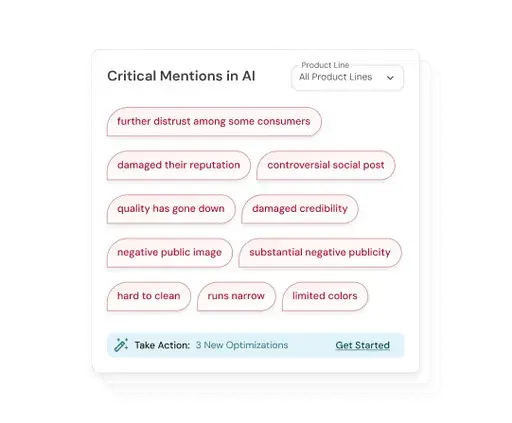
Bluefish AI focuses on brand safety monitoring and misinformation alerts, surfacing when a brand is misrepresented, associated with sensitive topics, or inaccurately cited in AI responses. Bluefish emphasizes signal clarity:
- Where a brand appears.
- Whether the context is accurate.
- Whether intervention may be required.
This makes it particularly valuable for compliance-driven teams where narrative control outweighs aggressive optimization.
How Profound Handles Reporting and Competitive Intelligence
Profound leans heavily into analytical depth. Profound specializes in AI visibility tracking and citation analysis, allowing teams to evaluate citation order, share of voice, prompt-level variations, and cross-engine positioning. With granular tracking, marketers can analyze:
- Which competitors are cited first.
- How messaging shifts across engines.
- Which prompts trigger visibility gains or losses.
- How citation performance and AI trends change over time.
For teams treating AEO as a growth channel rather than a monitoring function, this depth supports structured experimentation and attribution.
Who wins?
- Profound wins for teams that require deep investigative reporting, citation analysis, and competitive benchmarking.
- Bluefish AI wins for teams that prioritize brand accuracy, governance visibility, and fast identification of reputational risk.
Integrations and Workflow Connectivity
For AEO to drive measurable ROI, it can’t sit in a silo. Profound and Bluefish AI integrate with GA4, BI tools, and CRM systems like HubSpot.
How Bluefish AI Handles Integrations and Workflow Connectivity
Bluefish AI supports API access and data exports, allowing teams to bring AI monitoring insights into broader reporting environments. The focus is on governance workflows, alert routing, and structured reporting for compliance and brand teams. For organizations that prioritize oversight, this ensures that AI-related brand risks are surfaced to the right stakeholders quickly.
How Profound Handles Integrations and Workflow Connectivity
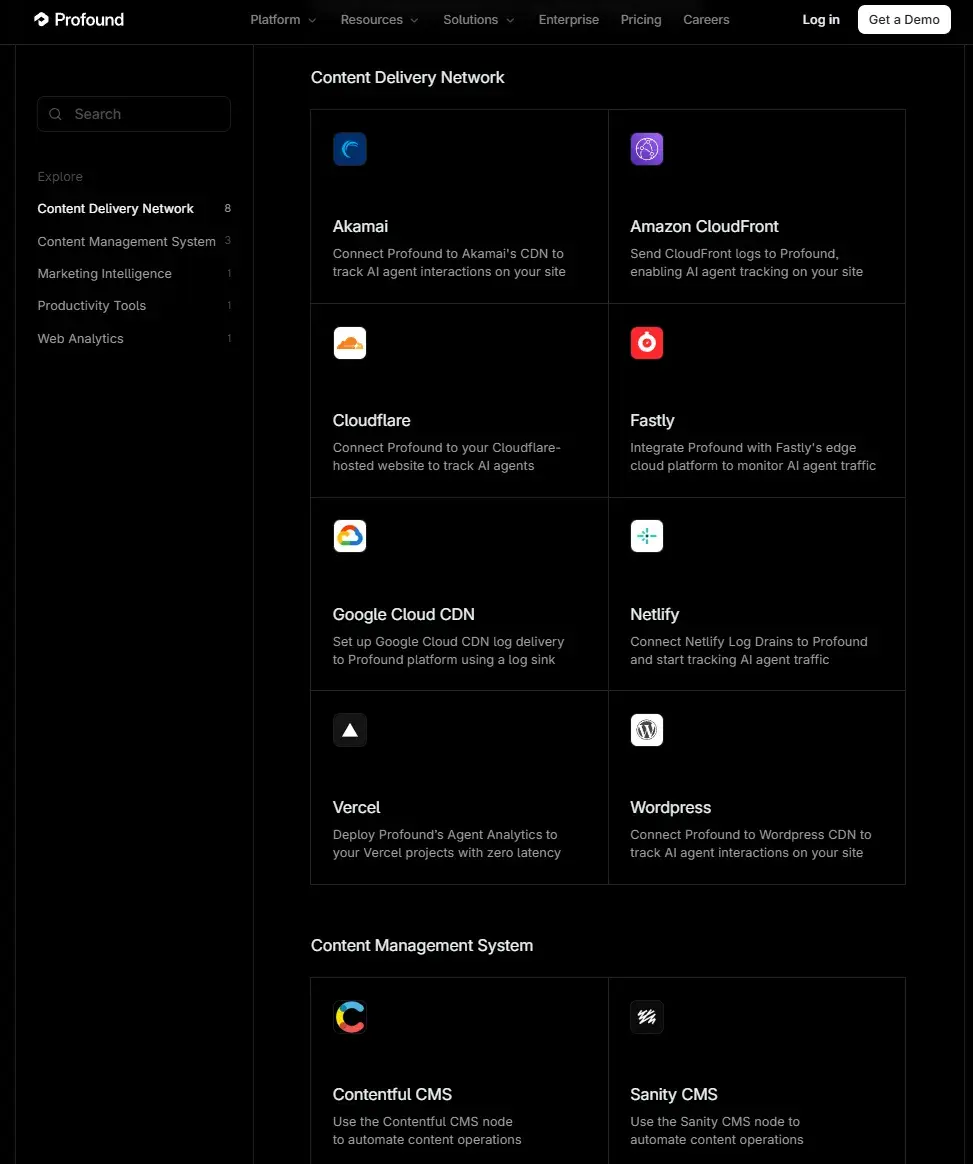
Profound has an extensive integration ecosystem built to operationalize AEO insights across the entire marketing stack. Rather than limiting visibility data to standalone dashboards, the platform connects with content management systems (CMS), content delivery networks (CDNs), marketing intelligence tools, analytics systems, and collaboration software. Profound ensures AI visibility data becomes actionable, not isolated.
This enables teams to integrate AI search signals into:
- CRM reporting and pipeline attribution.
- Content strategy, planning, and optimization cycles.
- BI dashboards and executive-level reporting.
- Marketing automation systems and multi-touch attribution models.
For growth-focused teams, this structure makes it easier to tie AI visibility directly to measurable business outcomes.
Who wins?
- Profound wins for growth-driven marketing teams that need AI visibility deeply embedded into CRM, analytics, content, and attribution workflows. It’s built for operational integration, not just monitoring.
- Bluefish AI wins for organizations that prioritize structured reporting, governance, and risk oversight, and don’t need the same level of integrations.
Pricing Structure, Onboarding, & Scalability
The cost of AI tools and scalability are often decisive when evaluating Profound vs. Bluefish AI for GEO. Budget constraints, internal resources, and long-term growth plans all influence which platform makes sense.
How Bluefish AI Handles Pricing, Onboarding, and Scalability
Bluefish doesn’t provide any transparency on how it handles pricing, onboarding, or scalability. If teams are interested in learning more about Bluefish, they’ll need to contact sales and speak to Bluefish AI directly.
How Profound Handles Pricing, Onboarding, and Scalability
Profound is positioned strongly toward enterprise and growth-focused marketing organizations. It offers enterprise-grade security controls, compliance features, and structured onboarding processes designed to support large, distributed teams.
Its implementation model often aligns with enterprise procurement cycles, including stakeholder onboarding, governance setup, and technical integration planning. While this may extend ramp-up time compared to lighter-weight GEO tools, it supports scalable deployment across global regions and business units.
Pricing
With Profound, teams jump straight into paid packages. From my experience, there’s no free trial, but CTAs do suggest you can try it for free.
Paid packages start from:
- Starter: $82.50/month
- Growth: $332.50/month
- Enterprise: Custom
Note: Profound’s starter package includes only ChatGPT.
Which should you choose for AEO, Profound or Bluefish?
The right choice depends less on feature lists and more on an organization’s priorities. Are you optimizing for growth and attribution? Or safeguarding brand integrity in AI-generated responses?
AEO platforms don’t create strategy — they operationalize it. Here’s how to evaluate Profound AI vs Bluefish AI for AEO by scenario.
Consider HubSpot AEO as an alternative to Profound vs. Bluefish AI for AEO.
If you’re evaluating Profound vs Bluefish AI for AEO, it’s worth considering HubSpot AEO as an alternative.
HubSpot AEO is an ongoing solution for AI visibility measurement and optimization. It combines prompt tracking, competitive intelligence, citation analysis, and prioritized recommendations to help teams move from monitoring to action. Key capabilities include:
- Prompt Tracking. HubSpot AEO suggests and tracks the prompts buyers are asking across ChatGPT, Gemini, and Perplexity, filtered by buyer’s journey phase, product relevance, and more. The tool suggests prompts based on what it knows about your company, competitors, and industry, so teams aren’t starting from scratch.
- Competitive Intelligence. The tool tracks brand mentions, share of voice, and sentiment across major answer engines so marketers can benchmark performance against competitors.
- Citation Analysis. It shows which domains, content types, and specific pages are driving AI mentions for your brand and competitors, so teams know exactly what to create, update, or optimize.
- Prioritized Recommendations. HubSpot AEPO turns visibility data into specific, actionable next steps. Each step comes with a full content brief explaining which prompts triggered it, what content types dominate citations, and which URLs are being cited most.
- Buyer’s Journey Coverage. Prompt tracking can be filtered by buyer’s journey phase, from early awareness through evaluation and decision-stage queries.
For Marketing Hub Pro and Enterprise customers, recommendations connect directly to HubSpot’s content and social tools, so teams can act on AEO insights without leaving the platform.
Perhaps most valuable is the optimization layer. Rather than stopping at dashboards, HubSpot AEO surfaces prioritized recommendations that guide teams on what to improve — from creating new content to updating existing pages or reaching out to third-party sites — making AEO strategy more executable and measurable.
Frequently Asked Questions About Profound vs. Bluefish AI for AEO
What is the main difference between Profound and Bluefish AI for Answer Engine Optimization?
Profound is built around proactive AI search visibility and optimization, providing teams with deep citation analysis, prompt-level tracking, and competitive benchmarking to improve share of voice across AI engines.
Bluefish AI, by contrast, emphasizes brand integrity and risk management. While it still offers visibility, its core value is alerting teams to misrepresentation, misinformation, and context that could harm their reputation.
Which AI engines and platforms do Profound and Bluefish AI track?
Profound’s coverage is broad and growth-oriented. It tracks major AI systems, including Google AI Overviews, ChatGPT (including search-based variants), Perplexity, Gemini, Claude, Microsoft Copilot, Grok, and other emerging engines. Its engine list is designed to reflect the current landscape of AI-powered search and answer systems that influence buyer behavior and organic visibility.
Bluefish AI also tracks key generative platforms. The list includes widely adopted tools where misattribution or harmful contextual associations matter most.
Is Profound or Bluefish AI better for multi-region and multi-language tracking?
Profound is generally stronger for multi-region and multi-language AEO, especially when teams need consistent, comparable visibility data across markets. Bluefish AI also supports multi-region monitoring, but its strength is in contextual accuracy rather than exhaustive linguistic coverage.
How does Profound and Bluefish AI pricing compare?
Bluefish AI does not publicly disclose pricing tiers. Profound, by contrast, offers defined paid tiers and clearer entry points. Packages typically start at approximately $82.50/month for Starter, $332.50/month for Growth, with Enterprise pricing customized.
The Bottom Line: Profound vs. Bluefish AI for Modern AEO Strategy
As AI-powered search reshapes discovery, the decision between Profound and Bluefish AI comes down to strategic intent. Profound is built for proactive growth: deep citation tracking, competitive intelligence, and integration into revenue workflows. Bluefish AI is built for governance: brand safety monitoring, misinformation alerts, and risk control in high-stakes industries.
If a marketing team’s goal is measurable AI visibility, attribution, and content optimization at scale, Profound is typically the stronger fit. If their priority is protecting brand integrity and managing reputational risk across AI systems, Bluefish AI may be the smarter choice.
Before investing in either platform, however, I recommend starting with HubSpot’s AEO Grader. It provides a free benchmark of a brand’s current AI visibility, helping marketers understand where it stands before committing budget and internal resources. AEO Grader helps marketers benchmark AI visibility before choosing a platform, making it a practical first step in their AEO journey.
From my perspective, the biggest mistake teams make is buying an AEO tool before defining whether their strategy is defensive or growth-driven. I’ve found that clarity on that question makes the platform decision far easier and ensures the investment supports measurable outcomes rather than just another dashboard.
