

Summary
- Linux fix gives kernel context to avoid evicting active game’s VRAM, keeping foreground app data on GPU.
- On a 4GB RX 6500 XT, most games saw little change, but titles like Alan Wake II jumped from ~14 to ~41 FPS.
- Not a universal fix: playable games see minor boosts, but badly performing titles can become playable.
A little while ago, we saw one of Valve’s contractors, Natalie Vock, release a new tool that prevents Linux from stealing your VRAM. Beforehand, when Linux had to free up room on your GPU’s VRAM and move stuff to the RAM, it had zero context over which blocks of data were assigned to which apps. As such, it had a tendency to boot the game you’re playing off the VRAM to help keep that one random Google Chrome window you have open on the GPU’s RAM, which isn’t ideal.
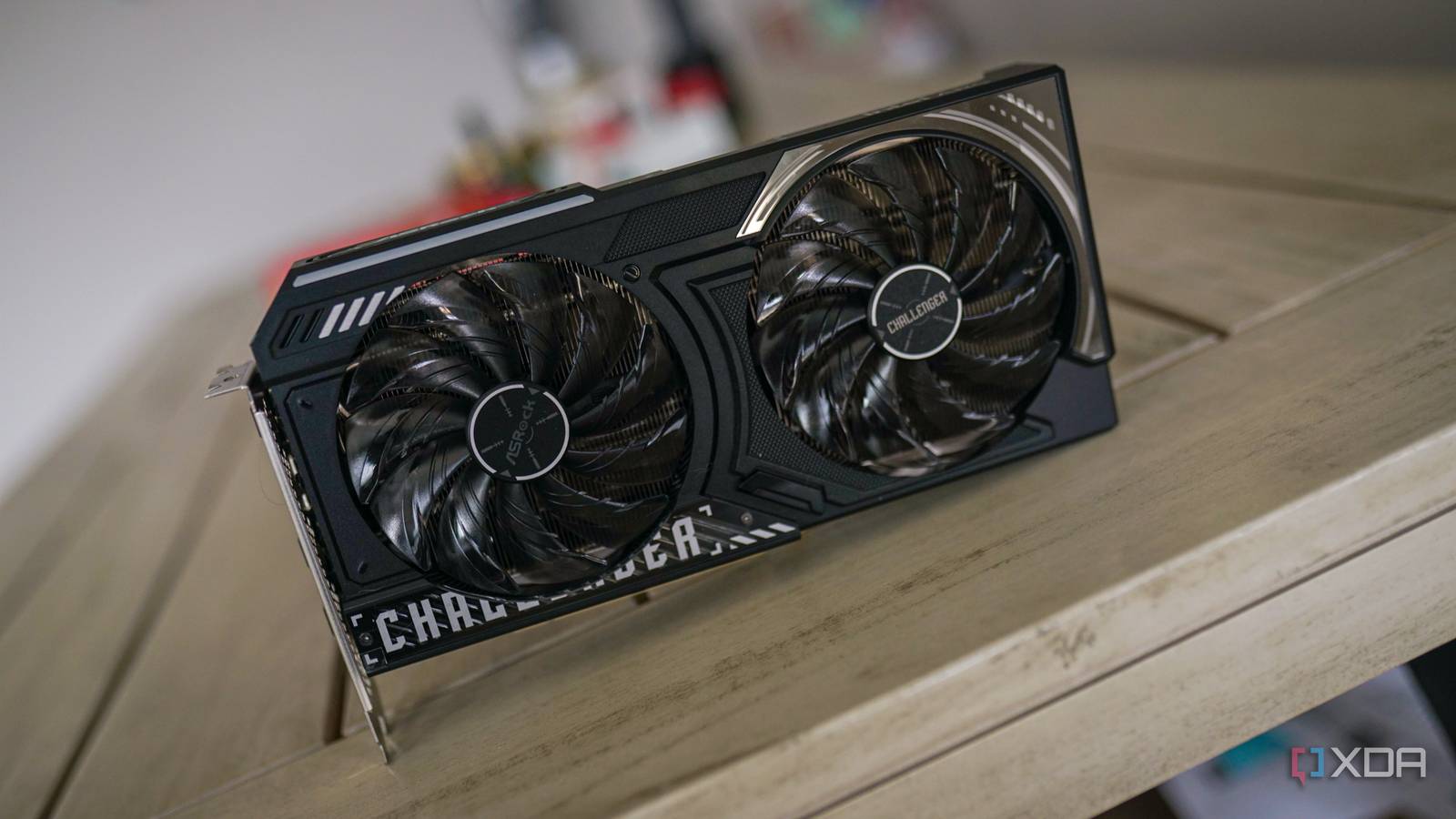
Vock’s fix helps the Linux kernel identify which data it should move to the RAM by taking into consideration several factors, such as which window the user is actively using when the OS needs to free up VRAM. And it seems this fix has worked, as a new benchmark saw almost triple the framerates from what we saw before on a 4GB Radeon RX 6500 XT.

Linux gamers didn’t do anything wrong, but they might pay for Windows piracy anyway
Pirates on Windows might make life harder for gamers on Linux.
Alan Wake II runs almost three times better on Linux using the booster
It was done on a Radeon RX 6500 XT
Over on NJ Tech’s channel on YouTube, you can check out several benchmarks on a Radeon RX 6500 XT both before and after the fix was applied. To get it working, NJ Tech used CachyOS and enabled the “Install GPU boosters” option.
For the most part, the FPS gains weren’t huge. Games like Cyberpink 2077 and Crimson Desert saw zero improvement, while Silent Hill f and Hogwarts Legacy saw a 1-3 FPS boost. However, there were also some big winners, such as Resident Evil: Requiem going from 67 to 78 FPS, and Alan Wake II going from 14 to 41 FPS, almost triple the original framerate.
Here’s a table of all the findings:
|
Game |
Settings |
Boosters Disabled |
Boosters Enabled |
|
Alan Wake II |
1080p Low, FSR 2 Quality |
~14 AVG FPS |
~41 AVG FPS |
|
Resident Evil: Requiem |
1080p Lowest, Max Upscaling |
~67 AVG FPS |
~78 AVG FPS |
|
Silent Hill f |
1080p Low, TAA |
~47 AVG FPS |
~50 AVG FPS |
|
Crimson Desert |
1080p Low, No Upscale |
~45 AVG FPS |
~45 AVG FPS |
|
Cyberpunk 2077 |
1080p Low, High Texture |
~49 AVG FPS |
~49 AVG FPS |
|
Hogwarts Legacy |
1080p Medium, TAA High |
~60 AVG FPS |
~61 AVG FPS |
|
The Last of Us Part II |
1080p Low, TAA Native |
~51 AVG FPS |
~51 AVG FPS |
As such, it doesn’t seem like this new tech is a magic silver bullet for framerate gains. However, if other titles follow the same pattern as these benchmarks, then we may see fewer framerate boosts on already-playable titles. At the same time, games with serious framerate issues will finally hit an acceptable, playable FPS. We’ll have to wait and see if this new tech will continue that pattern.

Steam wants to end the FPS guessing game before you buy
If you have a mid-range or lower-end gaming PC, this upcoming feature could be very useful.
