

Close Menu
    Facebook X (Twitter) Instagram
    Wifi PortalWifi Portal
    • Blogging
    • SEO & Digital Marketing
    • WiFi / Internet & Networking
    • Cybersecurity
    • Tech Tools & Mobile / Apps
    • Privacy & Online Earning
    Facebook X (Twitter) Instagram
    Wifi PortalWifi Portal
    Home»Cybersecurity»New VENOM phishing attacks steal senior executives’ Microsoft logins
    Cybersecurity

    New VENOM phishing attacks steal senior executives’ Microsoft logins

    adminBy adminApril 10, 2026No Comments3 Mins Read
    Facebook Twitter LinkedIn Telegram Pinterest Tumblr Reddit WhatsApp Email
    New VENOM phishing attacks steal senior executives
    Share
    Facebook Twitter LinkedIn Pinterest Email

    New VENOM phishing attacks steal senior executives' Microsoft logins

    Threat actors using a previously undocumented phishing-as-a-service (PhaaS) platform called “VENOM” are targeting credentials of C-suite executives across multiple industries.

    The operation has been active since at least last November and appears to target specific individuals who serve as CEOs, CFOs, or VPs at their companies.

    VENOM also seems to be closed access, as it has not been promoted on public channels and underground forums, thus reducing its exposure to researchers.

    Wiz

    The VENOM attack chain

    The phishing emails, observed by researchers at cybersecurity company Abnormal, impersonated Microsoft SharePoint document-sharing notifications as part of internal communication.

    The messages are highly personalized and include random HTML noise such as fake CSS classes and comments. The attacker also injects fake email threads tailored to the target, increasing credibility.

    A QR code rendered in Unicode is provided for the victim to scan for access. The trick is designed to bypass scanning tools and shift the attack to mobile devices.
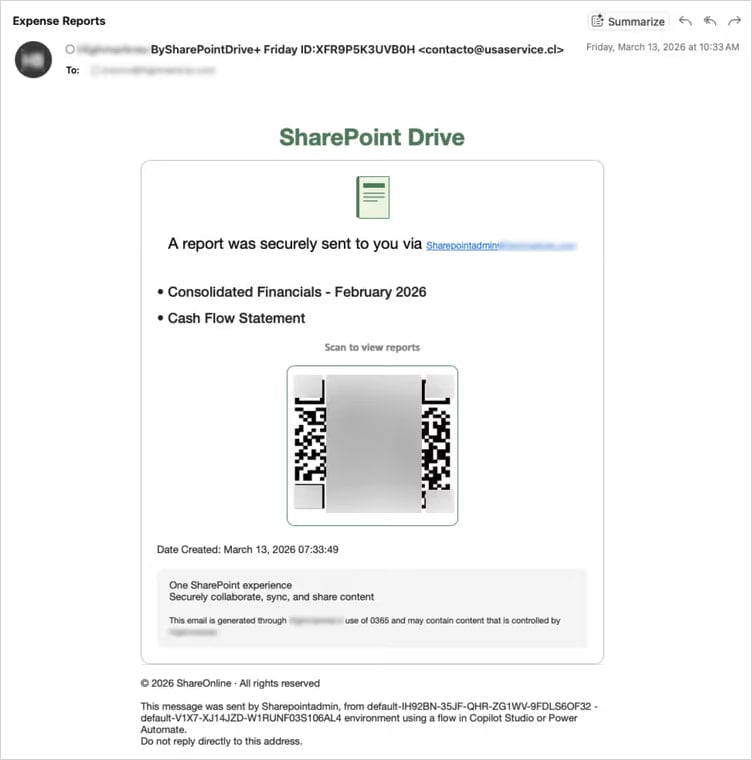
     

    Sample of malicious email sent from VENOM
    Sample of a phishing email
    Source: Abnormal

    “The target’s email address is double Base64-encoded in the URL fragment—the portion after the # character,” Abnormal researchers explain.

    “Fragments are never transmitted in HTTP requests, making the target’s email invisible to server-side logs and URL reputation feeds.”

    When the victim scans the QR code, they are taken to a landing page that serves as a filter for security researchers and sandboxed environments, ensuring that only real targets are redirected to the phishing platform. Users outside the threat actor’s interest are redirected to legitimate websites to reduce suspicion.

    Those who pass the tests are taken to a credential-harvesting page that proxies a Microsoft login flow in real time, relaying credentials and multi-factor authentication (MFA) codes to Microsoft APIs and capturing the session token.
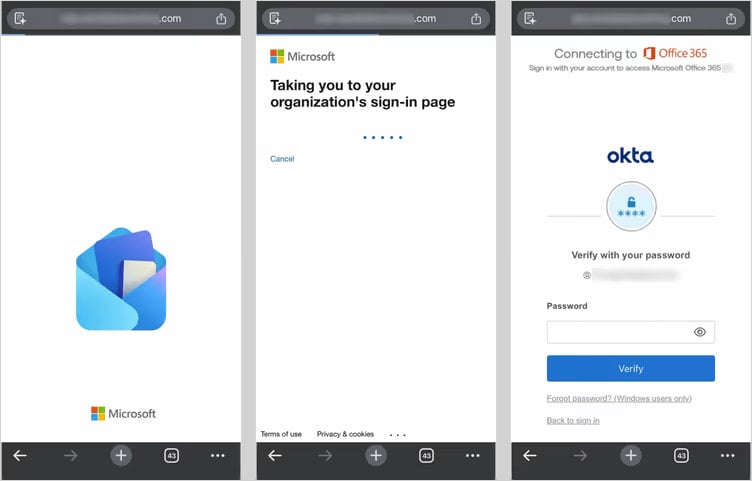
    VENOM's AiTM attack chain
    VENOM’s AiTM method
    Source: Abnormal

    Apart from the adversary-in-the-middle (AiTM) method, Abnormal has also observed a device-code phishing tactic in which the victim is tricked into approving access  to their Microsoft account for a rogue device.
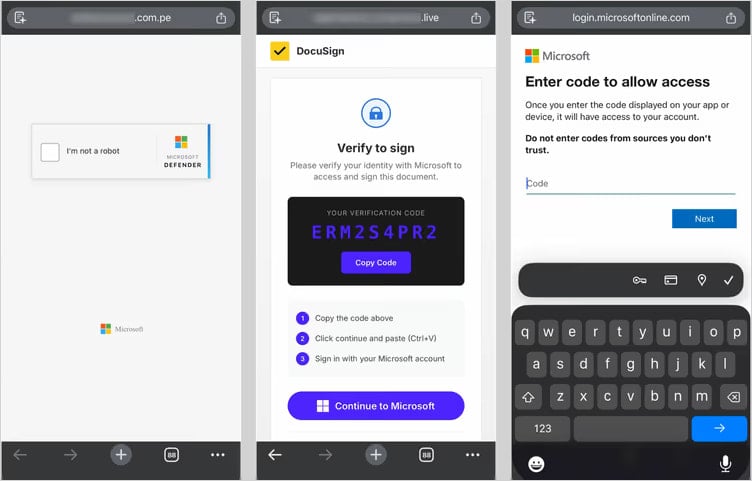
    The device code attack method
    The device code attack method
    Source: Abnormal

    This method has become very popular over the past year due to its effectiveness and resistance to password resets, with at least 11 phishing kits currently offering it as an option.

    In both methods, VENOM quickly establishes persistent access during the authentication process. In the AiTM flow, it registers a new device on the victim’s account. In the device code flow, it obtains a token that also provides access to the account.

    The researchers note that MFA is no longer sufficient as a defense. C-suite executives should use FIDO2 authentication, disable the device code flow when not needed, and block token abuse by implementing stricter conditional access policies.


    tines

    Automated pentesting proves the path exists. BAS proves whether your controls stop it. Most teams run one without the other.

    This whitepaper maps six validation surfaces, shows where coverage ends, and provides practitioners with three diagnostic questions for any tool evaluation.

    attacks executives Logins Microsoft Phishing senior steal VENOM
    Share. Facebook Twitter Pinterest LinkedIn Tumblr Telegram Email
    Previous ArticleThe Best Deals in Home Depot’s ‘Spring Black Friday’ Sale
    Next Article ChatGPT just got a cheaper Pro plan to take on Anthropic’s Claude
    admin
    • Website

    Related Posts

    GitHub lays out copyright liability changes and upcoming DMCA review for developers

    April 16, 2026

    New AgingFly malware used in attacks on Ukraine govt, hospitals

    April 16, 2026

    Capsule Security Emerges From Stealth With $7 Million in Funding

    April 16, 2026
    Add A Comment
    Leave A Reply Cancel Reply

    Search Blog
    About
    About

    At WifiPortal.tech, we share simple, easy-to-follow guides on cybersecurity, online privacy, and digital opportunities. Our goal is to help everyday users browse safely, protect personal data, and explore smart ways to earn online. Whether you’re new to the digital world or looking to strengthen your online knowledge, our content is here to keep you informed and secure.

    Trending Blogs

    Why Your Search Data Doesn’t Agree (And What To Do About It)

    April 16, 2026

    Opera’s browsers just picked up a new AI feature that’s actually useful

    April 16, 2026

    GitHub lays out copyright liability changes and upcoming DMCA review for developers

    April 16, 2026

    Mi Browser 14.54.0-gn APK Download by Zhigu Corporation Limited

    April 16, 2026
    Categories
    • Blogging (63)
    • Cybersecurity (1,341)
    • Privacy & Online Earning (168)
    • SEO & Digital Marketing (822)
    • Tech Tools & Mobile / Apps (1,604)
    • WiFi / Internet & Networking (225)

    Subscribe to Updates

    Stay updated with the latest tips on cybersecurity, online privacy, and digital opportunities straight to your inbox.

    WifiPortal.tech is a blogging platform focused on cybersecurity, online privacy, and digital opportunities. We share easy-to-follow guides, tips, and resources to help you stay safe online and explore new ways of working in the digital world.

    Our Picks

    Why Your Search Data Doesn’t Agree (And What To Do About It)

    April 16, 2026

    Opera’s browsers just picked up a new AI feature that’s actually useful

    April 16, 2026

    GitHub lays out copyright liability changes and upcoming DMCA review for developers

    April 16, 2026
    Most Popular
    • Why Your Search Data Doesn’t Agree (And What To Do About It)
    • Opera’s browsers just picked up a new AI feature that’s actually useful
    • GitHub lays out copyright liability changes and upcoming DMCA review for developers
    • Mi Browser 14.54.0-gn APK Download by Zhigu Corporation Limited
    • New AgingFly malware used in attacks on Ukraine govt, hospitals
    • Capsule Security Emerges From Stealth With $7 Million in Funding
    • NYT Strands hints and answers for Thursday, April 16 (game #774)
    • The Modern SEO Center Of Excellence: Governance, Not Guidelines
    © 2026 WifiPortal.tech. Designed by WifiPortal.tech.
    • Home
    • About Us
    • Contact Us
    • Privacy Policy
    • Terms and Conditions
    • Disclaimer

    Type above and press Enter to search. Press Esc to cancel.