

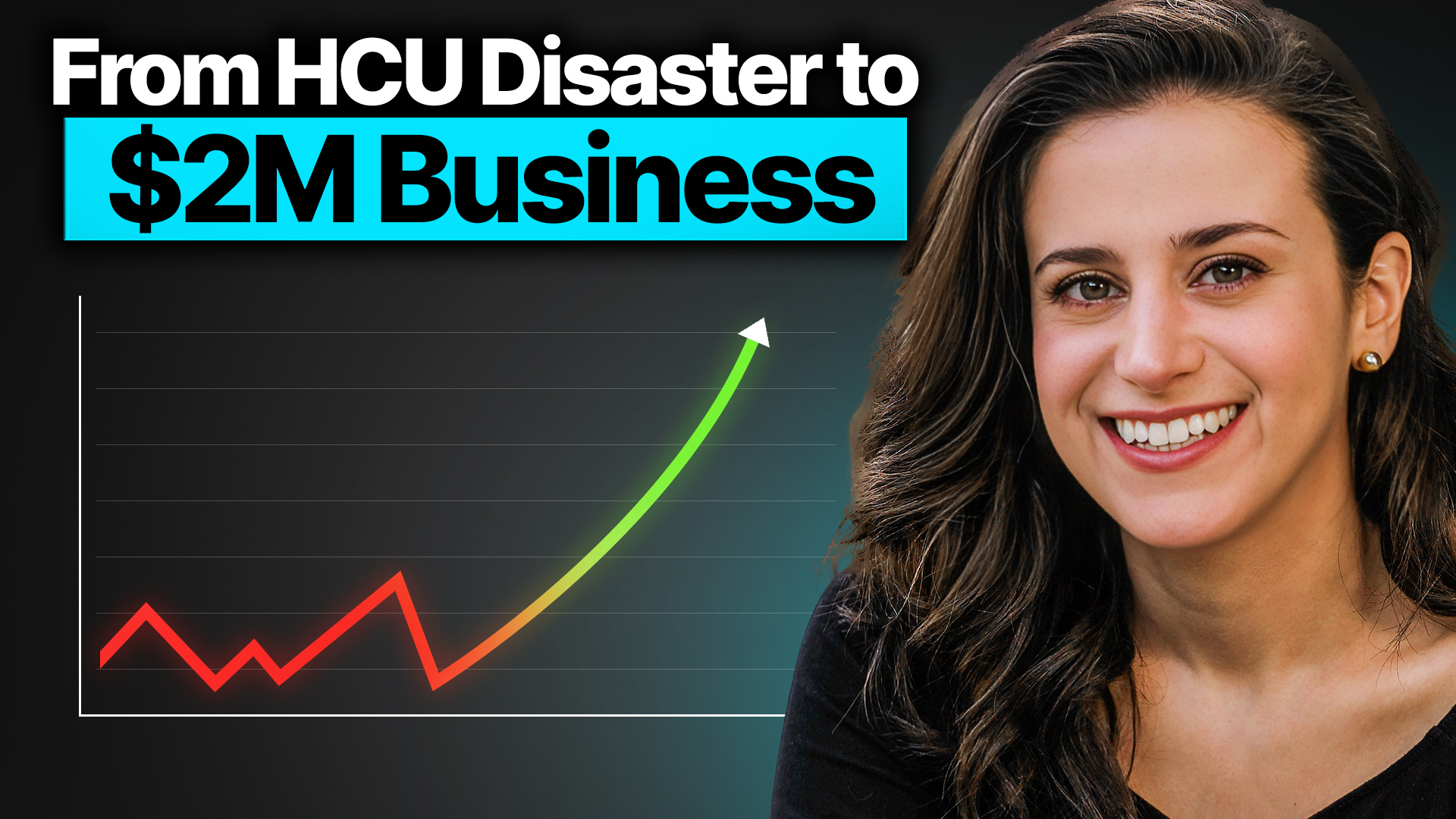
In this week’s episode of the Niche Pursuits podcast, Denise Cruz and I discuss how she went from running a travel blog business that was hit hard by the Helpful Content Update to building a successful travel advisor brand with nearly $2 million in commissionable sales. It’s a story about rebound, reinvention, and what can happen when someone takes deep niche expertise and applies it to a service business instead of a content site.
Denise’s journey feels especially relevant because it’s not about someone sitting on a wildly untouchable media empire before things changed. She was running relatable, real-world travel websites that had built meaningful traffic and income. When Google’s changes wiped most of that away, she had to make a fast decision about what came next.
Watch the Full Episode
A Relatable Travel Blogging Business Before the Crash
Before the pivot, Denise had built multiple blogs, including two travel sites that were performing well by most independent publisher standards. One of those sites was attracting around 75,000 monthly visitors, while another was in the 50,000 to 60,000 range. Together, they were generating about $6,000 per month, primarily from ad revenue, with some affiliate income also contributing.
The majority of that traffic came from Google, with Pinterest playing a smaller supporting role, which meant the impact of the HCU was swift and painful when rankings and visits started disappearing.
A few key details from Denise’s pre-HCU business:
- She had multiple blogs, not just one site carrying all the load.
- The core monetization model was ad revenue.
- Google was the main traffic source.
- The income decline happened week after week, not all at once.
- By the end, traffic and revenue had fallen to almost nothing.
Why Did This Pivot Happen So Fast?
Denise did not start from zero when her blogs were hit. She had already gone through the process of becoming a travel advisor through a host agency, although she had not yet fully developed that side of the business. At the time, it was more of a backup idea, or perhaps a future opportunity, than something she expected to depend on immediately.
Then the HCU changed the timeline. Instead of treating travel advising as something she might explore someday, Denise suddenly had a reason to move on it right away. She described the shift almost as a reaction to losing her blog income, but what followed was not random. It was a focused application of years of marketing experience, audience understanding, and systems thinking into a business model built around selling expertise directly.
What pushed the transition forward:
- She still had consulting income, which gave her some breathing room.
- She had already joined a host agency.
- She had booked a few trips for friends and family before the pivot.
- She has a deep understanding of online marketing, gained through her blogging and consulting work.
She saw service as a more stable path than trying to force a broken content model back to life.
When a Website Built for a Service Started Working Almost Immediately
Denise initially thought she might create another content-style site, but this time with stronger trust signals and a clearer business identity. Instead of following her usual SEO process, she built a travel agency website that emphasized who she was, what she offered, and why she was qualified to help clients. Within just a couple of weeks, she started getting leads.
That quick traction became a turning point. It suggested that Google was willing to reward a service-based site centered on real expertise even while her old content business was being decimated, despite that content also being rooted in expertise.
Denise did not spend that early phase chasing keyword formulas or publishing top-of-funnel listicles. She focused on answering the kinds of questions her actual clients had and creating resources that were useful at the bottom of the funnel. Here’s what made the early site different:
- No heavy keyword research process.
- No SEO playbook built around chasing search terms.
- The homepage was clearly structured as a travel agency homepage.
- The content was designed for clients and prospects close to booking.
- The site presented Denise as a professional service provider, not just a publisher.
How EEAT Became a Practical Growth Strategy
Many site owners have heard Google discuss experience, expertise, authority, and trust, but Denise actually used these ideas as a practical blueprint. She said EEAT was one of the few things Google mentioned that felt specific enough to test, so she leaned into it heavily with her new business.
That meant more than writing an author bio. She created a Google Business Profile, listed her services clearly, used a dedicated business phone line, linked her site back to her agency profile, displayed certifications and supplier training, and added testimonials. Initially, some of those testimonials came from people she already knew, but over time, they were replaced by reviews from actual clients who found her through the website.
Signals Denise intentionally built into the business:
- Professional certifications and training badges.
- Agency affiliation and linked profiles.
- Google Business presence.
- Public contact information.
- Client testimonials.
- Service pages explaining how to work with her.
- Scheduling and lead capture tied into a CRM.
The Real Shift Was Moving From Traffic to Client Responsibility
One of the clearest contrasts Denise drew was between publishing content and serving real clients. Writing a blog post is one thing. Booking someone’s vacation, where mistakes can result in thousands of dollars and a family’s compromised experience, creates a significantly different level of responsibility.
That pressure changed how she wrote and how she operated. Her communication became more direct, more structured, and more focused on anticipating questions about policies, cancellations, upgrades, cabin choices, and logistics. Instead of trying to maximize time on page, she was trying to reduce confusion and help customers make good decisions.
How service writing differs from blog writing:
- Clarity mattered more than engagement tricks.
- Policy explanations became essential.
- The goal was informed decisions, not pageviews.
- Content supported a sale and a client relationship.
- Every email and resource had to reduce risk and uncertainty.
Small Traffic, Much Bigger Business Impact
This is where Denise’s story becomes especially useful for content creators who still think in terms of page views. Today, she said her site gets only around 200 to 300 visitors, which is tiny compared to the 75,000 monthly visitors one of her blogs used to get. But those visitors are far more qualified, and many of them are already clients who come back through her email newsletter or through direct relationships.

That comparison highlights one of the biggest lessons from the interview. A service business does not need mass traffic to succeed. It requires the right positioning, an offer that people understand, and a process that guides the right leads toward booking.
What changed about the traffic model:
- Massive traffic volume was no longer the goal.
- Higher intent replaced higher pageviews.
- Existing clients now account for a significant portion of the site traffic.
- Email and referrals matter more than social virality.
- Lead quality became more important than SEO scale.
Systems Became the Growth Engine
Denise repeatedly came back to systems during the interview, and it’s easy to see why. She was still doing consulting work when travel leads started coming in, so she needed a way to handle inquiries without manually managing everything. This led to the implementation of CRM, automations, lead tracking, appointment scheduling, and process design encompassing the entire customer journey.
This was not just an efficiency play. It was a quality control mechanism. Denise wanted to ensure that clients had a strong experience and that she was not missing any important details as booking volume increased.
Over time, she has refined her lead forms, funnels, and follow-up systems, and now she is even working on saying no more effectively by improving lead qualification before prospects ever get on the phone with her. These are the core systems she emphasized:
- CRM setup
- Automated follow-up
- Appointment scheduling
- Lead qualification
- Sales funnel tracking
- Repeatable email workflows
- Referral requests
- Newsletter processes
What Her Sales Funnel Actually Looks Like
For people wondering how this type of business operates day-to-day, Denise provided a useful overview of her process. Most people who contact her already know the type of trip they want, the dates they are targeting, and that they want help from an expert. They are not early-stage browsers. They’re close to making a purchase and want confidence that they are making the right choices.
Typically, a lead fills out a form on her website and is immediately prompted to schedule a call. Denise prefers a short phone conversation over a long email back-and-forth because it allows her to qualify the client, answer questions efficiently, and move the booking forward more quickly. From there, she follows up with quotes, reservation details, and manual coordination where needed.
Her typical funnel includes:
- Website inquiry form
- Scheduling a prompt for a discovery call
- Automated follow-up if no call is booked
- A 15-minute conversation to discuss needs and options
- Email quotes and next steps
- Reservation handling
- Ongoing follow-up and support
A Small Email List With Outsized Results
Another standout point from the interview is that Denise is not building her business on social media. She said she doesn’t enjoy the constant nature of social platforms, so she has focused instead on capturing leads and maintaining relationships through email. Everyone who reaches out in some way gets funneled into her list, and that list plays a crucial role in generating repeat business and referrals.
Her newsletters are sent out a couple of times a month, when possible, and focus on relevant travel updates, supplier news, and useful client information, rather than non-stop promotions or deal-chasing. That fits her positioning. She isn’t trying to attract bargain hunters. She is building a reputation as a trusted advisor, especially in the cruise industry, and using email to stay top of mind.
What she sends in an email:
- Travel rule updates
- Supplier news clients need to know
- Selected special rates when relevant
- Personal business updates
- Information that helps clients prepare for future trips
The Numbers Behind the Turnaround
The business results are substantial. Denise shared that her commissionable sales were approximately $650,000 in one year, then jumped to $1.6 million the following year. She is now aiming to maintain or exceed that level while increasing the average value of each booking.
She also said she is starting to see the 80/20 rule take shape in the business, with a smaller percentage of high-value clients generating a large share of revenue. Some of those clients return for multiple trips and also bring friends and family with them, creating a compounding effect on referrals and repeat bookings. Denise estimated that around 30% of new clients are referral-based in some way, even if they first appear as part of a larger group or family trip.
The Bigger Takeaway for Niche Site Owners
What makes Denise’s experience so compelling is the underlying question it raises for anyone affected by major search changes. If you have built real expertise through your content, could that expertise become the foundation of a service business? In her case, the answer was clearly yes.
That doesn’t mean every blogger should become a consultant, advisor, or agency owner tomorrow. Denise was candid that this kind of work involves significantly more client interaction, greater responsibility, and increased operational complexity than publishing content.
Denise demonstrated that combining niche authority with robust systems and a clear offer creates a resilient business. This approach yields a company that is significantly more valuable than the original website alone.
Final Thoughts
Denise Cruz’s journey is inspiring because it’s grounded in reality. She lost something meaningful, moved quickly, and built something stronger by using the same subject matter expertise in a different business model.
For niche site owners, this interview is a reminder that traffic is not the only asset you have built. Trust, knowledge, positioning, and audience understanding can all be repurposed into services that solve real problems for real customers.
And in Denise’s case, that shift led from a $6,000-a-month blogging business that got crushed by the HCU to a travel advisory business doing nearly $2 million in commissionable sales within just a few years. That’s not just a comeback story. It’s a blueprint worth paying attention to.
Links & Resources
