


A lot of research for new purchases or services now happens inside AI tools, not search results. Buyers ask full questions and get ready-made answers. The problem gets explained, options get listed, and each option now comes with a clear “who it’s for” and the tradeoffs.
That AI answer becomes the reference point, and it shapes how buyers think before they ever look at a website.
This changes the role of your website. It no longer introduces the category or sets the terms. It reacts to a frame that already exists. You either confirm it, correct it, or lose the buyer.
This article explains how AI answers reshape the buyer’s journey before the click, how these systems describe your business, and where positioning breaks when messaging is vague or inconsistent. I’ll share practical tips to fix these problems so you can position your business better in AI answers and convert more customers after the click.
Contents
How AI has changed the buyer’s journey
If you’re a seasoned business owner or marketer, you probably remember that the buyer funnel looked like this:
someone searched > landed on a web page > began evaluating options there
Messaging, structure, and persuasion lived on the website. In the new buyer journey, that’s no longer the case.
Today, the funnel often looks like this:
ask > summarize > narrow > decide > maybe click
Now, AI doesn’t move people through funnel stages; it skips them.
One question produces one answer that explains the problem, names options, and narrows the field. That single response now replaces reading blog articles, comparison pages, and other sales content.
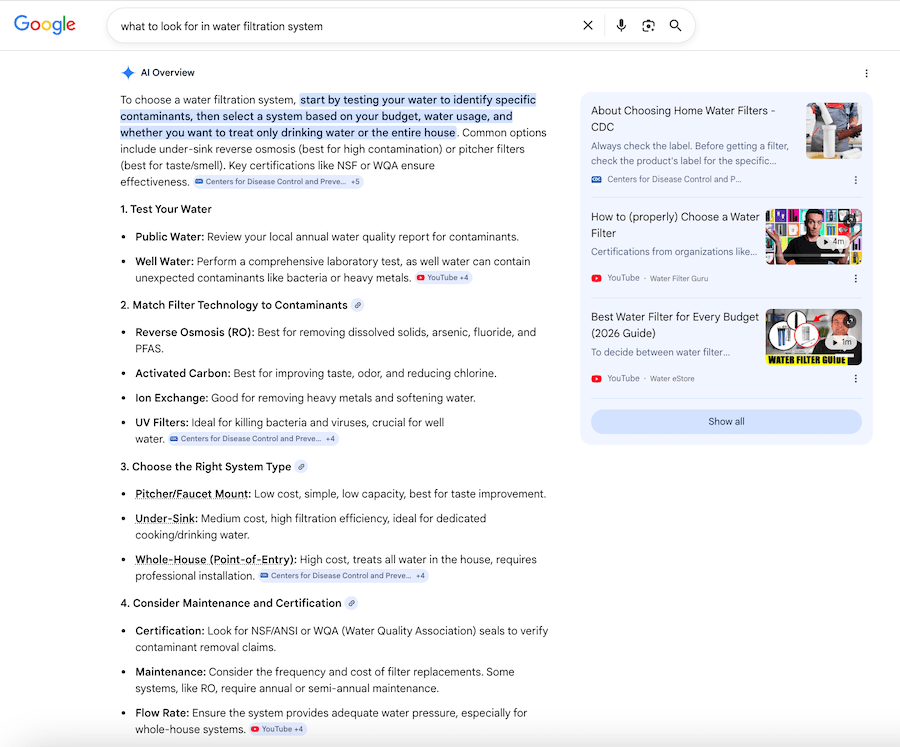
By the time someone clicks, they are no longer learning; they are checking what they got from the AI.
Why this matters in practice
The most important change is not the loss of traffic, but when the evaluation begins. Buyers now arrive on sites having already:
- Learned the category
- Seen alternatives
- Internalized tradeoffs
Your site confirms a decision instead of shaping it.
What gets lost
Nuance disappears first. If your differentiation requires explanation or context, it rarely survives summarization.
AI keeps what it can explain quickly and safely. Everything else gets flattened.
This is why many businesses sound interchangeable in AI answers, even when they are not in reality.
What this looks like (real-world example)
You can see this clearly with real regional HVAC businesses. Take Morris-Jenkins, a family-owned HVAC company operating in North and South Carolina. Their site repeatedly states what they focus on: residential heating and cooling, fast response times, and clear pricing. They also clearly separate HVAC work from plumbing and electrical services.
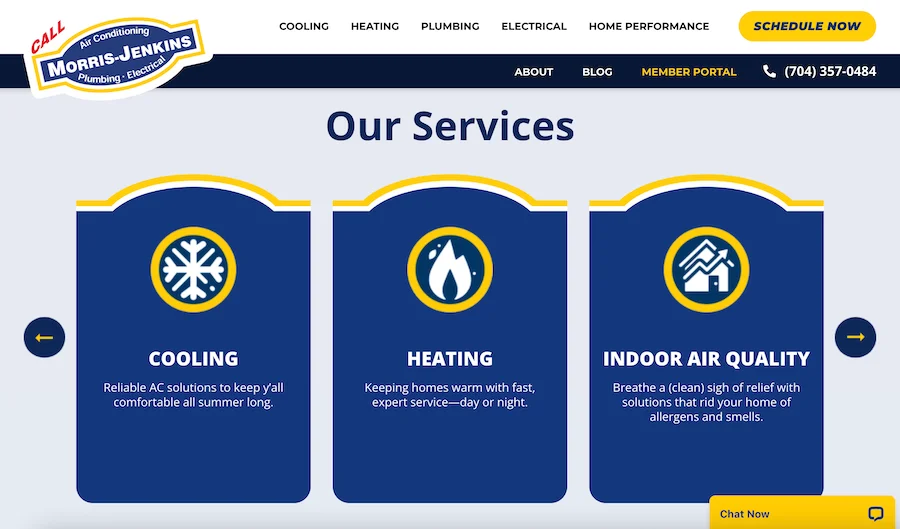
When AI tools describe Morris-Jenkins, they usually call it a “residential HVAC specialist.” The description is consistent.
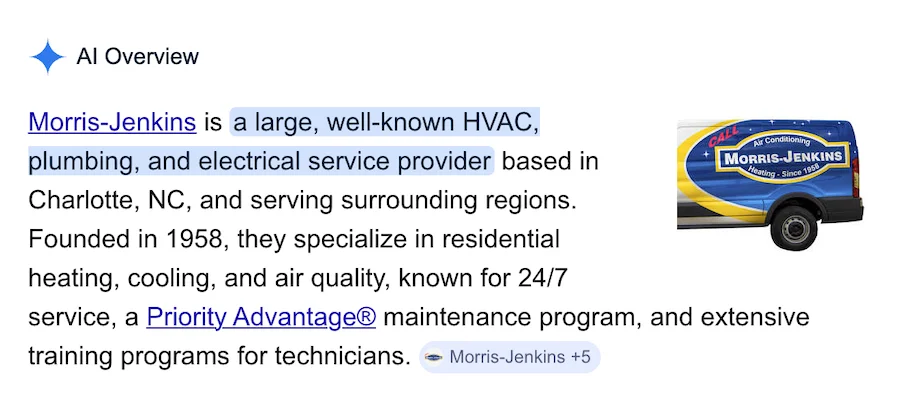
Now compare that with smaller regional HVAC businesses that use generic copy like:
- “Full-service HVAC solutions”
- “Serving all your heating and cooling needs”
- “Quality service you can trust”
When those businesses appear in AI answers, they often appear only as names. In some cases, AI describes them as general contractors or bundled home services companies.
That is not because the businesses are worse. It is because their sites never say what they specialize in.
How AI fills the gaps
- If a site lists every service equally, AI assumes none are core.
- If every location page uses the same copy, AI assumes the business is generic.
- If there is no clear “this is what we do best” statement, AI makes one up.
Several SMB HVAC companies have corrected this with very simple changes.
For example, Parker & Sons in Arizona clearly separates HVAC installation from repair work, highlights energy-efficient systems, and states which services they do not prioritize. Their site uses plain language and avoids broad claims.
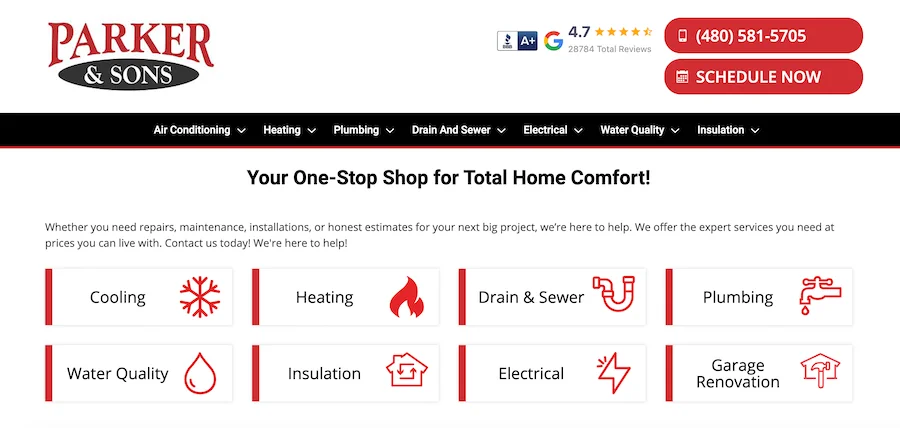
As a result, AI summaries tend to describe them as a specialist in residential HVAC and energy-efficient systems, not just another name in a list.
Why this matters for the funnel
Once AI frames a business as “a specialist” or “just another option,” that framing sticks.
Buyers who click through already carry assumptions:
- Who the company is for
- What kind of work they do
- How premium or basic they might be
By the time they reach your site, the narrowing has already happened.
🔎 Need help understanding the modern rules for SEO? Download our free guide >> How to Do SEO Right—Right Now!
What AI looks for when shaping buyer perception
AI doesn’t care how clever your copy sounds. It looks for early decision signals it can reuse without guessing.
When someone asks an AI tool about a business, the system scans for a few basic things it can state with confidence. Those signals determine how the business gets explained to the buyer.
The signals AI pulls first
Across SMB categories, the same signals show up again and again:
- What category the business belongs to
- Who the service is meant for
- What problem it mainly solves
- How premium or basic it seems
- What it does well and what it does not
Most of these signals come from the first 200 words of important pages. Homepages. Service pages. FAQs. Location pages.
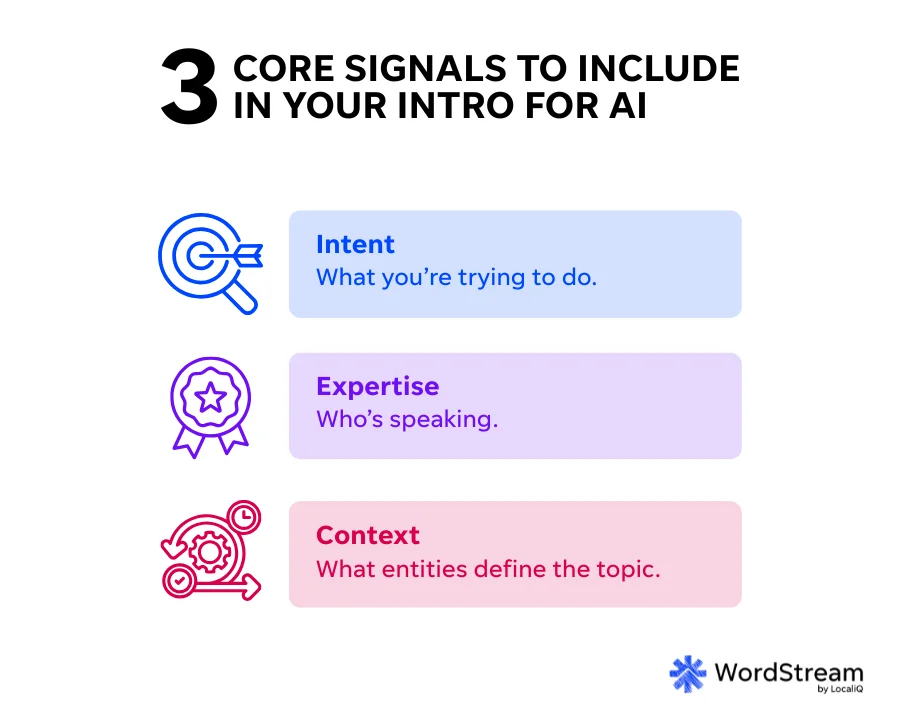
If those sections are vague, AI has nothing solid to anchor to. That is when it starts blending.
Why consistency matters more than persuasion
AI rewards low ambiguity.
If your homepage says one thing, your service pages suggest another, and reviews imply something else, AI does not choose the best version. It averages them.
The result is usually a safe but unhelpful description.
What this looks like (real-world example)
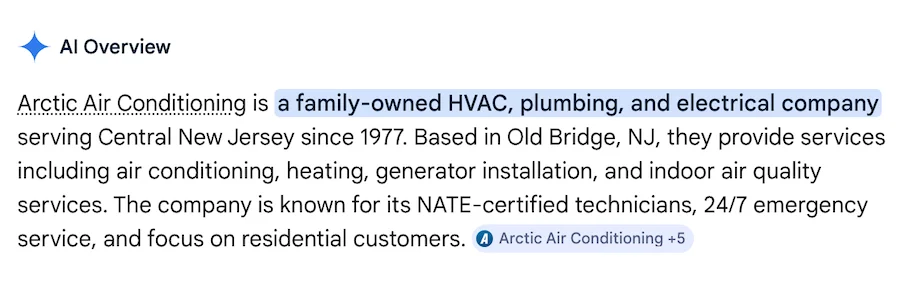
Take Arctic Air Conditioning, a regional HVAC company. Their site states clearly, early, and repeatedly that they focus on residential air conditioning, electrical, or plumbing repair in New Jersey. That focus appears on the homepage, service pages, and Google Business Profile.
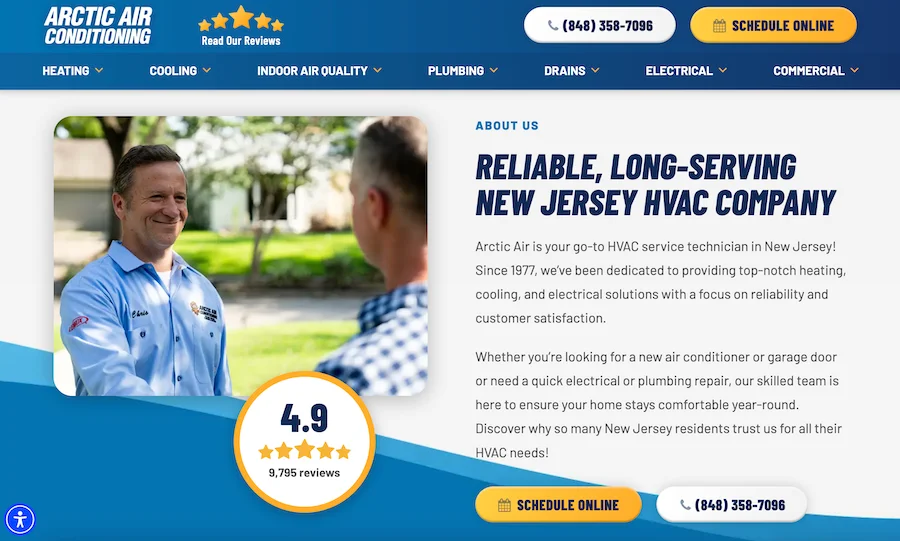
When AI tools describe Arctic Air Conditioning, the explanation is stable.
Now compare that to many smaller HVAC businesses whose sites say things like:
- “Full-service HVAC solutions”
- “Heating and cooling experts”
- “Residential and commercial services”
Service pages list everything equally. Location pages reuse the same copy. Reviews mention a mix of repairs, installs, and unrelated work.
When AI pulls from that, it blends the signals.
The business gets described as “an HVAC contractor” with no specialization, even if most of its revenue comes from AC installs or specific system types.
How AI fills the gaps
If a site never states what the business focuses on, AI assumes it does everything.
If residential and commercial work are mentioned equally, AI treats them as equal. If there is no clear “we do this best” signal, AI removes differentiation entirely.
Several HVAC SMBs fixed this with simple changes:
- Stating residential AC installation as the primary service.
- Clearly separating commercial work into a secondary section.
- Adding short FAQs explaining what they do not handle.
- Updating service descriptions to reflect real revenue drivers.
Once those signals became consistent, AI summaries followed. Instead of sounding like “an HVAC company,” the businesses started being described as specialists.
🚨 Get ready-to-use AI prompts for email marketing, social media, content creation, and more >> 200+ Best AI Prompts Any Business Can Use
Where AI gets its buyer signals from
AI does not trust a single page. It looks for repetition across sources.
Primary inputs AI relies on
These carry the most weight:
- Opening paragraphs of core pages
- FAQs and definition sections
- Service comparison pages
- Third-party descriptions
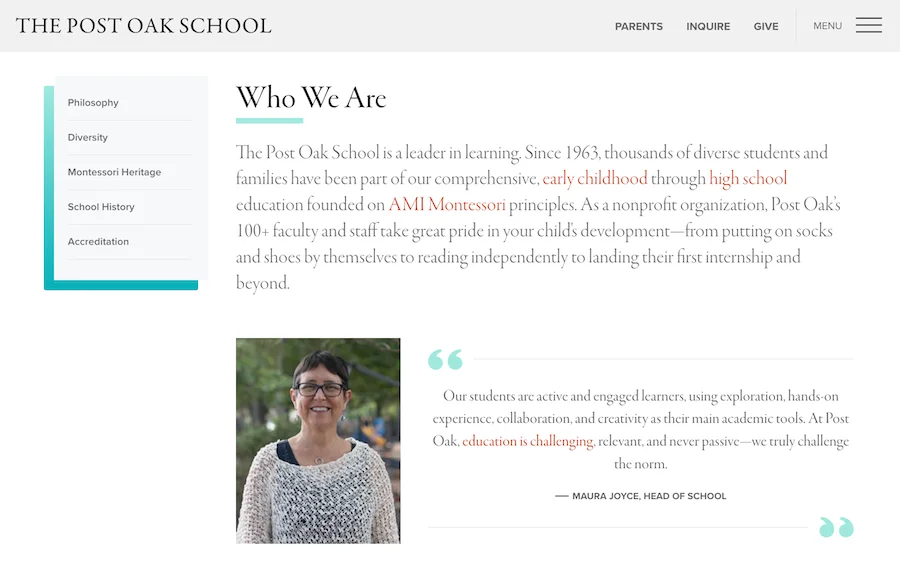
If these agree, AI treats the framing as reliable.
Secondary inputs that reinforce or dilute
- Reviews
- Forums
- Listicles
- Local directories
- Blog summaries
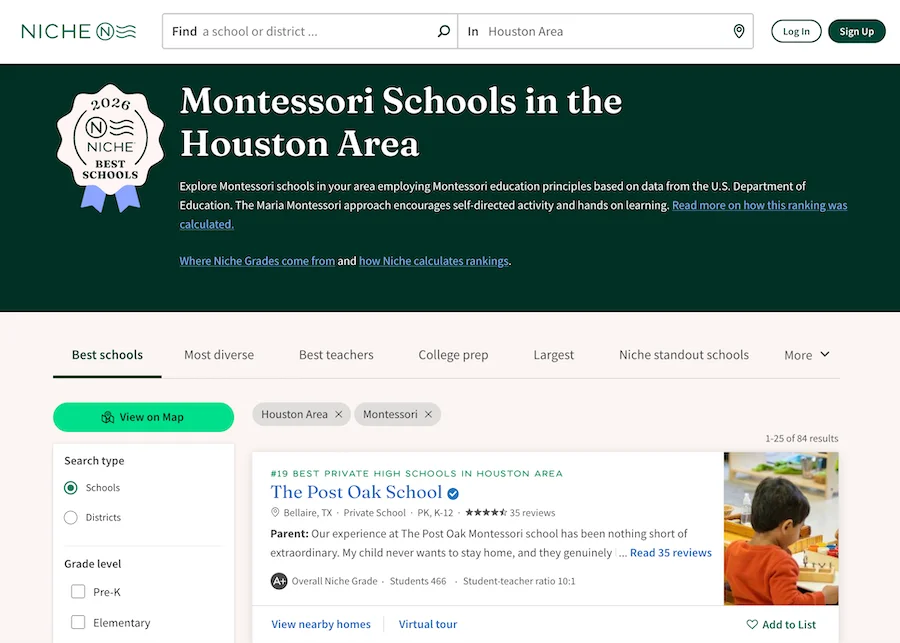
If these repeat the same message, it sticks. If they conflict, AI smooths them into something generic.
Key insight
AI trusts repetition across sources more than polish on one page. That’s why review language, FAQ wording, and service descriptions matter as much as homepage headlines.
🎉 Need help articulating what makes your business special? Get the guide >> How to Create a Unique Value Proposition From the Ground Up
How to influence how AI presents your business to buyers
The SMBs that show up consistently in AI answers all do one thing well. They make themselves easy to explain.
Most teams still think positioning happens late: on landing pages, during sales calls, etc. That assumes the buyer arrives without a frame. In the new buyer journey, that assumption is wrong.
What changes structurally
Today:
- Positioning must exist before the click.
- AI must understand your angle without explanation.
- Your framing must survive summarization.
If AI cannot explain what your business does accurately in a short paragraph, your positioning is incomplete.
What works in practice
- Plain category statements
- Explicit “best for” language
- Clear tradeoffs
- Narrow service definitions
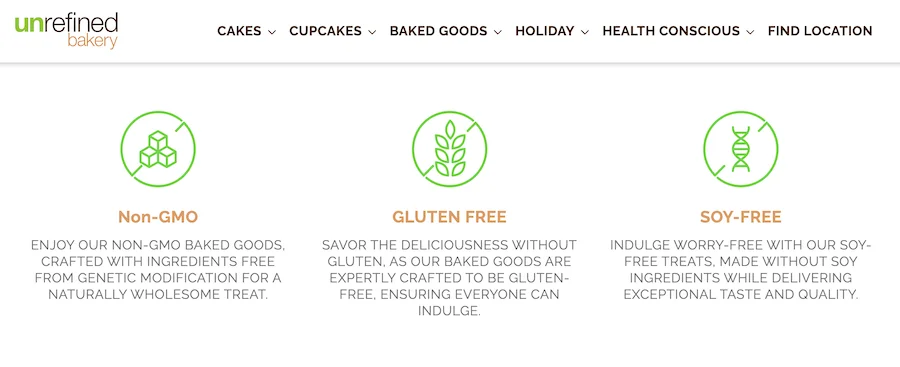
This bakery is clear on the types of ingredients they use (and don’t use).
That sentence is not clever. It is reusable.
What fails consistently
- Brand slogans
- Abstract value statements
- Soft qualifiers
Words like “trusted,” “modern,” or “high-quality” collapse under summarization. They give AI nothing to work with.
What this looks like (real-world example)
Look at law firms. Many small firms describe themselves as:
- “Full-service law firms”
- “Handling a wide range of legal matters”
That language sounds flexible. To AI, it is vague.
When users ask: “Do I need a personal injury lawyer or a general attorney,” AI tends to favor firms like Rob Levine Law, because the specialization is obvious. Personal injury. Clear scope. Clear audience.
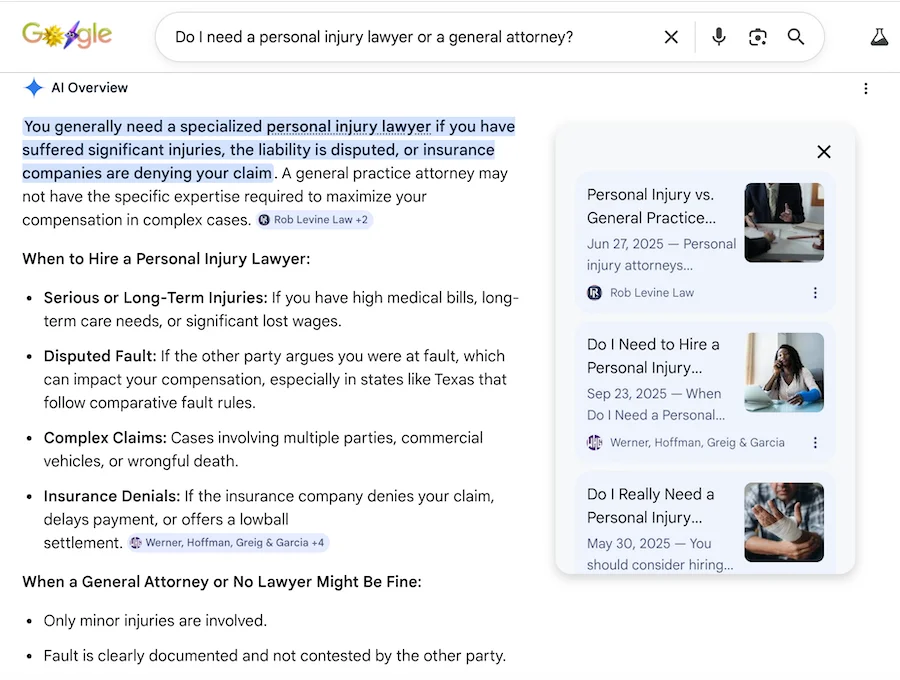
Generalist firms often get grouped into broad “local law firm” categories, even if most of their revenue comes from one type of case.
The firms that clarified early, stating clearly that they focused on personal injury, workers’ compensation, or immigration law, saw a different outcome.
AI explanations became narrower. The wrong inquiries dropped off. The right ones increased. They did not lose traffic. They lost bad-fit leads.
What success looks like in the AI-assisted buyer’s journey
None of the SMBs above saw instant traffic spikes. What they saw instead:
- AI descriptions became more accurate.
- Explanations stayed consistent across tools.
- Fewer wrong inquiries.
- Better-fit customers reached out.
That’s how influence shows up in the new buyer journey. Clicks and attribution usually lag behind these changes.
👀 Looking for ways to get more leads for your business (for free)? We’ve got you covered >> Fast & Easy Ways to Get Free Leads (+Examples You Can Copy)
Win big by influencing throughout the new buyer’s journey
Buyers still evaluate, compare, and decide. But that work now happens inside AI systems.
The businesses that adapted haven’t optimized harder—they’re clarifying earlier. Winning in the new buyer journey means shaping decisions before your site ever loads.
