


C. Scott Brown / Android Authority
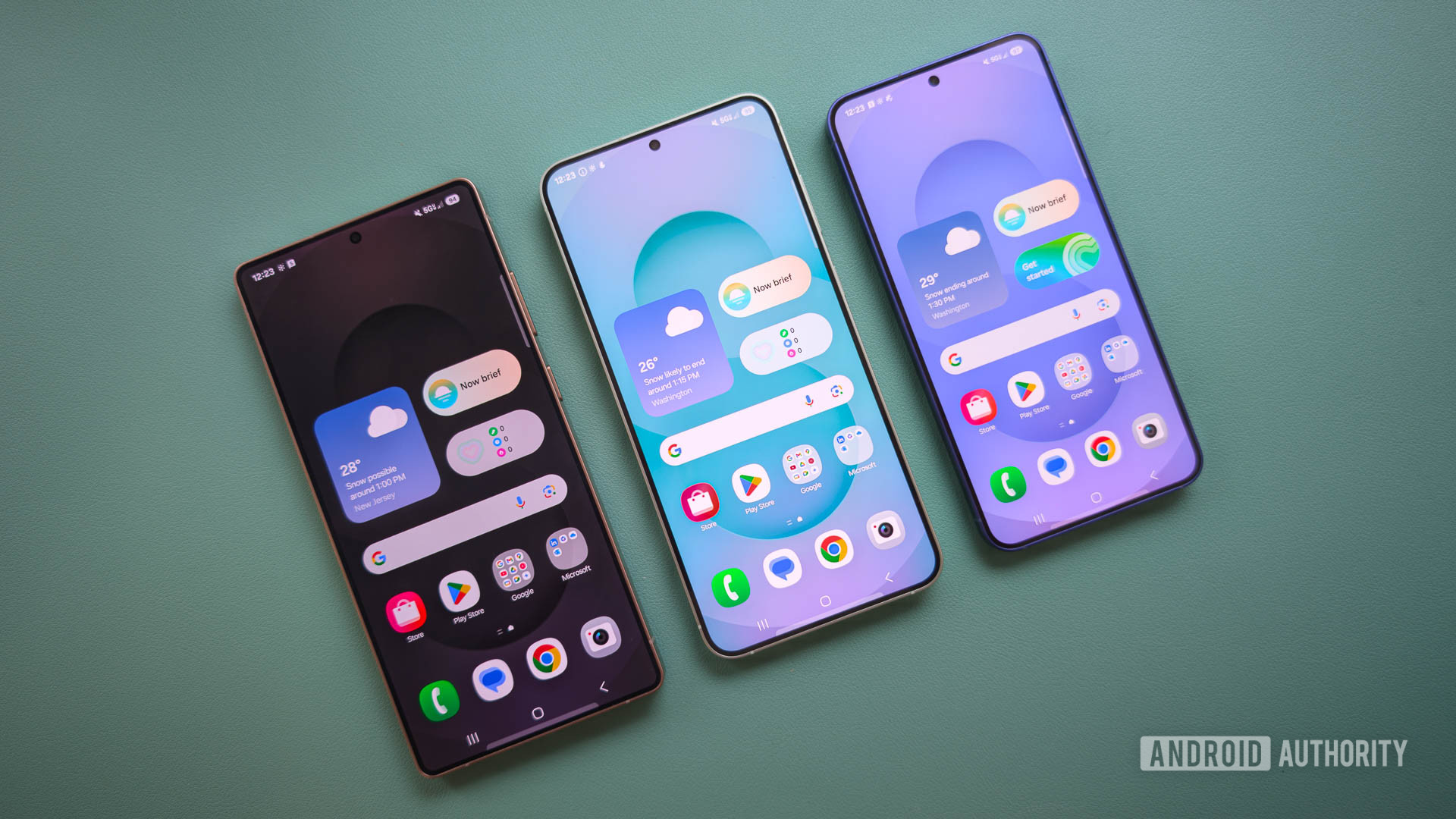
Samsung is the most popular Android smartphone maker globally, but my biggest problem with the company is that its flagship phones receive few hardware upgrades compared to rivals. Don’t believe me? The Galaxy S25 and S25 Plus have new processors, but offer the same charging and camera specs as the Galaxy S22 and S22 Plus. Even the Galaxy S25 Ultra merely offers a new processor, ultrawide camera, and Gorilla Glass, but sticks with the same battery and charging tech as its predecessors.
This can be frustrating for Samsung fans and general smartphone consumers, especially as manufacturers like Xiaomi, OPPO, vivo, and OnePlus routinely offer exciting upgrades. But with all of this in mind, we can think of a few reasons why Samsung seldom offers big upgrades for its phones.
Why do you think Samsung doesn’t offer big upgrades very often?
309 votes
1. Production challenges

C. Scott Brown / Android Authority
Samsung ships more smartphones than any other Android OEM, and its flagship phones frequently appear in listings of the top ten best-selling smartphones. This creates an interesting challenge, as it needs a massive supply of parts from partners to actually build all of those phones.
This challenge means Samsung can’t adopt a cutting-edge part in a phone if its suppliers can only produce a small number of them. Therefore, the Galaxy maker might be forced to rely on tried-and-tested parts that suppliers can readily produce in massive numbers. This could be why we don’t see hardware upgrades like one-inch camera sensors, variable telephoto camera modules, and more.
2. Reliability or safety concerns

Ryan Haines / Android Authority
Another reason why Samsung might hold off on major upgrades is that it’s worried about safety or long-term reliability. You only need to look at 2016’s Galaxy Note 7 for proof of what can go wrong, as defective batteries resulted in the phones catching fire. Airlines even banned the phone from their planes.
This saga is likely why Samsung still plays it safe when it comes to battery upgrades, as it uses the same battery capacity across multiple phone generations. In fact, the Galaxy S25 Ultra has the same 5,000mAh battery as the Galaxy S21 Ultra. Meanwhile, the base Galaxy S model has only seen modest upgrades over the years, going from the S22’s 3,700mAh battery to the S25’s 4,000mAh pack.
By contrast, rival Chinese manufacturers often use silicon-carbon batteries in their phones, enabling more juice for the same physical size or the same capacity at a smaller physical size. For example, the OnePlus 15 has a 7,300mAh battery while the OPPO Find X9 Pro has a 7,500mAh battery. These batteries tend to degrade faster than Samsung’s lithium-ion batteries, but they’re comparable to, or better than, Apple and Google’s traditional batteries.
3. Profit margin concerns

Robert Triggs / Android Authority
This might be the main reason why Samsung generally doesn’t offer big upgrades for its phones. Newer parts simply cost more than older parts, so Samsung likely sticks with older, cheaper components purely because it still needs to make a healthy profit. That’s not a surprise, as the company is a business after all.
However, it’s hard to argue that Samsung hasn’t taken profit-chasing to new extremes in the last few years. For example, rival manufacturers offer flagship phones with 3x 50MP periscope cameras, but the Galaxy S25 and S25 Plus stick with an ageing 3x 10MP camera.
Don’t want to miss the best from Android Authority?


This focus on profit also manifests in another way, as Samsung’s base Galaxy S model lacks Ultra features like 45W wired charging and Gorilla Armor protection. This is likely for product differentiation purposes, as people are forced to buy the more expensive Ultra model if they really want these perks. The firm also skips telephoto cameras on its Galaxy A phones, ostensibly so users have to pay a little extra for the Galaxy S models.
Industry watchers like leaker Ice Universe lay the blame at the feet of mobile chief TM Roh. This is understandable, as Samsung’s Galaxy S phones started to stagnate after he assumed the position. However, Roh’s tenure also coincided with Covid, while the industry has also endured component price increases in the last few years. But whatever the underlying cause, profit considerations are undoubtedly a big reason why we don’t see major upgrades very often.
4. A lack of competition

One understated reason Samsung might not offer big upgrades for its phones very often is that it doesn’t have much direct competition in this space. In fact, colleague Megan Ellis rightfully pointed out that Samsung doesn’t have to worry about HUAWEI anymore owing to US sanctions.
People forget that HUAWEI was making up major ground on Samsung up until 2020, and it even passed Apple for the number two spot globally. Devices like the P20 Pro and P20 Lite were big sellers in the firm’s strongholds of Europe, the Middle East, and Africa. Furthermore, the company also popularized AI chips and periscope cameras. I’d strongly argue that HUAWEI kept Samsung on its toes and forced it to adopt new technologies and big upgrades sooner.
Samsung no longer has stiff Android competition in the US, either. Motorola, OnePlus, and TCL are the only Chinese manufacturers in the country, but the best OnePlus phones aren’t available via carriers, TCL doesn’t offer truly high-end phones, and Motorola isn’t a consistent flagship player in the region. So Samsung might think it doesn’t need to spend money on big upgrades when its largest market doesn’t have much choice in the first place. It’s a far cry from the rest of the world, where OPPO, vivo, Xiaomi, and other Chinese phones are readily available.
5. Internal obligations

Samsung isn’t just a phone maker. It also makes many parts that go into phones in the first place. This includes processors, RAM, storage, the display, and camera sensors.
Samsung might be obligated to use internally sourced components in lieu of parts from other brands. The company tends to use in-house displays for its high-end phones, rather than potentially cheaper or better screens from Chinese company BOE. The firm also sticks with the same ageing Samsung ISOCELL camera sensors, despite the availability of more advanced sensors both in-house and via other suppliers.
One prominent example of these internal obligations is the in-house Exynos processors, which are reputedly cheaper than comparable Snapdragon chips but generally less powerful. The firm routinely launches Exynos variants of phones in some markets (e.g. EMEA) but doesn’t offer the Snapdragon version in these territories, depriving these customers of the best performance. What’s particularly troubling about the Exynos chips is that they’re almost always made by Samsung Foundry, despite TSMC’s reputation for superior manufacturing prowess. This decision to give Samsung Foundry some work almost certainly results in inferior performance and battery life at times.
How much longer can Samsung stay complacent, though?

Ryan Haines / Android Authority
There are evidently many potential reasons why Samsung doesn’t offer big upgrades very often on its high-end smartphones. This doesn’t seem to be hurting the company, though, as the Galaxy S24 and S25 phones both delivered fantastic sales. So there’s clearly more to building a phone that people want than a spec sheet alone.
Nevertheless, Samsung is clearly coasting right now with its Galaxy S phones. Over 55% of our polled readers thought the company was playing it too safe, while just ~13% said it was still churning out great flagship phones. So while general consumers might be buying these phones in droves, it might be a matter of time until they wise up to the lack of upgrades. This complacency certainly opens the door for another major Android brand to steal some of the firm’s market share, but who will it be?
Thank you for being part of our community. Read our Comment Policy before posting.
