


Close Menu
    Facebook X (Twitter) Instagram
    Wifi PortalWifi Portal
    • Blogging
    • SEO & Digital Marketing
    • WiFi / Internet & Networking
    • Cybersecurity
    • Tech Tools & Mobile / Apps
    • Privacy & Online Earning
    Facebook X (Twitter) Instagram
    Wifi PortalWifi Portal
    Home»Cybersecurity»Claude Code leak used to push infostealer malware on GitHub
    Cybersecurity

    Claude Code leak used to push infostealer malware on GitHub

    adminBy adminApril 2, 2026No Comments3 Mins Read
    Facebook Twitter LinkedIn Telegram Pinterest Tumblr Reddit WhatsApp Email
    GitHub adds AI-powered bug detection to expand security coverage
    Share
    Facebook Twitter LinkedIn Pinterest Email

    Claude Code leak used to push infostealer malware on GitHub

    Threat actors are exploiting the recent Claude Code source code leak by using fake GitHub repositories to deliver Vidar information-stealing malware.

    Claude Code is a terminal-based AI agent from Anthropic, designed to execute coding tasks directly in the terminal and act as an autonomous agent, capable of direct system interaction, LLM API call handling, MCP integration, and persistent memory.

    On March 31, Anthropic accidentally exposed the full client-side source code of the new tool via a 59.8 MB JavaScript source map included by accident in the published npm package.

    The leak contained 513,000 lines of unobfuscated TypeScript across 1,906 files, revealing the agent’s orchestration logic, permissions, and execution systems, hidden features, build details, and security-related internals.

    The exposed code was rapidly downloaded by a large number of users and published on GitHub, where it was forked thousands of times.

    According to a report from cloud security company Zscaler, the leak created an opportunity for threat actors to deliver the Vidar infostealer to users looking for the  Claude Code leak.

    The researchers found that a malicious GitHub repository published by user “idbzoomh” posted a fake leak and advertised it as having “unlocked enterprise features” and no usage restrictions.
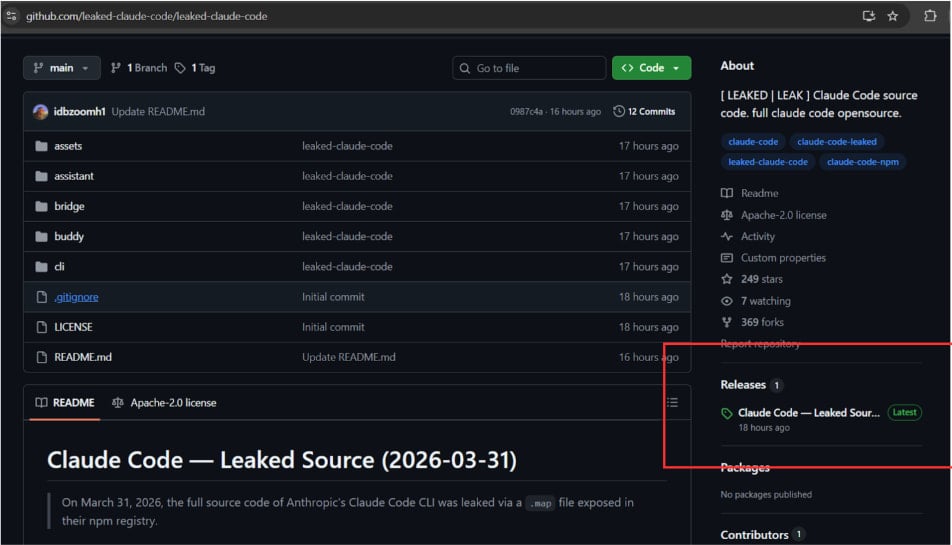
    GitHub repository spreading malware
    GitHub repository spreading malware
    Source: Zscaler

    To drive as much traffic to the bogus leak, the repository is optimized for search engines and is shown among the first results on Google Search for queries like “leaked Claude Code.”
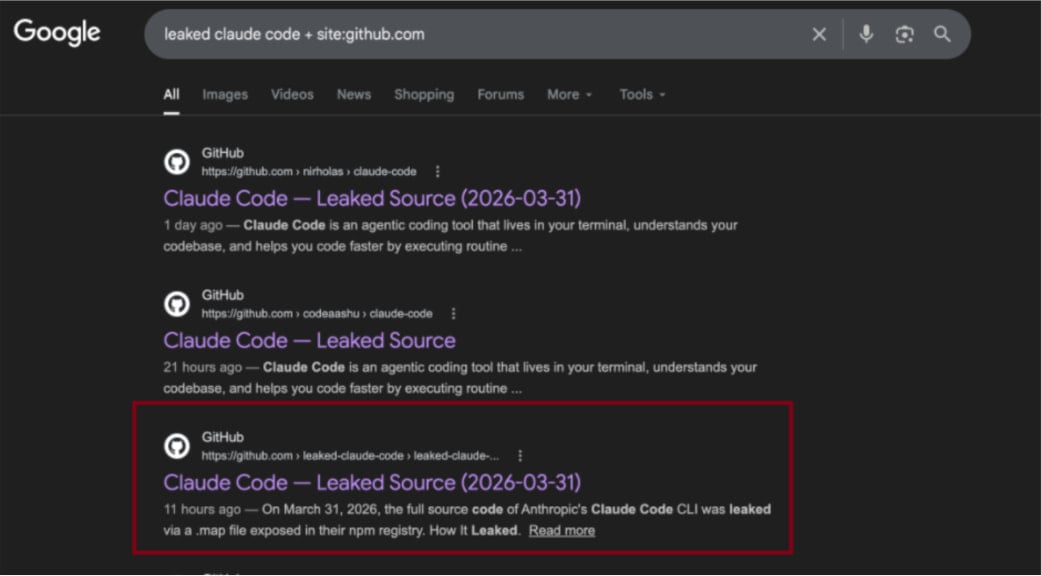
    Search result pulling users to the malicious GitHub repo
    Search result for the malicious GitHub repo
    Source: Zscaler

    According to the researchers, curious users download a 7-Zip archive that contains a Rust-based executable named ClaudeCode_x64.exe. When launched, the dropper deploys Vidar, a commodity information stealer, along with the GhostSocks network traffic proxying tool.

    Zscaler discovered that the malicious archive is updated frequently, so other payloads may be added in future iterations.

    The researchers also spotted a second GitHub repository with identical code, but it instead shows a ‘Download ZIP’ button that wasn’t functional at the time of analysis. Zscaler estimates it is operated by the same threat actor who likely experiments with delivery strategies.
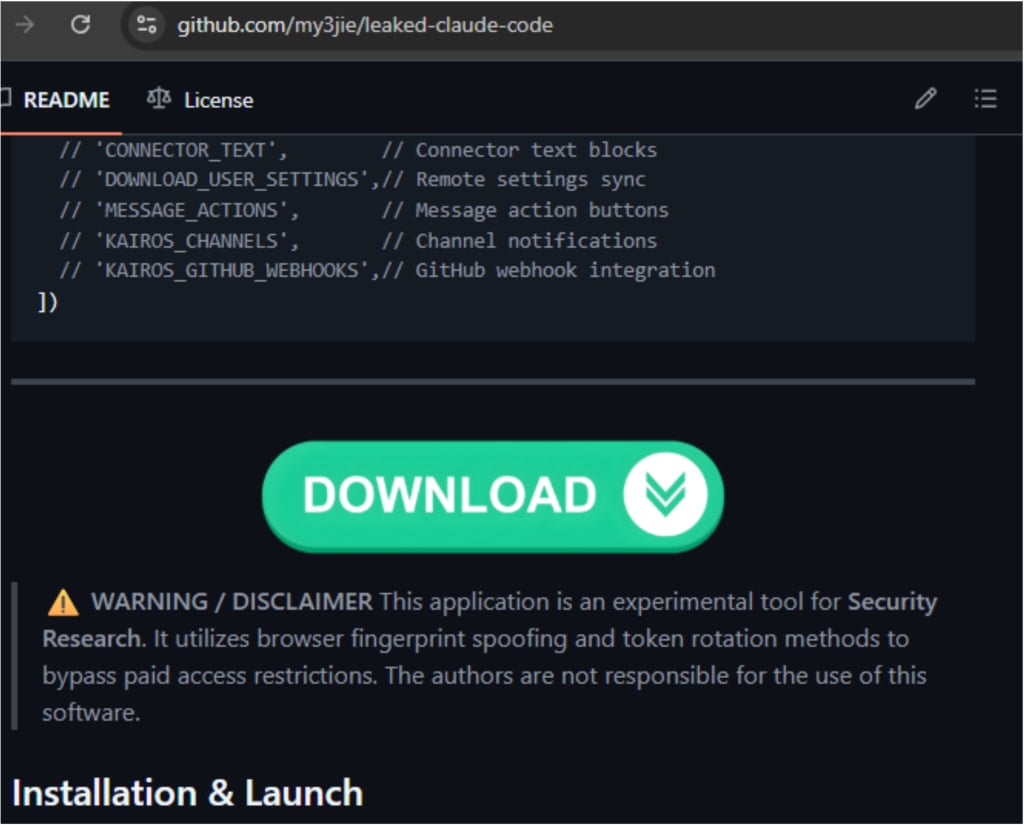
    Second malicious GitHub repository
    Second GitHub repository linked to the same threat actor
    Source: Zscaler

    Despite the platform’s defenses, GitHub has often been used to distribute malicious payloads disguised in various ways.

    In campaigns in late 2025, threat actors targeted inexperienced researchers or cybercriminals with repositories claiming to host proof-of-concept (PoC) exploits for recently disclosed vulnerabilities.

    Historically, attackers were quick to capitalize on widely publicized events in the hope of opportunistic compromises.


    tines

    Automated pentesting proves the path exists. BAS proves whether your controls stop it. Most teams run one without the other.

    This whitepaper maps six validation surfaces, shows where coverage ends, and provides practitioners with three diagnostic questions for any tool evaluation.

    Claude Code GitHub Infostealer leak Malware push
    Share. Facebook Twitter Pinterest LinkedIn Tumblr Telegram Email
    Previous ArticleA framework for AI, empathy, and design
    Next Article Kyndryl service targets AI agent automation, security
    admin
    • Website

    Related Posts

    UAC-0247 Targets Ukrainian Clinics and Government in Data-Theft Malware Campaign

    April 16, 2026

    GitHub lays out copyright liability changes and upcoming DMCA review for developers

    April 16, 2026

    New AgingFly malware used in attacks on Ukraine govt, hospitals

    April 16, 2026
    Add A Comment
    Leave A Reply Cancel Reply

    Search Blog
    About
    About

    At WifiPortal.tech, we share simple, easy-to-follow guides on cybersecurity, online privacy, and digital opportunities. Our goal is to help everyday users browse safely, protect personal data, and explore smart ways to earn online. Whether you’re new to the digital world or looking to strengthen your online knowledge, our content is here to keep you informed and secure.

    Trending Blogs

    UAC-0247 Targets Ukrainian Clinics and Government in Data-Theft Malware Campaign

    April 16, 2026

    Why Your Search Data Doesn’t Agree (And What To Do About It)

    April 16, 2026

    Opera’s browsers just picked up a new AI feature that’s actually useful

    April 16, 2026

    GitHub lays out copyright liability changes and upcoming DMCA review for developers

    April 16, 2026
    Categories
    • Blogging (63)
    • Cybersecurity (1,342)
    • Privacy & Online Earning (168)
    • SEO & Digital Marketing (822)
    • Tech Tools & Mobile / Apps (1,604)
    • WiFi / Internet & Networking (225)

    Subscribe to Updates

    Stay updated with the latest tips on cybersecurity, online privacy, and digital opportunities straight to your inbox.

    WifiPortal.tech is a blogging platform focused on cybersecurity, online privacy, and digital opportunities. We share easy-to-follow guides, tips, and resources to help you stay safe online and explore new ways of working in the digital world.

    Our Picks

    UAC-0247 Targets Ukrainian Clinics and Government in Data-Theft Malware Campaign

    April 16, 2026

    Why Your Search Data Doesn’t Agree (And What To Do About It)

    April 16, 2026

    Opera’s browsers just picked up a new AI feature that’s actually useful

    April 16, 2026
    Most Popular
    • UAC-0247 Targets Ukrainian Clinics and Government in Data-Theft Malware Campaign
    • Why Your Search Data Doesn’t Agree (And What To Do About It)
    • Opera’s browsers just picked up a new AI feature that’s actually useful
    • GitHub lays out copyright liability changes and upcoming DMCA review for developers
    • Mi Browser 14.54.0-gn APK Download by Zhigu Corporation Limited
    • New AgingFly malware used in attacks on Ukraine govt, hospitals
    • Capsule Security Emerges From Stealth With $7 Million in Funding
    • NYT Strands hints and answers for Thursday, April 16 (game #774)
    © 2026 WifiPortal.tech. Designed by WifiPortal.tech.
    • Home
    • About Us
    • Contact Us
    • Privacy Policy
    • Terms and Conditions
    • Disclaimer

    Type above and press Enter to search. Press Esc to cancel.