

My wife has shown up back home with various surprises over the years. The last big one is a rescue dog who is sleeping on my feet as I write this. However, the most surprising thing she’s ever shown up with is an honest-to-goodness LaserDisc player.
I have never owned a LaserDisc player, and the last time I saw one was in the middle of the 1990s. My dad borrowed the LD player (and rear projection TV) from a friend, and we watched Judge Dredd and Crimson Tide. The LD player that now sits in my house is a fancier machine than the first one I encountered. For one thing, this specific Pioneer player doesn’t need you to get up and flip the LaserDisc halfway through the movie.
We’ve been working through the stack of discs that came with the machine, and while enjoying this novel experience, a few things occurred to me. Like most people, I went straight from VHS to DVD, but if I had gone VHS > LD > DVD instead, I might have missed a few LaserDisc quirks when making the final jump to digital video.
Analog video that feels more “film-like”
It’s wholegrain

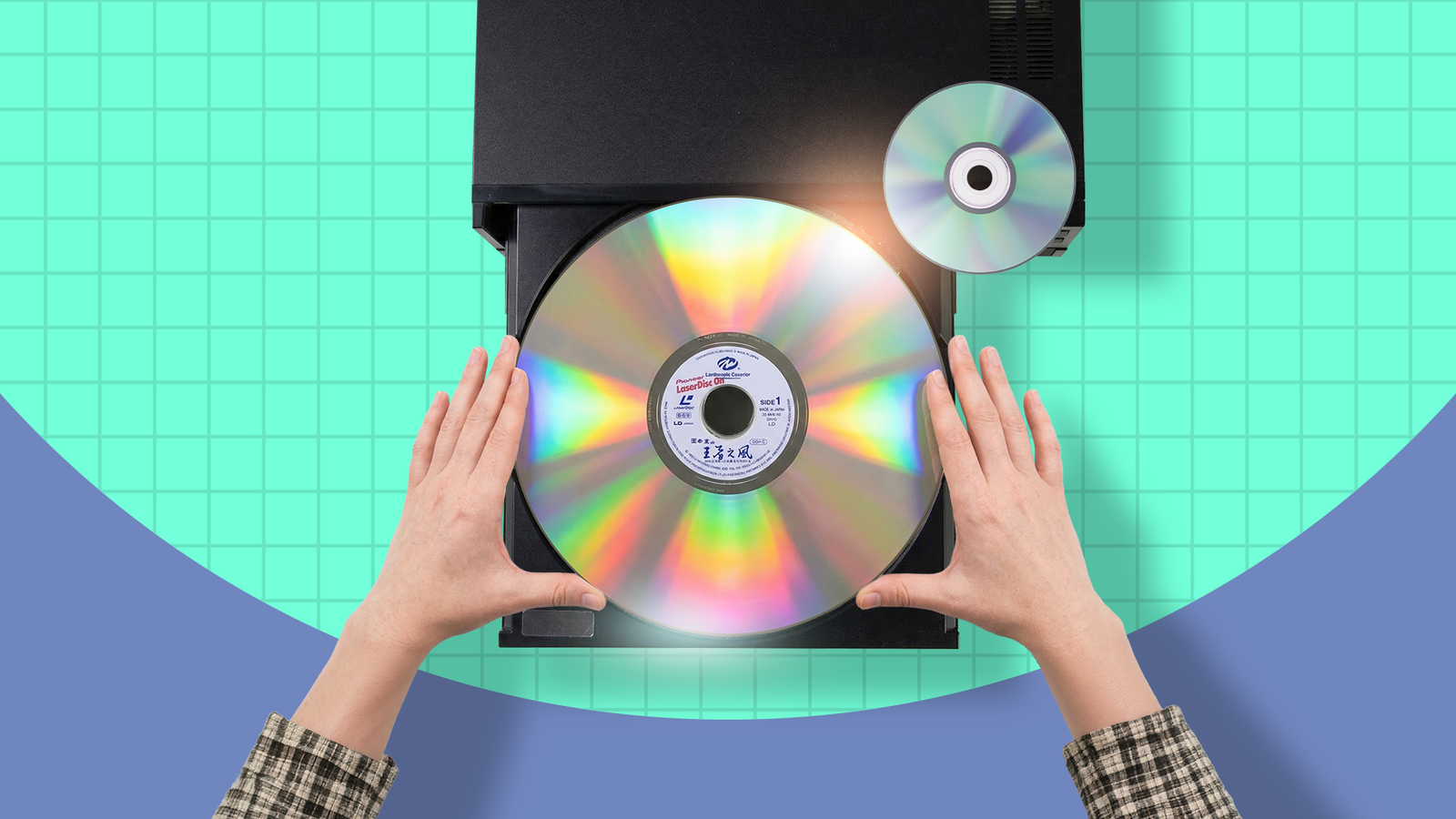
I don’t usually put my LaserDisc player on top of my TV. I only did it for this photo.
I’ve written before about how film grain causes issues with digital encoding, particularly that it makes it difficult to compress video well. However, as I watched movies on our LD player, I got the distinct feeling that the movies felt more “filmic’ than DVD, if you catch my drift.
The picture is for sure much softer than the DVD version of the movie, but given that we are watching these movies on my wonderful 34-inch Sony CRT TV, that issue is mitigated. DVDs also look awesome on this TV, but the digitization of older movies definitely has a different look, and despite the mild lack of comparative detail, I think I might actually prefer the softer look of the LDs for older movies from before the 1980s to the early 1980s.
No compression artifacts (the good kind of “worse”)
Fuzz not flakes

DVDs are pretty decent quality-wise, and I love watching my DVD collection upscaled on a modern 4K TV; the result is pretty pleasing. However, there’s no getting around that DVDs lack the bitrate to compress some types of scenery well.
Dark scenes, or those with gradation like blue skies, can show up as macro blocking and banding. Fast-moving scenes can also have a distinctive digital smearing. It’s largely been solved by Blu-ray, but some DVDs pushed the limits of the format.
Watching our LDs, the analog nature of the video seems to handle these sorts of scenes more gracefully. You get analog noise instead. Grain, speckling, a bit of instability—but not the kind of digital artifacts that pull you out of the image. Honestly, in films with lots of grain anyway, it gets lost in the noise.
Higher audio quality (on the right discs)
Here comes the BOOM

This one caught me off guard. Some of the LDs we watched have sound that’s clearly and obviously more detailed and dynamic than typical DVD audio. I looked into it, and it’s possible for LDs to have CD-quality audio.
The picture quality of LDs is much better than VHS, but I think it would have been worth it for the audio quality leap alone.
No region locking headaches
Sharing is caring

Because DVDs are digital, they opened up all sorts of DRM possibilities. DVDs are encrypted and region-locked. Of course, none of that actually stopped anyone from importing and playing discs, but even today I need a separate region-free DVD player to ensure that I can watch all of my discs.
Most LaserDiscs have no copy protection of any kind. Any LD from anywhere in the world should work, even though on paper they are regional. Generally, the only roadblock here is NTSC vs PAL. Your player and your TV need to support both, or the LD won’t display correctly.
You wouldn’t skip this anti-piracy video…

When I first started watching DVDs, I thought the menus and intros were cool. I still do, but the problem is that for most discs out there, these things are unskippable. I hate to admit that sometimes I’ll just watch the streaming version of a TV show that I own on disc, because at least it just gets straight to the show instead of showing me a bunch of anti-piracy warnings. Warnings that, ironically, pirates would remove from their ripped copies for convenience.
LaserDiscs don’t have this issue. You have the convenience of chapter markers, which VHS doesn’t have, but none of the DVD fluff. There wouldn’t be room for it anyway. LaserDiscs had to use every second of room on the disc for video!
Giant artwork you can actually appreciate
This last one is an advantage that’s also true for vinyl records compared to CDs. Because LaserDiscs are large, they come in elaborate sleeves. Longer movies need two discs, and don’t forget that some have special feature discs too!
This created the opportunity for large pieces of art and surprisingly detailed text. Even though I own some of these same movies in other formats, I feel LDs are worth collecting just because of this packaging, even if they aren’t the go-to format for me to watch. Now that we have an LD player (which seems to be in perfect working order), you can bet I’ll keep an eye out for anything interesting or rare. The ideal find would be a version of a movie or show that never got a digital release, but half the fun is not knowing what you’ll find!
