

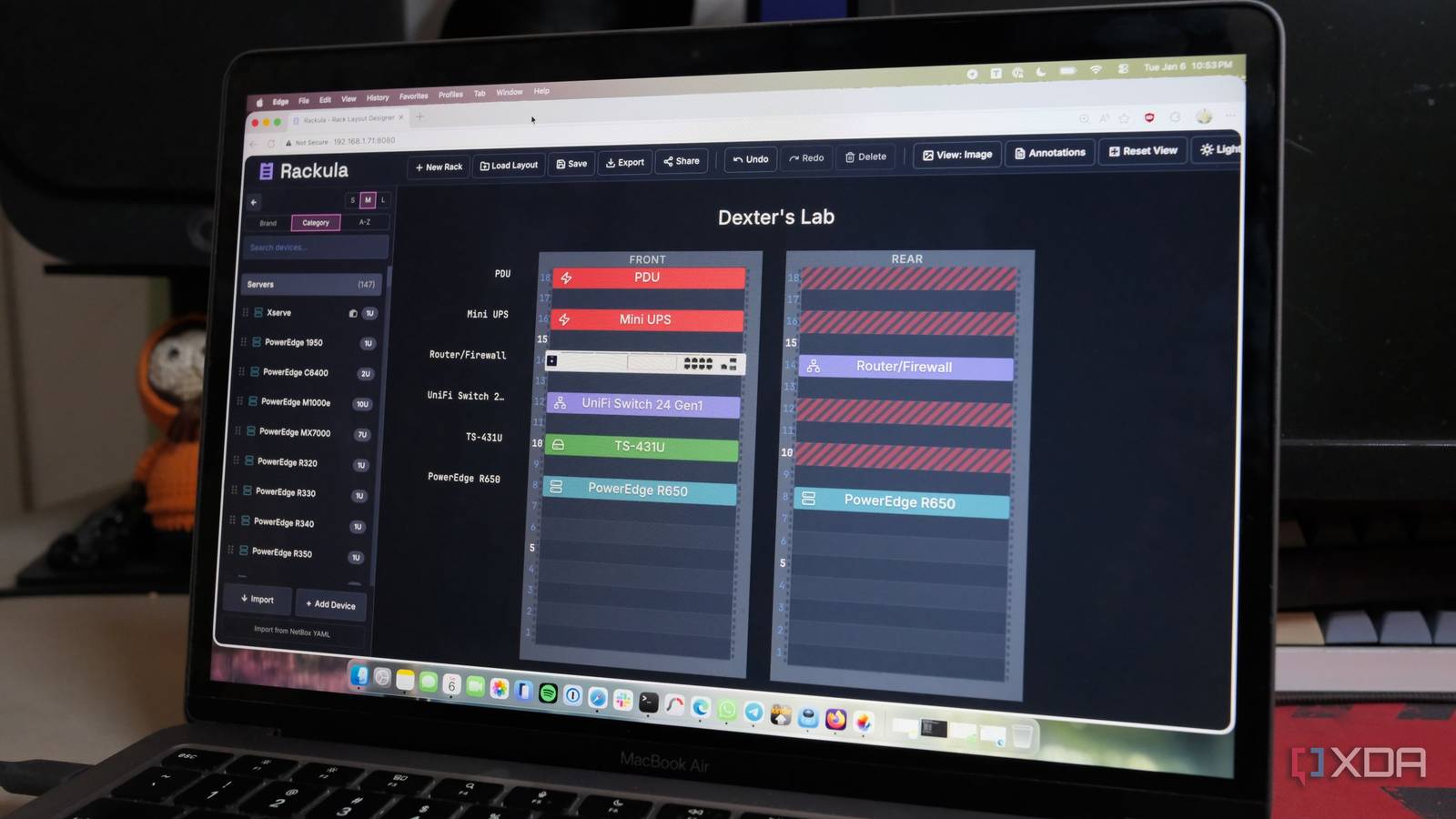
For a long time, I treated my home lab like a problem that could be solved if I just made one more smart upgrade. There was always a better layout, a cleaner dashboard, a more elegant backup flow, or a more efficient way to run the same handful of services. I kept telling myself I was getting closer to the version that would finally feel finished. What I actually built was a cycle where the lab never sat still long enough to prove it was working.
I didn’t stop experimenting. I stopped experimenting without a reason.
The strange part is that most of my real needs were never that complicated. I wanted a few reliable services, easy remote access, sensible backups, and enough flexibility to experiment without breaking everything else. That should have been manageable, but perfection has a way of making simple goals feel unfinished. Once I stopped trying to make my setup look ideal on paper, I started making decisions based on what actually held up day after day. That shift changed the lab more than any hardware swap ever did.

How I used NixOS to make my home lab truly immutable
Safety and security are NixOS’s calling cards
Chasing perfection turned routine maintenance into constant disruption
Every improvement created one more place for failure
The biggest problem with chasing the perfect home lab is that it disguises disruption as progress. Every migration feels justified in the moment, especially when it promises cleaner management, lower power use, or a more modern stack. You convince yourself that a weekend of work will buy months of stability. Then that weekend turns into troubleshooting, rebuilding, and rechecking things that had been fine before you touched them.
I ran into this most often when I tried to optimize systems that were already doing their jobs. A service would be stable, accessible, and easy to maintain, but I’d still start thinking about whether it belonged on different hardware or under a different hypervisor. I’d read about a slicker approach, and suddenly my working setup looked temporary. That mindset made the lab feel active, but not necessarily better. It also meant small changes kept rippling outward into DNS, storage, networking, and backups.
The result was a lab that always felt one step away from being “done” and never actually settled into a dependable rhythm. Even successful upgrades came with a cost because they reset my confidence in the environment. I wasn’t just maintaining services anymore. I was maintaining a moving target that shifted whenever I got restless. Once I noticed that pattern, it became harder to pretend all that tinkering was automatically productive.
Stability matters more than having the cleverest setup
Reliable services beat elegant diagrams every single time

What finally helped was a much less exciting idea: leave working things alone. That sounds obvious, “if it ain’t broke, don’t fix it. On the other hand, it goes against a lot of home lab culture, where experimentation and optimization are treated like proof that you’re doing it right. There’s nothing wrong with that in moderation. The issue comes up when the lab becomes a showcase for potential rather than a tool that supports what you actually use.
A reliable service has real value even when the architecture behind it isn’t especially impressive. If backups run, media streams, automations fire, and remote access works without drama, you’re already ahead of where many self-hosted setups end up. Those outcomes matter more than whether everything is containerized in the cleanest possible way or consolidated onto the most efficient box. There’s a lot of satisfaction in a neat stack, but satisfaction isn’t the same as uptime. I had to learn that those are two different rewards.
Your home lab stops being useful infrastructure when every stable service looks like something to rebuild. If you keep reworking storage, DNS, or deployments without solving a real problem, the lab has become the project. And when downtime starts feeling normal because there’s always another improvement underway, you’re not running dependable infrastructure anymore.
Once I started judging the lab by how little I had to think about it, my priorities changed fast. I stopped chasing theoretical improvements and started asking whether a change would make life easier a month from now. That filtered out a surprising number of tempting projects. It also made the lab feel calmer, which isn’t a glamorous metric but is a useful one. Calm systems tend to keep doing their job.
There is still a real case for refining and rebuilding often
Experimentation is part of why home labs exist

To be fair, a home lab isn’t supposed to be a frozen appliance. Part of the fun is learning new platforms, trying new deployment methods, and seeing what different hardware can do. If nobody ever rebuilt anything, plenty of us would miss the whole point. A lab can absolutely be a sandbox first and a production environment second, especially if the goal is education or pure curiosity.
There’s also a strong argument that frequent rebuilding teaches resilience. You learn how your services fit together, which pieces are fragile, and what documentation you wish you had written sooner. Breaking things in your own environment can teach lessons that clean tutorials never will. When you rebuild from scratch a few times, you stop treating the stack like magic. That confidence is valuable, and it’s one of the best reasons to keep experimenting.
On top of that, some labs really do need change because the owner’s goals keep evolving. What starts as a simple Pi-hole and file server setup can grow into virtualization, monitoring, VPN access, smart home infrastructure, and more. At that point, refusing to rethink the environment would be just as limiting as constantly reinventing it. Growth is real, and sometimes a redesign is the right call. The problem isn’t change itself. It’s the habit of treating constant change as proof of progress.
The best home lab improves when change has a job
Intentional upgrades are better than endless reinvention cycles

That’s why I didn’t stop experimenting. I stopped experimenting without a reason. There’s a huge difference between rebuilding because a current setup is failing you and rebuilding because you’re bored with a dashboard or jealous of someone else’s rack. One is a practical response to a real problem. The other is a great way to spend a weekend creating fresh instability for no meaningful payoff.
Now I try to give every major change a job before I commit to it. It needs to solve a clear pain point, reduce maintenance, improve reliability, or unlock something I genuinely plan to use. If it doesn’t do one of those things, it probably belongs on a test box, not in the environment that handles daily services. That simple rule has saved me from a lot of unnecessary churn. It’s also made the experiments I do choose feel more purposeful and more fun.
Oddly enough, letting go of perfection made the lab more enjoyable. I spend less time obsessing over whether the stack looks ideal and more time actually using what I built. When something breaks now, it’s easier to isolate because I’m not juggling three unfinished migrations and a half-adopted monitoring tool. The lab feels like infrastructure again, rather than a permanent renovation site. That’s a much better place to be.
Letting the lab work became the whole point
What changed in the end was not just the hardware or the software, but the standard I used to judge success. A good home lab doesn’t need to look complete in the abstract. It needs to serve the person running it without demanding constant attention in return. Once I accepted that, my setup got less ambitious on paper and much better in practice. It became easier to trust because it was no longer being rearranged every time I saw a clever new idea.
There’s still room for tinkering, and I’d never want to lose that part of the hobby. But I’m much more careful now about where experimentation lives and what it’s allowed to disrupt. The perfect home lab turned out to be a mirage that kept moving farther away every time I chased it. The useful home lab was sitting right in front of me the whole time, waiting for me to stop trying to perfect it and just let it work.
