
Close Menu
    Facebook X (Twitter) Instagram
    Wifi PortalWifi Portal
    • Blogging
    • SEO & Digital Marketing
    • WiFi / Internet & Networking
    • Cybersecurity
    • Tech Tools & Mobile / Apps
    • Privacy & Online Earning
    Facebook X (Twitter) Instagram
    Wifi PortalWifi Portal
    Home»Cybersecurity»FBI links Signal phishing attacks to Russian intelligence services
    Cybersecurity

    FBI links Signal phishing attacks to Russian intelligence services

    adminBy adminMarch 20, 2026No Comments3 Mins Read
    Facebook Twitter LinkedIn Telegram Pinterest Tumblr Reddit WhatsApp Email
    Signal
    Share
    Facebook Twitter LinkedIn Pinterest Email

    Signal

    The FBI has issued a public service announcement warning that Russian intelligence-linked threat actors are actively targeting users of encrypted messaging apps such as Signal and WhatsApp in phishing campaigns that have already compromised thousands of accounts.

    The FBI’s PSA is the first public attribution linking these campaigns directly to Russian intelligence services, rather than a broader description of just state hackers.

    According to the FBI, the campaigns are designed to bypass the protections of end-to-end encryption in commercial messaging apps (CMAs), not by breaking encryption, but through account hijacks.

    The FBI says the techniques used in these attacks can be applied to multiple CMAs but predominantly target Signal users.

    Depending on the access they obtain, attackers can read private messages and contact lists, impersonate victims, and launch additional phishing campaigns as trusted people.

    The FBI says the attacks have affected “thousands” of accounts worldwide and primarily target those with access to sensitive information.

    “The activity targets individuals of high intelligence value, such as current and former U.S. government officials, military personnel, political figures, and journalists,” reads the FBI’s PSA.

    The FBI’s attribution comes after earlier advisories from Dutch and French cybersecurity authorities that described similar account-hijacking operations.

    Earlier this month, Dutch intelligence agencies warned that state-backed attackers were targeting Signal and WhatsApp users in phishing campaigns aimed at gaining access to secure communications.

    The advisory highlighted that the attacks relied on tricking users into allowing attackers to add the account to their devices or link attacker-controlled devices to the account.

    Today, France’s Cyber Crisis Coordination Center (C4) also published an alert about the same tactics targeting instant messaging platforms, stating the activity is widespread and ongoing across multiple countries.

    Signal phishing attacks

    All three advisories state that the phishing attacks follow the same tactic of bypassing the platform’s encryption by hijacking accounts or linking devices to an existing account.
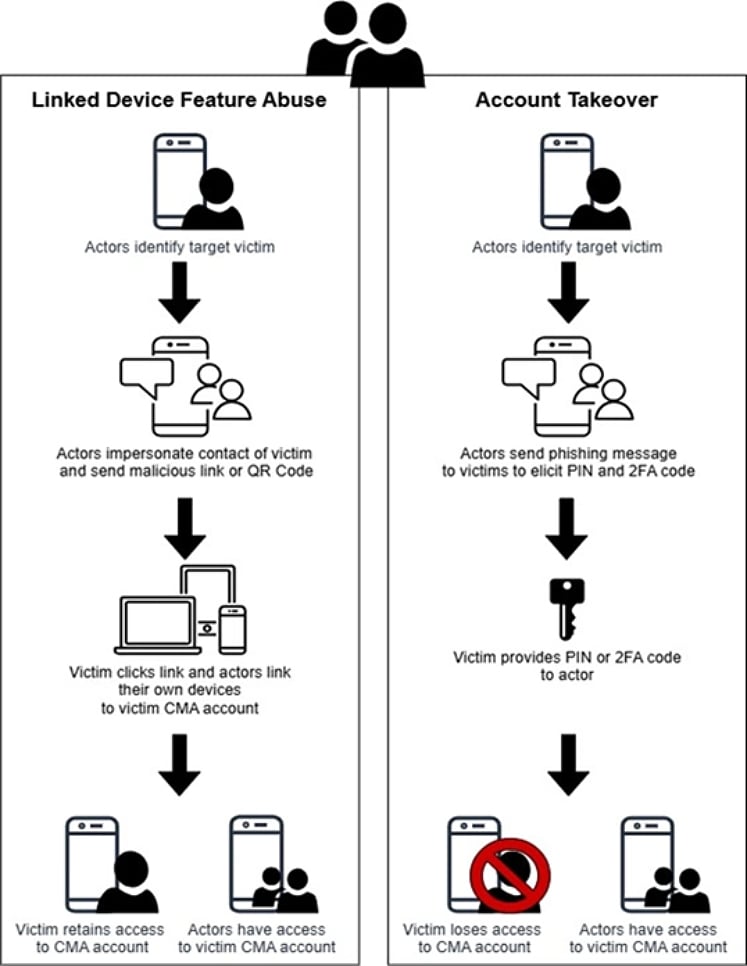
    Two different phishing methods seen targeting Signal
    Two different phishing methods seen targeting Signal
    Source: FBI

    The FBI says that most phishing messages impersonate support accounts, which request that the target perform an action that secretly grants threat actors access to the account.

    Victims are typically tricked into sharing verification codes or scanning malicious QR codes that link their accounts (Signal and WhatsApp) to attacker-controlled devices.
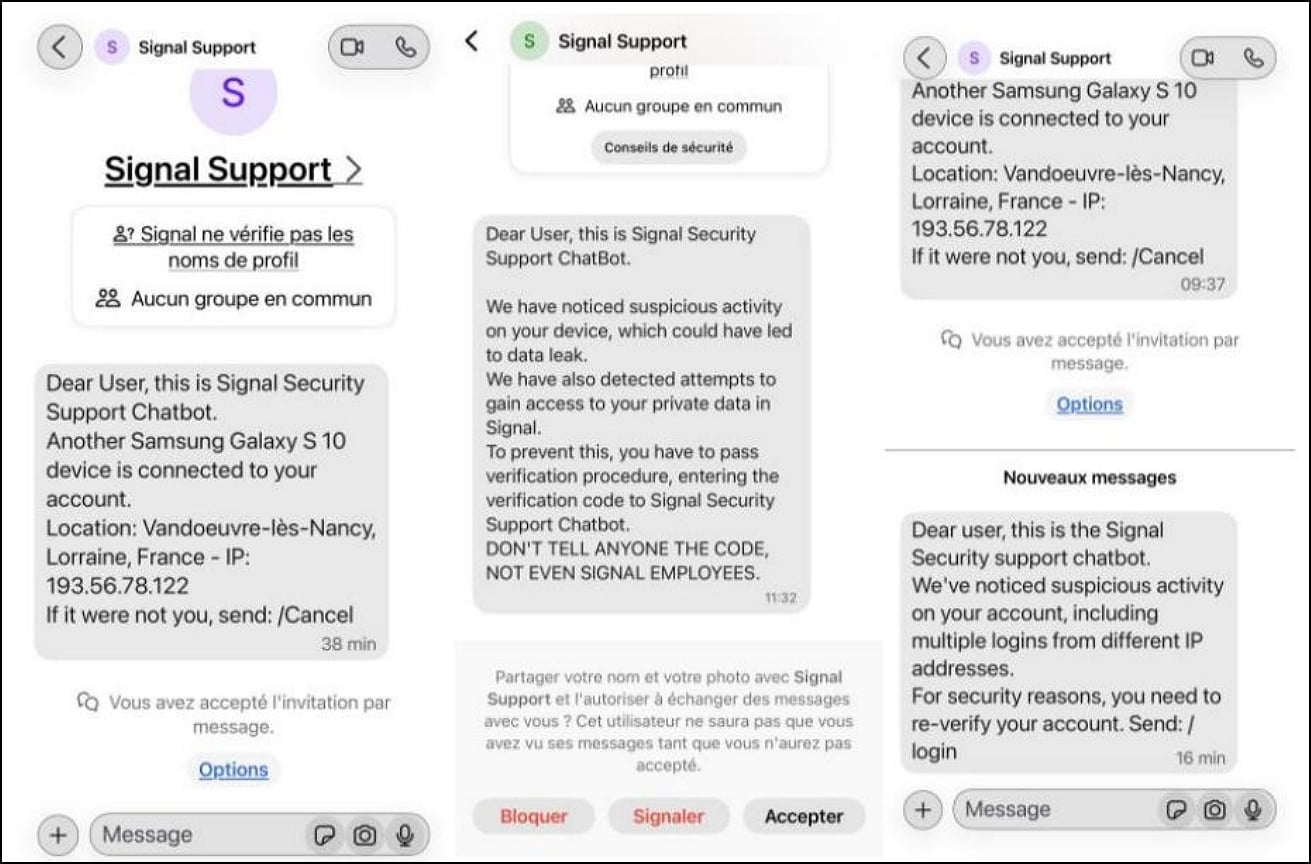
    Samples of Signal phishing messages used in the phishing campaign
    Samples of Signal phishing messages used in the phishing campaign
    Source: France’s Cyber Crisis Coordination Center (C4) 

    Once the threat actors gain access to accounts, they can silently monitor communications, join group chats, and send messages as the compromised user, making detection more difficult and enabling further phishing campaigns.

    The PSA emphasizes that encryption in Signal, WhatsApp, and similar platforms is not broken and no vulnerabilities are being exploited.

    The FBI says the campaign has already led to unauthorized access to thousands of messaging accounts, which were then used to target additional victims.

    Users are advised to remain suspicious of unexpected messages, be wary of requests to scan QR codes or link devices to their accounts, and never share verification codes with anyone, including accounts claiming to be a platform’s support personnel.


    tines

    Malware is getting smarter. The Red Report 2026 reveals how new threats use math to detect sandboxes and hide in plain sight.

    Download our analysis of 1.1 million malicious samples to uncover the top 10 techniques and see if your security stack is blinded.

    attacks FBI Intelligence links Phishing Russian services signal
    Share. Facebook Twitter Pinterest LinkedIn Tumblr Telegram Email
    Previous ArticleCongress Is Dropping the Ball with a Clean Extension of FISA
    Next Article Ignored no more: Google Messages lets you mention friends to make sure you’re heard
    admin
    • Website

    Related Posts

    Two-Factor Authentication Breaks Free from the Desktop

    April 16, 2026

    Newly Discovered PowMix Botnet Hits Czech Workers Using Randomized C2 Traffic

    April 16, 2026

    CIOs fret over rising security concerns amid AI adoption

    April 16, 2026
    Add A Comment
    Leave A Reply Cancel Reply

    Search Blog
    About
    About

    At WifiPortal.tech, we share simple, easy-to-follow guides on cybersecurity, online privacy, and digital opportunities. Our goal is to help everyday users browse safely, protect personal data, and explore smart ways to earn online. Whether you’re new to the digital world or looking to strengthen your online knowledge, our content is here to keep you informed and secure.

    Trending Blogs

    Chrome just flipped the switch on its new enhanced AI Mode, and it’s a huge upgrade

    April 16, 2026

    Two-Factor Authentication Breaks Free from the Desktop

    April 16, 2026

    Microsoft makes it easier to import Google PMax campaigns

    April 16, 2026

    EFF pushes back on Google data scandal response: ‘Google screwed up’

    April 16, 2026
    Categories
    • Blogging (63)
    • Cybersecurity (1,350)
    • Privacy & Online Earning (169)
    • SEO & Digital Marketing (829)
    • Tech Tools & Mobile / Apps (1,615)
    • WiFi / Internet & Networking (226)

    Subscribe to Updates

    Stay updated with the latest tips on cybersecurity, online privacy, and digital opportunities straight to your inbox.

    WifiPortal.tech is a blogging platform focused on cybersecurity, online privacy, and digital opportunities. We share easy-to-follow guides, tips, and resources to help you stay safe online and explore new ways of working in the digital world.

    Our Picks

    Chrome just flipped the switch on its new enhanced AI Mode, and it’s a huge upgrade

    April 16, 2026

    Two-Factor Authentication Breaks Free from the Desktop

    April 16, 2026

    Microsoft makes it easier to import Google PMax campaigns

    April 16, 2026
    Most Popular
    • Chrome just flipped the switch on its new enhanced AI Mode, and it’s a huge upgrade
    • Two-Factor Authentication Breaks Free from the Desktop
    • Microsoft makes it easier to import Google PMax campaigns
    • EFF pushes back on Google data scandal response: ‘Google screwed up’
    • Newly Discovered PowMix Botnet Hits Czech Workers Using Randomized C2 Traffic
    • How Push Notifications Can Betray Your Privacy (and What to Do About It)
    • Try Using the 3-3-3 Rule to Stick to an Exercise Routine
    • CIOs fret over rising security concerns amid AI adoption
    © 2026 WifiPortal.tech. Designed by WifiPortal.tech.
    • Home
    • About Us
    • Contact Us
    • Privacy Policy
    • Terms and Conditions
    • Disclaimer

    Type above and press Enter to search. Press Esc to cancel.