

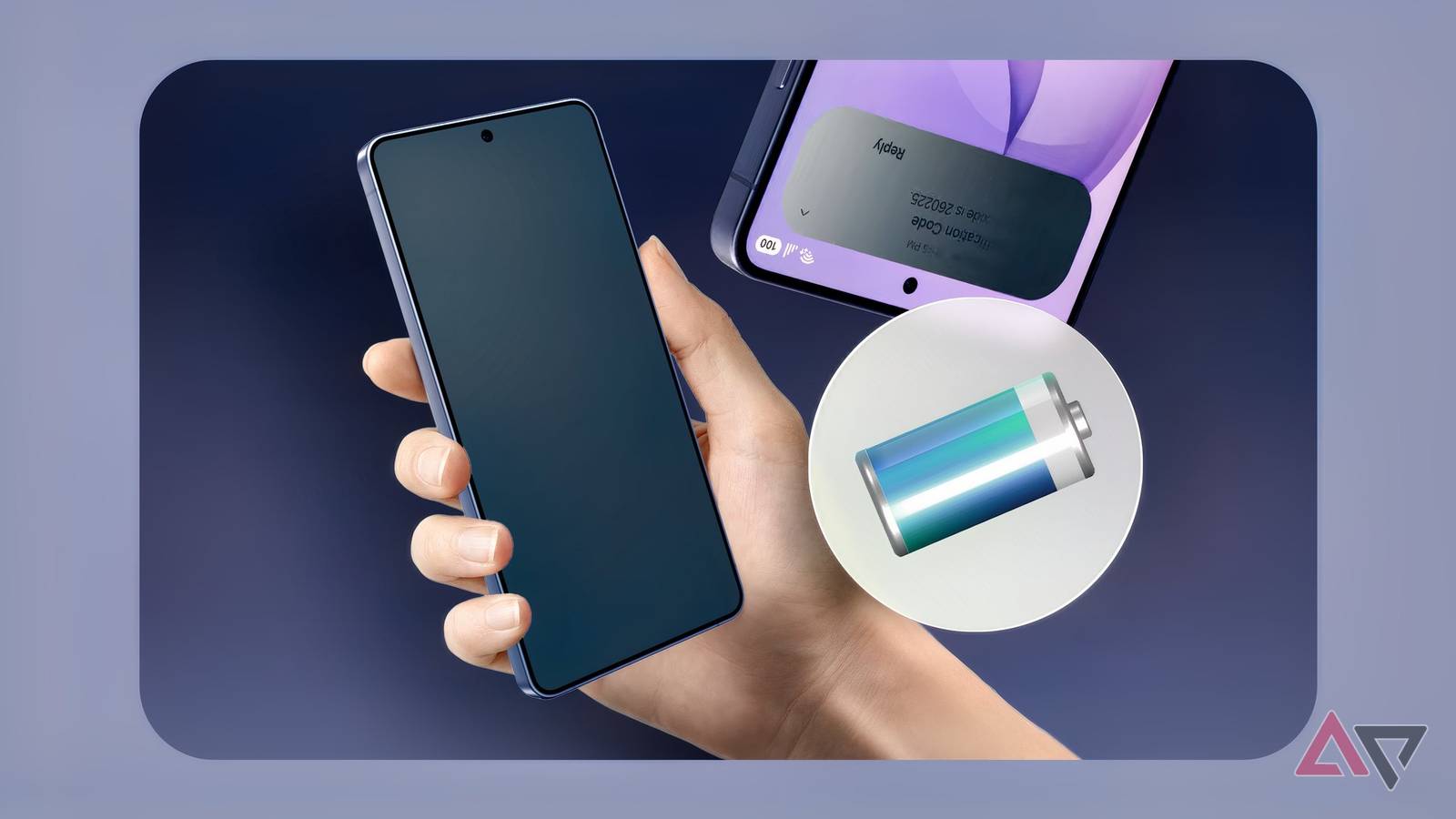
It’s hard to deny that the Privacy Display has proven to be the Samsung Galaxy S26 Ultra’s most talked-about feature, but I was more apprehensive than most when I first heard Samsung discuss the feature.
Here at Android Police, we’ve already waxed lyrical about how the Privacy Display has to be seen to be believed, discussed how people will use the new feature, and questioned whether it’ll give users eye strain and headache.
I only had eyes for Audio Eraser because from the early leaks about the screen tool, I had some doubts about it.
I’m all-too-familiar with battery anxiety, and watch with weariness as new generations of smartphones are announced toting display features that gobble up energy.
High refresh rate displays, blinding max brightness, and creeping pixel counts, all go hand-in-hand with shorter battery lives — or chunkier power packs to compensate.
So, when Samsung announced a brand-new screen feature, my first thought was “what’s that going to do to the battery life?”
Thankfully, the brand sent me one, letting me test my theories with some experiential tests.

6 things you must know about the Samsung Galaxy S26 Ultra’s amazing Privacy Display
Now you see it, now THEY don’t
How the Galaxy S26 Ultra’s Privacy Display actually works
All killer, no filter

Before we do some number-crunching, it’s worth explaining how the Galaxy S26 Ultra’s Privacy Display actually works, so you know why battery life could be affected.
Unlike stick-on screen protectors, Samsung has implemented the Privacy Display at the “Pixel level” as it says.
That means the screen hardware itself is changing, and the effect isn’t just the result of a filter layer or screen.
When Privacy Display turns on, whether you’ve manually toggled it or opened an app which uses it, the tech directs the light that’s emitted so it’s only going straight forward: at the user.
Could the display save battery, because it reduces the light emitted from the display to only go in one direction? Or could it increase consumption since it controls the light to a greater extent?
I was open to both, but ended up being surprised by the third option.
The first S26 Ultra test
Game on for the Privacy Display

My first test with the Samsung Galaxy S26 Ultra was simple: I charged it up to full, turned off auto brightness, loaded up one of 3D Mark’s 20-minute-long endurance tests, unplugged the phone and pressed Play.
Twenty minutes later, when it ended, I powered it back up to full, changed the Privacy Display, and moved on.
Why a performance test, and not a simple screen-on one?
Firstly, I figured the performance aspect of each test would be constant, yet would consume enough power to exacerbate any drain from the screen.
Secondly, it’s because 3D Mark records battery drain, so it has a log that wouldn’t exist if I just turned on a 90-minute video.
I was also curious to see if processing was affected at all by whatever software was at work.
Unfortunately, each test ended with exactly the same battery percentage: 92%.
This made me wonder whether the Privacy Display actually didn’t affect the battery life at all, but I’d already promised a long write-up about this experiment, and needed to deliver.
So I stepped things up again: three rotations around the test. An hour of simulated vibrant gameplay.
The second S26 Ultra test
An hour of top-end gaming
Three back-to-back benchmark tests were, naturally, quite annoying to run.
I needed to be near enough to the phone at all times that I’d see when each test ended, and immediately put it on to run again.
I didn’t want any downtime that could lead to variations in the results.
First up, I tested with Privacy Display off. The first test saw the battery drop from 100% to 91%, test two down to 82%, and test three down to 73%.
Then I turned on Privacy Display and ran the tests again. Event one saw it drop to 91%, event two down to 82%, and event three — drumroll please — down to 72%.
That’s right: The difference was 1%. Not a huge amount by any metric, and enough to be explained by tiny amounts of battery degradation, small environmental differences, or a split-second extra in recommencing the tests.
Suffice to say, I don’t feel confident claiming that there is any difference at all … on the surface.
But I noticed something interesting while digging into the other stats from the benchmark test: On each round, 3D Mark’s loop scores were moderately better when Privacy Display was turned off.
I’m talking about consistent scores about 200 higher. That’s not a huge amount in the grand scheme of things, for phones beginning in the mid 7,000s and ending in the high 4,000s, but it’s a little clue.
Furthermore, I noticed that, with Privacy Display turned on, the heat-related performance drops common in benchmark tests took longer to set in.
With Privacy Display off, the max loop score in each test was 7,115, then 5,218, then 5,448. With it on, it was 7,473, 7,355, then 4,946.
My hypothesis here: Privacy Display doesn’t affect the battery, but reduces the radiation from the screen and therefore stops it heating up as fast, thereby offsetting overheating for longer.
I came to this conclusion based on results like the ones above, and my own eyes: the screen certainly looks brighter and more vibrant with the filter turned off.
Regardless of battery considerations, then, it’s probably worth leaving on for gamers.
A final last-ditch S26 Ultra test
C’mon Samsung, give me something

That was interesting to learn, but I hadn’t sent out to learn about performance: I wanted battery data.
When it became clear that 3D Mark wasn’t giving me that lovely smoking gun I could turn into a clicky angle, I used another battery test from my arsenal.
I downloaded onto the phone a 90-minute video (my film director showreel looped about 25 times), and played it from start to finish.
This isn’t my favorite of the battery tests in my roster, because drain is usually in the low single figures, but of all I frequently use, it’s the only one that’s basically just a test of the screen.
Privacy Display on, 3% drain. Turned off, 2% drain. Again, Privacy Display might use a modicum more power, but by such a marginal amount that it’s impossible to say for sure.
I’m not convinced. Going forward, I’m treating the two modes as equally power-consumptive.
This will, to some people, read like a rather anticlimactic piece (for battery learning at least; the performance data is interesting).
I imagine some readers were hoping for 20% extra battery drain in one mode or another; I certainly was.
But they show you don’t need to let battery anxiety dictate whether you use the Privacy Display on the S26 Ultra. Nope, you can let your worries about eye strain do that instead.


8/10
- SoC
-
Qualcomm Snapdragon 8 Elite Gen 5
- Display type
-
Dynamic AMOLED 2X
- Display dimensions
-
6.9-inch
- Display resolution
-
3120 x 1440
