

Summary
- HackyFi is an ultra-compact USB-C dongle using RP2350A with screen, buttons, and onboard storage.
- Plug it in, and it instantly triggers workflows, apps, or recordings with full cross-platform support.
- Kickstarter fully funded; pledge starts at $60, but crowdfunding isn’t a guaranteed purchase.
Sometimes, bigger isn’t always better. It’s easy to believe that, if you want to create a Raspberry Pi project, your best bet is to purchase the biggest and strongest board available. However, one of the Raspberry Pi’s strengths is its small size, which allows it to fit into use cases that its bigger cousins just can’t fit into.
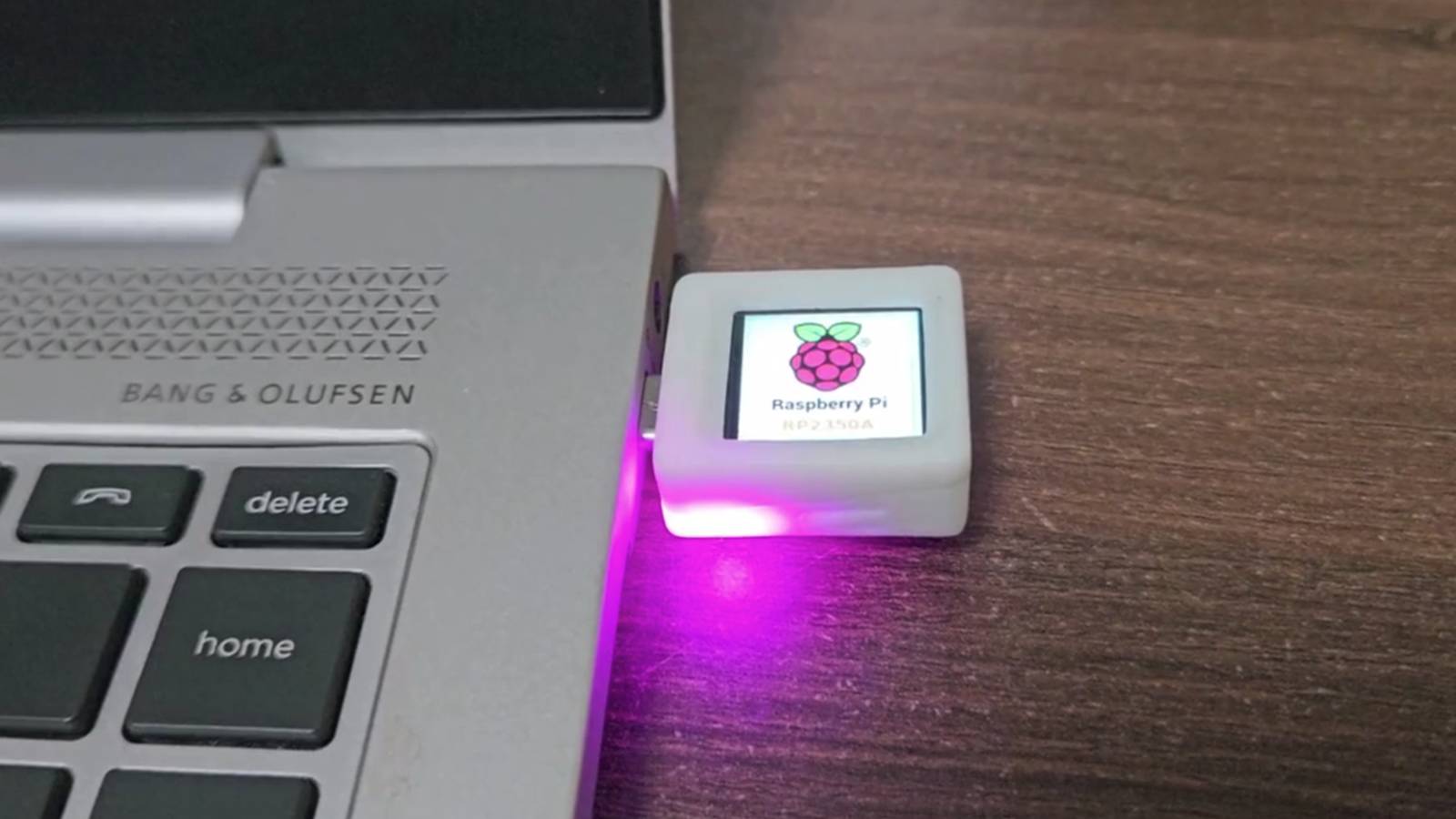
For instance, take the adorable HackyFi. This takes advantage of the Raspberry Pi RP2350A microcontroller to make a USB-C dongle with a screen that you can plug into your PC to run whatever you like. And because its creators kept it small and compact, you can slip it into your pocket with ease when it’s time to go.

3 Raspberry Pi projects for ethical hackers
Get your hack on in style.
The HackyFi is a powerful workhorse that comes in a tiny package
You can even put it on your keyring

As spotted by Hackster.io, the HackyFi is the newest idea from Creative Labs. It takes advantage of the small-but-mighty RP2350A chip to get the job done without taking up too much space. In fact, because the hardware is so compact, the HackyFi can afford luxuries like a built-in screen without making the dongle too big to be conveniently carried around.
In fact, the HackyFi was designed with portability at the forefront:
HackyFi was built on a simple idea: powerful tools shouldn’t be bulky. In a world where most development and automation devices are oversized, complicated, or locked into one ecosystem, we wanted something different — something portable, programmable, and practical.
HackyFi is an ultra-compact USB-C dongle with a built-in display, buttons, storage, and full cross-platform support. Designed for hackers, makers, educators, and researchers, it lets you plug in, trigger workflows instantly, and code it your way — whether you’re experimenting, automating, or learning.
It seems Creative Labs is most proud of the HackyFi’s ability to run tasks the second it’s plugged into a device. You can see an example in the GIF above, where the HackyFi opens up a camera app and takes a recording after being plugged in with no additional input required.
If you’d like to see more of the HackyFi, you can do so over on the project’s Kickstarter page. It’s already fully funded, and you can pledge $60 to get your own HackyFi once it’s done. Just remember that crowdfunding is not the same as purchasing, and that if a campaign falls through, you won’t get a refund. Never pledge with money you’re afraid of losing with zero return.
