

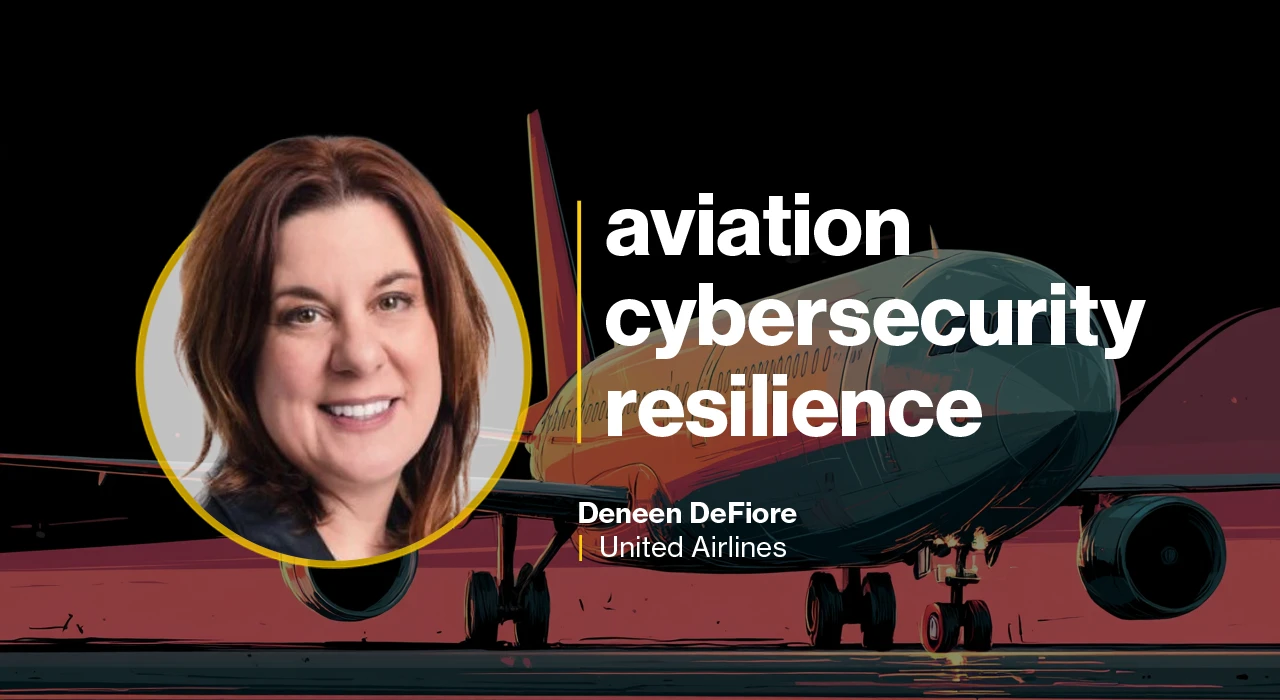
Aviation runs on complex digital systems built for stability, safety, and long lifecycles. That reality creates a unique cybersecurity challenge for airlines, where disruption can quickly become an operational and public trust crisis.
In this Help Net Security interview, Deneen DeFiore, VP and CISO at United Airlines, explains how the company approaches modernization without compromising safety-critical environments, why resilience and continuity matter as much as prevention, and how the airline manages risk across an interconnected ecosystem of vendors, partners, and infrastructure providers. DeFiore also shares how cross-functional collaboration shapes incident response when the stakes include passengers in the air.

Aviation operates on thin margins for error and long technology lifecycles. How do you reconcile the need for cybersecurity modernization with aircraft, operational, and safety systems that were never designed for frequent change?
In aviation, modernization cannot mean constant change for its own sake. Many aircraft and operational systems were designed for stability, determinism, and certification, not rapid iteration. The way we reconcile that reality is by being very intentional about where change happens and where it does not.
We focus on wrapping legacy and safety-critical systems with modern controls rather than forcing them to behave like cloud-native platforms. That means strong identity, segmentation, monitoring, and data protections around systems that may not be easily modified. It also means designing compensating controls and resilience strategies so that security improvements reduce risk without introducing operational fragility.
Modernization in aviation is less about speed and more about precision. Every change must measurably improve safety, reliability, or resilience. Cybersecurity must respect that bar.
Airlines are simultaneously IT companies, logistics operators, and safety-critical infrastructure providers. How does that hybrid identity shape your cybersecurity strategy compared to other large enterprises?
That multidimension identity influences how we think about digital risk. In many industries, cybersecurity incidents are primarily about data loss or financial impact. In aviation, they can cascade into operational disruption and safety considerations very quickly. As a result, our strategy is built around operational continuity, resiliency, and trust, not just protection.
We prioritize availability, recovery, and decision support just as much as prevention. Cyber risk is assessed in terms of how it affects the ability to move aircraft, crew, and passengers safely and on time. It also means cybersecurity leaders must understand the business end-to-end. You cannot protect an airline effectively without understanding flight operations, maintenance, weather, crew scheduling, and regulatory constraints. Cybersecurity becomes an enabler of safe operations, not a separate technical function.
The aviation ecosystem is deeply interconnected, from airports and ground handlers to manufacturers and air traffic control. How do you assess and manage cyber risk that originates outside your direct control but can still ground flights?
No airline operates in isolation, and many of the most significant risks sit outside our direct control. Managing that reality starts with visibility and relationships. We invest heavily in understanding our dependencies, critical third parties, and systemic choke points across the ecosystem.
Risk assessment goes beyond vendor questionnaires. It includes scenario analysis, operational impact modeling, and close coordination with partners, regulators, and industry groups. Information sharing is essential, because early awareness often matters more than perfect control. Ultimately, we assume some disruptions will originate externally. The goal is to detect them quickly, understand their operational impact, and adapt without compromising safety. Resilience and coordination are just as important as contractual controls.
Incident response in aviation has public, operational, and safety implications. How does your crisis decision-making differ when the potential impact includes passengers on the ground or in the air?
In aviation, cyber incident response decisions are never made in a vacuum. Every action is evaluated through the lens of safety, operational continuity, and public trust. Crisis decision-making is deliberately multidisciplinary. Cybersecurity does not act alone. We work alongside operations, safety, legal, communications, and executive leadership to ensure decisions are balanced and informed.
Speed matters, but clarity matters more. We also plan extensively in advance. You cannot improvise under pressure when aircraft and passengers are involved. Clear playbooks, rehearsals, and defined decision authorities allow teams to act decisively while staying aligned with safety principles.
Cybersecurity teams in aviation often work alongside safety, engineering, and operations groups. How do you build trust and shared accountability across disciplines that historically speak very different languages?
Trust is built by respecting the mission of each discipline and meeting them where they are. In aviation, safety and engineering communities are deeply evidence-driven and rightly cautious. Our cybersecurity earns credibility by understanding the outcomes they need and the constraints they have, not dismissing them. We focus on shared outcomes rather than cybersecurity jargon.
Instead of leading with controls or compliance, we talk about risk to operations, recovery time, and failure modes. That creates a common language and reinforces that everyone is working toward the same goal. Shared accountability comes from partnership. When cybersecurity is seen as enabling safe, reliable operations rather than slowing them down, collaboration follows naturally. Over time, that trust becomes one of the strongest defenses we have.

Read more:
