

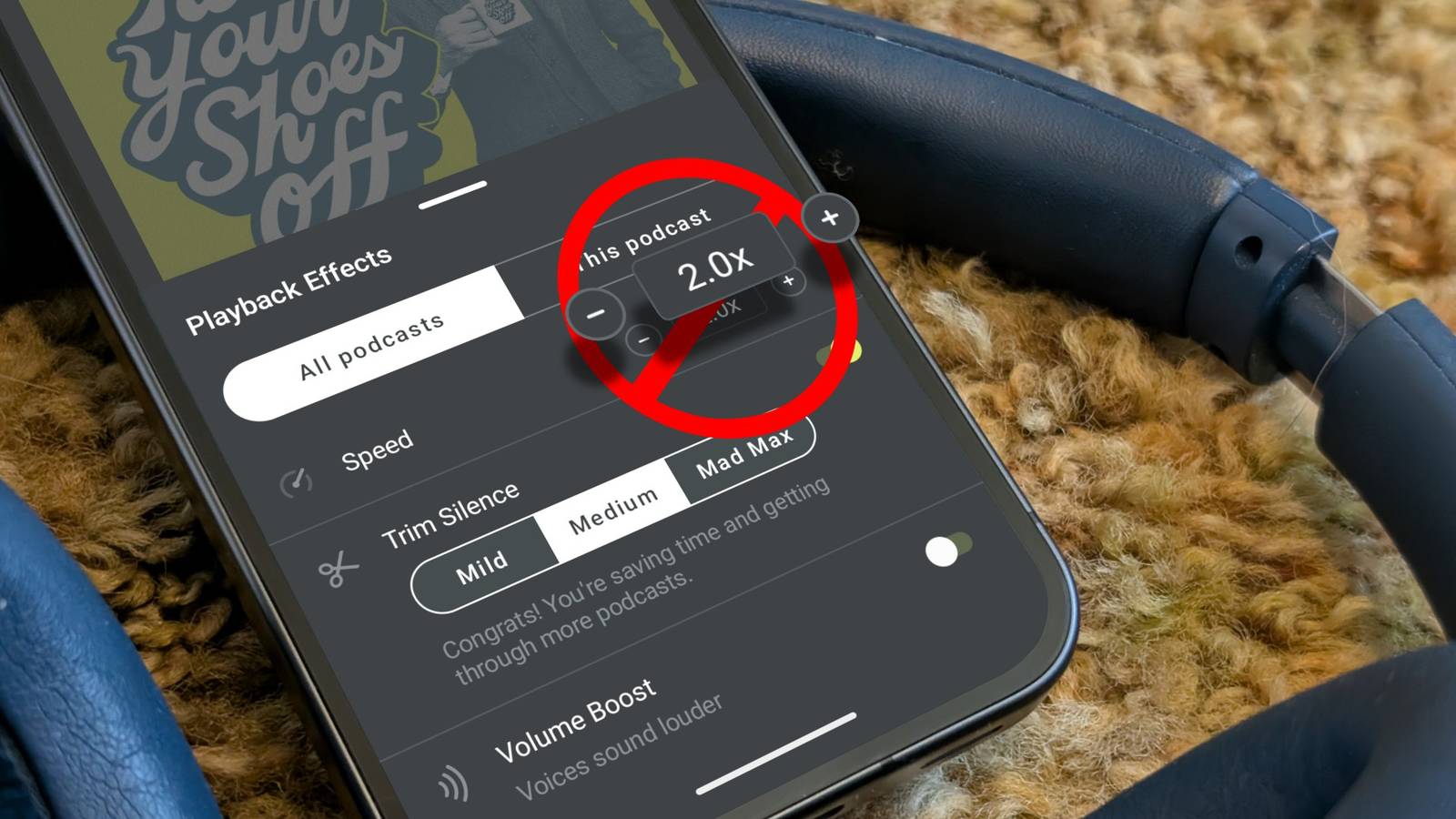
Our time is limited, but there’s a nearly unlimited number of podcasts, audiobooks, and YouTube videos to watch. You wouldn’t be alone if you turned to the seemingly innocent “1.5x” or 2x” speed button as a solution, but at what cost?
Look, I get it. You have a million podcast episodes in your queue and a long list of audiobooks you’ve never gotten around to. Speeding up playback seems like an easy solution to pack more content into smaller windows of time. You will accomplish that, but I think this practice is a bit dystopian. Allow me to explain.
The illusion of “learning”
Completing doesn’t mean retaining

Dogs are smart enough to recognize many words, but that doesn’t mean they understand them. There’s a big difference between hearing and comprehending. If the goal is to simply finish as many podcasts and audiobooks as you can, speeding up is a great trick. But what will you have taken from it all?
Hearing a word is not enough for our brains to fully “encode” it into our memory. We need time to process—even if it’s fractions of a second. When words are being hurled past your ears at double speed, there’s no room for your inner thoughts.
This is especially true for audiobooks. In writing, authors use line breaks and chapters to intentionally insert pauses. These little moments give your brain a chance to digest what it just read. If you can’t digest it, you can’t retain it, and all the time you spent was for nothing.
I really notice it with shows that release episodes weekly vs. all in one drop. When I binge multiple episodes back-to-back, I find myself forgetting stuff more than when I have a full week to process and ruminate.

Listening to podcasts at 1.5x speed doesn’t make me a monster
Life’s too short to listen in real time.
Stripping away artistic intent
The creator had a vision

Making things and releasing them into the world requires many choices. Take something as simple as a comedy podcast, for example. The show might just be a couple of dudes goofing off, but they made a logo, bought equipment, set up a recording space, and edited the audio. The final product isn’t just an accident—it was intentional.
The thing is, even with line breaks and chapters, there’s only so much an author can do to control how a book is read. However, when it comes to audio, it can be exactly how the author or podcast hosts want it to sound. Every pause, how certain words are emphasized, and, of course, the speaking speed.
When you listen to something sped up, you’re not hearing it how it was intended to be heard. It’s like looking at a painting with colored glasses on, watching a movie that was shot in 4:3 with the top and bottom chopped off to fit in 16:9, or skipping through every single cut scene to finish a game as quickly as possible.
Content is not a commodity
It’s supposed to be fun!
I stand by everything outlined above, but it only scratches the surface. The core of the issue is the feeling that you need to consume as much content as humanly possible. Even the word “content” feels a little gross and degrading.
An audiobook, a podcast episode, or a YouTube video is not just a task on a to-do list to check off. The trap that many of us fall into is trying to “optimize” everything we do for peak efficiency and productivity. That’s fine for your email inbox and hygiene routine, but not your hobbies.
It’s okay to take a few months to finish a book. It’s okay to miss a couple of episodes of a podcast. It’s okay if you have to split the latest 1+ hour video essay from your favorite YouTuber into three viewings. The point is not simply to finish the thing—the point is to enjoy it.
Move at your own pace
There’s no getting around the fact that we live in a fast-paced world. It’s easy to fall victim to that and feel judged based on how much we accomplish. The Spotify Wrapped-ification of everything and obsession with stats certainly haven’t helped, either.
Time saved is not always time gained. Listening or watching media at faster speeds doesn’t mean you’re actually retaining it. Even if you do, you’re retaining a version of it that’s different than the creator’s vision. And for what purpose? So you can quickly move on and consume something else? Slow down and move at your own pace. You’ll feel better for it.

Why Do Podcasters Wear Headphones While Sitting Next To Each Other?
Ever wonder why podcasters wear giant headsets when they’re practically elbow to elbow? Spoiler: It’s not about style.
