Over the past year, Google has significantly accelerated its investment in artificial intelligence and machine learning across its products and platforms. While most marketers are familiar with ChatGPT, Google has been advancing its own AI capabilities in parallel, including the relaunch of Bard as Gemini and the steady rollout of AI-assisted features across Google Play.
For app marketers and ASO specialists, these developments are not abstract. They represent a fundamental shift in how apps are understood, categorized, and surfaced to users. Google Play is no longer relying primarily on keyword matching. Instead, it is moving toward a deeper, semantic understanding of apps, their functionality, and the problems they solve.
This evolution raises an important question. If Google increasingly generates, interprets, and evaluates app metadata itself, how do ASO teams maintain control, differentiation, and long-term competitive advantage?
One underutilized answer lies in a tool that has existed for years but is rarely discussed in an ASO context: the Google Natural Language.
Key Takeaways
- Google Play is moving away from keyword density and toward semantic understanding driven by machine learning and natural language processing.
- The Google Natural Language provides valuable insight into how Google interprets app metadata, including entities, sentiment, and category relevance.
- Optimizing for category confidence and entity relevance can improve keyword coverage and resilience during algorithm updates.
- ASO teams that align metadata with user intent and natural language patterns are better positioned for long-term discovery performance.
- Using tools like the Google Natural Language helps future-proof ASO strategies as automation and AI-driven ranking signals continue to expand.
Why Traditional ASO Signals Are Losing Impact
Before exploring how the Google Natural Language can support ASO, it is important to understand the broader shifts in Google Play’s ranking algorithms.
Over the past two years, Google Play has shifted away from frequent, visible algorithm swings towards a more continuous learning model. While ASO teams still see volatility, it is now driven less by discrete updates and more by ongoing recalibration as models ingest new behavioural, linguistic, and performance data. Reindexing events still occur, but they are increasingly tied to semantic reassessment rather than simple metadata changes.
At the same time, the effectiveness of traditional optimization levers such as keyword density, exact-match repetition, and rigid keyword placement has continued to erode. These tactics no longer align with how Google Play evaluates relevance.
Like Google Search, Google Play is now firmly optimized for meaning, not mechanics. Its systems are designed to understand intent, function, and audience context rather than rely on surface-level keyword signals. The algorithm is increasingly capable of identifying what an app does, who it serves, and the problems it solves, even when those ideas are expressed using varied, natural language.
This is where natural language processing becomes central to modern ASO tools and practices.
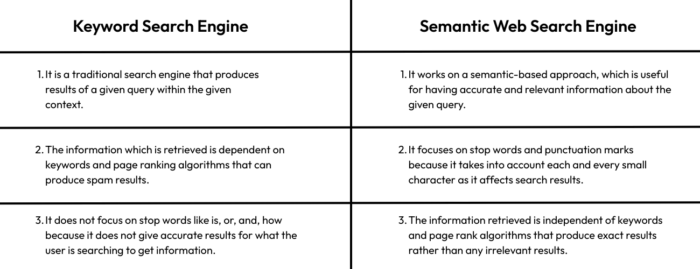
What is the Goal of the Google Natural Language
Google Natural Language is designed to help machines understand human language in a way that more closely mirrors human interpretation. It powers a wide range of Google products and capabilities, including sentiment analysis, entity recognition, content classification, and contextual understanding.
In practical terms, it analyzes a body of text and identifies:
- The overall sentiment and tone.
- Key entities and their relative importance.
- The categories and subcategories that the content most strongly aligns with.
For ASO teams, this offers a rare opportunity. Instead of guessing how Google might interpret app metadata, it provides a proxy for understanding how Google’s machine learning systems read and categorise text.
Used correctly, it can help ASO specialists align metadata more closely with Google’s evolving ranking logic.
How Google Natural Language Applies to ASO
When applied to app metadata, Google Natural Language can reveal how Google is likely to associate an app with certain concepts, categories, and keyword themes. This insight is particularly valuable as keyword density becomes less influential and semantic relevance takes priority.
Below are the key components that matter most for ASO.
Sentiment Analysis
Sentiment analysis evaluates the emotional tone of a piece of text and categorises it as positive, negative, or neutral. While sentiment is not a primary ranking factor for app discovery, it does provide useful contextual information.
For example, overly promotional, aggressive, or unclear language can introduce noise into metadata. Reviewing sentiment outputs can help teams ensure that descriptions maintain a clear, neutral, and informative tone that supports both user trust and algorithmic interpretation.
Entity Recognition and Salience
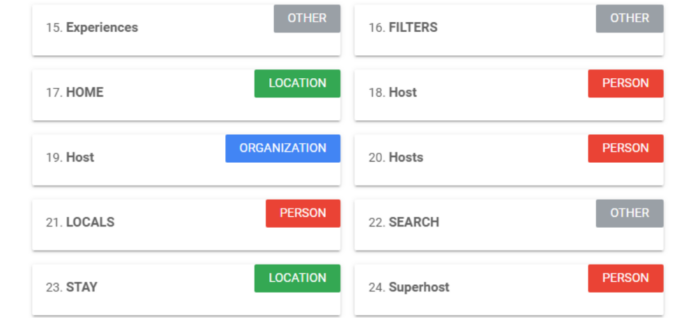
Entity recognition identifies specific entities within a text and classifies them into predefined types such as company, product, feature, or concept. Each entity is assigned a salience score, which reflects how central that entity is to the overall content.
In an ASO context, entities might include:
- Core app features
- Functional use cases
- Industry-specific terms
- Recognisable product or service concepts
Salience scores range from 0 to 1.0. Higher scores indicate that an entity plays a more important role in defining the content.
From an optimization perspective, this is critical. If key features or use cases are not appearing as highly salient, it suggests Google may not be strongly associating the app with those concepts.
Strategically incorporating relevant entities into metadata in a natural, user-focused way can improve clarity and strengthen topical relevance. Placement also matters. Important entities that appear early in descriptions or are reinforced toward the end of the text tend to carry more weight.
Categories and Confidence Scores
Category classification is arguably the most impactful element of Google Natural Language for ASO.
When text is analyzed, it assigns it to one or more categories and subcategories, each with an associated confidence score. These scores indicate how strongly the content aligns with a given category.
For Google Play, this has major implications. Higher category confidence increases the likelihood that an app will be associated with a broader range of relevant search queries within that category. Rather than ranking for a narrow set of exact keywords, apps can gain visibility across an expanded semantic keyword space.
In practice, we have seen that improving category confidence can significantly enhance keyword coverage and ranking stability, particularly during periods of algorithm change.
To increase category confidence:
- Use clear, natural language that reflects real user intent
- Focus on describing functionality and value, not just features
- Avoid keyword stuffing or forced phrasing
- Reinforce category-relevant concepts consistently throughout metadata
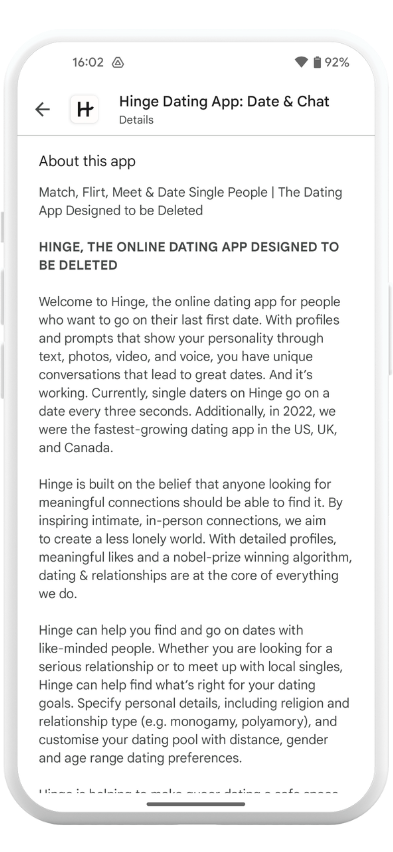
The real value of Google Natural Language lies not in isolated analysis, but in iterative optimization. By repeatedly testing metadata drafts through the Google Natural Language, ASO teams can refine language until category confidence, entity salience, and overall clarity improve.
This approach aligns well with broader 2026 ASO best practices, which emphasize:
- User intent over keyword lists
- Semantic relevance over repetition
- Long-term stability over short-term gains
Case Study Insights
We have applied GNL-driven optimisation techniques across multiple app categories. While results vary by vertical, the overall pattern has been consistent.
During periods of significant Google Play algorithm updates, apps optimized around category confidence and entity relevance showed greater resilience. In several cases, visibility improved despite widespread volatility elsewhere in the store.
In one example, keyword coverage expanded substantially following metadata updates that increased confidence across both a core category and secondary related categories. This translated into a more than fivefold increase in organic Explore installs over time.
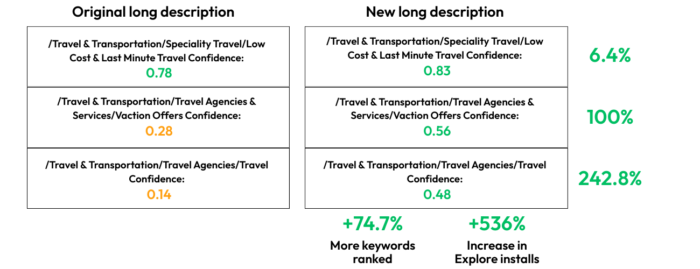
These results reinforce an important principle. When ASO strategies align with how Google understands language, they are better positioned to benefit from algorithm evolution rather than being disrupted by it.
Connecting GNL to 2026 ASO Strategy
Looking ahead, the role of natural language processing in app discovery will only grow. As Google continues to automate metadata creation and interpretation, manual optimization will shift from mechanical execution to strategic guidance.
ASO teams that understand and leverage tools like Google Natural Language will be better equipped to:
- Guide AI-generated content rather than react to it
- Maintain differentiation in an increasingly automated ecosystem
- Build metadata that supports both paid and organic discovery
This approach also complements broader trends such as AI-powered search, cross-platform discovery, and privacy-first measurement frameworks.
Conclusion
The rise of natural language processing does not signal the end of ASO. Instead, it marks a shift in how optimization should be approached.
By moving beyond keyword density and embracing semantic relevance, ASO teams can align more closely with Google’s evolving algorithms. Google Natural Language offers a practical way to understand how app metadata is interpreted and how it can be improved to support discovery, conversion, and long-term stability.
As automation continues to expand across Google Play, the teams that succeed will be those who understand the systems behind it and adapt their strategies accordingly. Natural language optimization is no longer optional. It is becoming a core pillar of modern ASO.

See How My Agency Can Drive More Traffic to Your Website
- SEO – unlock more SEO traffic. See real results.
- Content Marketing – our team creates epic content that will get shared, get links, and attract traffic.
- Paid Media – effective paid strategies with clear ROI.
Book a Call
Are You Using Google Ads? Try Our FREE Ads Grader!
Stop wasting money and unlock the hidden potential of your advertising.
- Discover the power of intentional advertising.
- Reach your ideal target audience.
- Maximize ad spend efficiency.