


Robert Triggs / Android Authority
I love Pixels, and the Pixel 6 Pro marked my conversion to Google’s ecosystem, thanks in no small part to its incredibly powerful triple rear camera. Computational photography has proven its value over the years and remains a core part of Google’s sales pitch for the Pixel 10 series.
However, for a product line lauded for its image capture capabilities, I’m finding it increasingly hard to rank Pixels near the top of the pack. Yes, they’re still unbelievably reliable at basic point-and-shoot, and at the same time, a good eye can obtain breathtaking results from what is quite modest hardware on paper. I’m not denying that Google’s formula is good, but great by modern standards? I’m not as convinced as I once was.
I’ve increasingly left my most recent Pixel on the shelf in favor of physically larger smartphone camera packages or my trusty mirrorless. After spending probably too much time pixel-peeping, I’ve become acutely aware of Google’s processing artifacts and have concluded that I really don’t like blowing these pictures up. While I can overlook the grainy shadows, mottled low-light details, and overly-sharp portraits for a quick social post, that’s not what I really want when spending potentially $1,000 or more on a phone primarily to take pictures with.
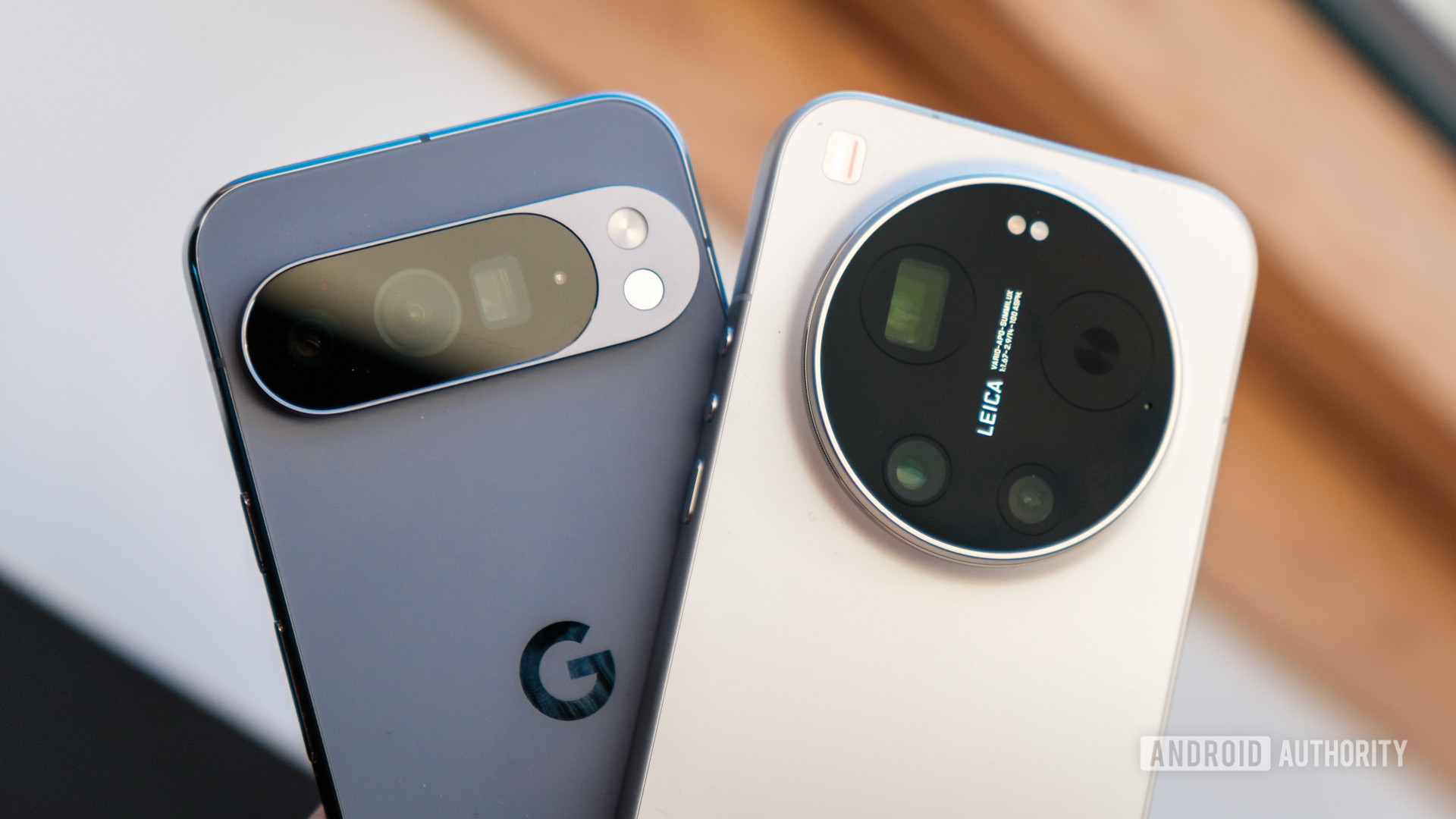
By comparison, I’ve had the Xiaomi 17 Ultra in hand recently. After taking it out for a spin alongside my Pixel 10 Pro XL, I might never go back to a Pixel until Google seriously overhauls its hardware.
Do you think Pixels are among the best phones for photography?
1455 votes
Not that the two phones aren’t comparable for general-purpose shots. Both offer superb dynamic range, rich and realistic colors, and a fair amount of detail from their main and zoom cameras. If anything, the Pixel is arguably the marginally more consistent option, with Xiaomi’s color science occasionally veering off into oversaturation and underexposure.
Still, peek a bit closer at the pictures, and the Pixel’s veneer quickly rubs off. Xiaomi’s latest telephoto camera gives the phone a significant advantage for image quality and flexibility, especially if you frame and crop your pictures as much as I do.
Take this example that combines extreme low light with moderate-range zoom: a real test for even dedicated cameras on the market, let alone small-sensor phone zoom cameras. Both look OK at full frame, but in terms of detail preservation, the Pixel is completely inadequate here, even with the help of Night mode. There’s significant noise and smudged or missing details. Meanwhile, the Xiaomi 17 Ultra delivers a level of detail that even my Fuji mirrorless can’t match, quite likely due to the use of multi-frame processing and possibly a little AI (there’s something about the look that’s undoubidly a little artificial). In any case, noise and detail have consistently been an issue for Google, and the divide is only growing.
Pixels have been a constant disappointment for portrait photography.
Likewise, portraits have been a long running Pixel bugbear of mine for similar reasons. For all Google’s singing and dancing about Pure Tone, blemishes and textures continue to look far too sharp at full frame, yet somehow disappear into mush on close inspection. This might not matter much on a phone screen, but it can come back to bite the Pixel if you ever want to print out your snaps for a photo album or a frame.
The less said about the Pixel’s bokeh blur compared to the natural effect of Xiaomi’s new 75mm lens, the better. Software just isn’t as accurate or as nice-looking as the real thing. By comparison, I rate Xiaomi’s portrait details and bokeh as probably the best in the business, rivaling the quality I expect from my Fuji mirrorless.
Returning to AI and zoom, Google’s latest approach has been to rely on AI diffusion upscaling with Pro Res Zoom to flesh out details at 30x and beyond. On the other hand, Xiaomi has embraced a larger 200MP sensor, paired with a 75mm-100mm variable focal length lens to help it cater to both short and long distances. The same sensor that took the great portrait above is also a dab hand at long distances too.
In my experience, Xiaomi has a clear advantage at 3x due to its natural optics. It’s a fairly level playing field playing around 5x and 10x, but beyond that, I’d give a slight edge to the Chinese handset. Google’s AI upscaling works well on some textures but struggles with others. Meanwhile, Xiaomi’s long-range efforts are obviously not flawless, but the larger sensor ensures its results look comparable to Google’s AI upscaling efforts in daylight.
It’s tough to see the benefit of AI zoom over better hardware.
We can extend this zoom-camera comparison to macro, too. Xiaomi’s novel lens can focus reasonably close up, resulting in natural depth and bokeh without having to get up super close to the subject. Google’s 5x telephoto camera can’t focus anywhere near this close, so it resorts to digital upscaling or the ultrawide camera, which introduces perspective distortion and a lack of real depth. Xiaomi can do ultrawide camera macros too, but there’s no substitute for a long focal length to enhance macro shots.
And this really is the Pixel’s problem in a nutshell. Google built its early reputation on computational photography, doing more with less, and was initially very successful at bridging the gap and often leading the pack. It’s mostly continued this trend in recent years at the expense of emerging hardware improvements that enable not only better image quality but also more versatile shooting options.
Again, not to disparage Google’s computational photography efforts. Exposure, tone mapping, and night photography remain the Pixel’s strongest suits, and Google has augmented these essentials with fun and useful tools like Add Me and Magic Editor. But for all Google’s strengths, its imaging pipeline lags the competition in raw image quality.
If you want pictures from a smartphone that look as close to lifelike as possible, along with next-level creative flexibility, the Pixel is not where it’s at these days.
Photography isn’t everything, but it’s hard to resist

Robert Triggs / Android Authority
This isn’t to say the Pixel 10 or Galaxy S26 isn’t a good handset for snapping those family events or documenting your travels. They’re still versatile enough to suit most needs. However, if you’re a really serious photographer who will make use of cutting-edge features and demands the pinnacle of mobile image quality, I think you’ll find far more utility with phones like the Xiaomi 17 Ultra. The only issue for US customers is getting their hands on these alternatives.
Of course, there’s a lot more that goes into making a great phone. While cutting-edge hardware enthusiasts may be increasingly turning their gaze to China’s Ultra models, there’s still something to be said for the broader ecosystem of the Pixel or Galaxy experience. But as a photographer-first phone user, I’m increasingly wondering if that’s enough to keep me coming back.
Don’t want to miss the best from Android Authority?


Thank you for being part of our community. Read our Comment Policy before posting.
