

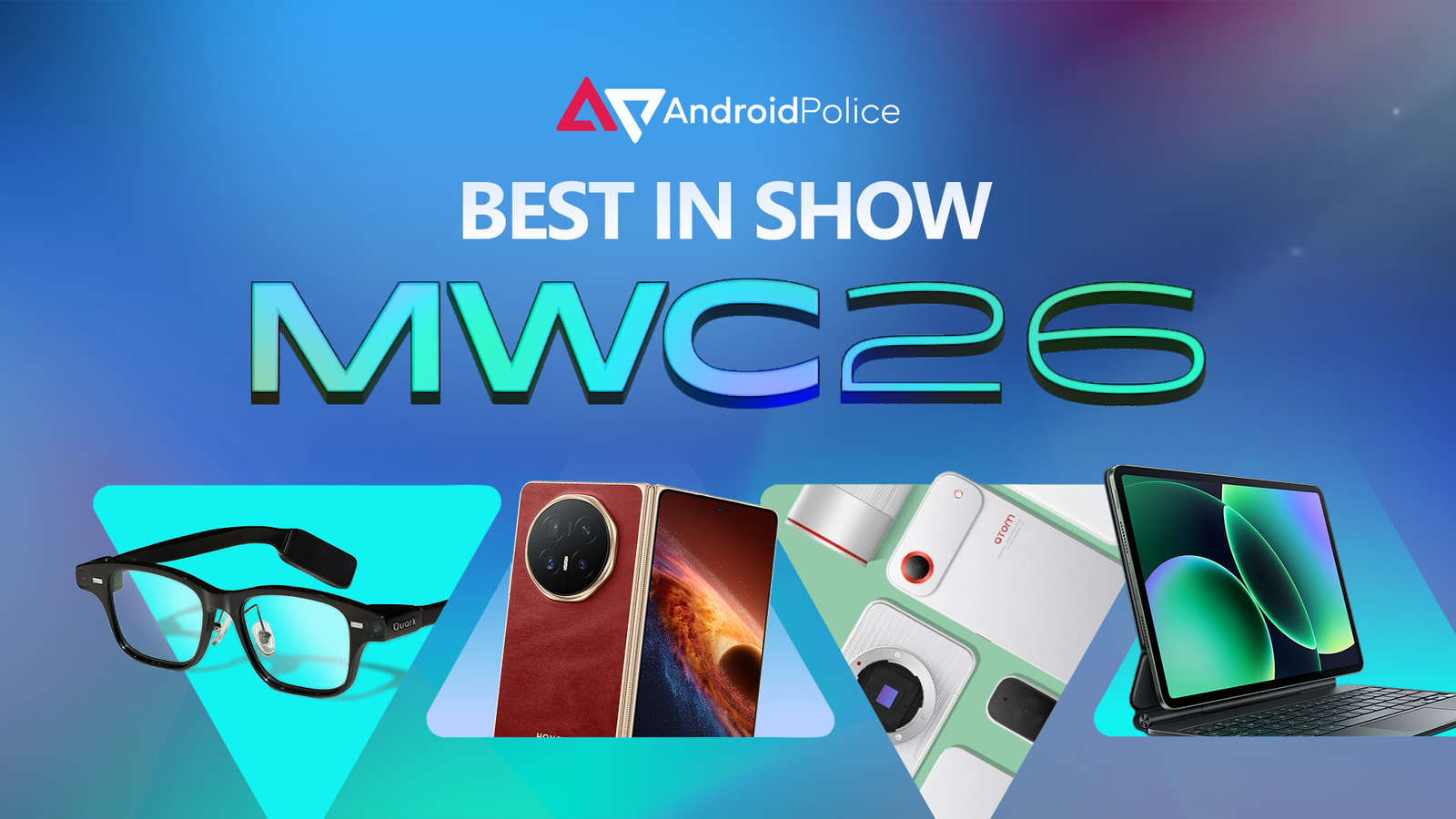
MWC is over, and the talking points were predictable enough. AI agents dominated nearly every keynote, and 6G showed up to the party promising all the things its predecessor failed to deliver.
But the most surprising takeaway from Barcelona this year had nothing to do with either of those things.
Foldable phones have become, well, boring. Boring may not be the right word for it, but matured certainly fits the bill. These used to be the concept cars of the smartphone world. Now they’re just phones.
That maturation was freeing. With the foldable wars largely settled, the floor opened up, and the most interesting hardware at MWC this year wasn’t trying to reinvent the phone at all. It was expanding what “mobile” even means.

What in the Mobile World Congress?: The weirdest things at the 2026 show
AI co-workers, scalp analyzers, and dancing robots have our attention
Best Phone: Honor Magic V6

Honor’s latest foldable doesn’t look dramatically different from its predecessor, and that’s by design. The real work happened inside.
The hinge has been completely rebuilt; it’s as smooth as anything you’ll find on a foldable, and the crease that’s plagued every generation before is barely visible now.
The body is 4mm thin when open, folding down to match the thickness of an iPhone 17 Pro Max.
Then there’s the battery, which at 6,660mAh is the largest ever put into a commercial foldable. Even heavy users should have no trouble getting a full day, and some will stretch it to two.
The downer, as always with Honor: it won’t be coming to the US.
Best Foldable: Motorola Razr Fold

Remember what we said about foldables becoming commonplace?
Motorola has been making flip-style foldables for the better part of a decade but never ventured into book-style territory until now.
The Razr Fold is one of the best flagships we’ve seen in years — the design is considered, the hardware is serious, and nothing about it feels like a first attempt.
It has a 6,000mAh silicon-carbon battery, a triple 50MP Sony LYTIA camera system that earned a DXOMARK Gold label, and a large 8.1-inch inner display that’s among the brightest in its class.
European pricing is set at €2,000, and we should learn about US pricing in the coming months.
That said, don’t expect it to come cheap. But Motorola has a solid track record of bringing new form factors down to earth within a few years of launch, which makes this worth watching.

The Moto Razr Fold could make Motorola the king once again
The Foldable Era could be a turning point for phones, and it needs a new king
Best Tablet: Xiaomi Pad 8 Pro

Picking a best tablet at MWC this year wasn’t simple. Lenovo and Honor both made strong cases.
But Xiaomi had the right combination of performance, accessories, and design with its Pad 8 Pro. The display is sharp and fast, the Snapdragon 8 Elite chipset handles anything you can throw at it, and its massive 9,200mAh should easily be able to handle a day’s worth of work without topping off.
The accessories seal it. The Focus Pen Pro and Focus Keyboard make a credible laptop replacement out of it, and Xiaomi’s HyperOS 3 has been tuned for tablet workflows in ways stock Android hasn’t managed.
Best Concept: Tecno Magnetic Modular Phone

Modular phones are nothing new — Moto Mods had a real following before Motorola quietly killed the line.
Tecno’s 2026 concept makes the strongest case yet for bringing that idea back. The base handset is just 4.9mm thick, thinner than the iPhone Air, and the modular accessories looked and felt like they belonged there rather than snapped on as an afterthought.
The system snaps accessories into place in seconds via magnets and pogo pins. Modules on display included a 3x telephoto camera lens, a battery pack, a wireless lavalier microphone, a wallet, and a speaker.
The phone becomes whatever you need it to be at a given moment without trying to be all of those things at once.
Tecno has no plans to release its modular mobile masterpiece, and this is still firmly a concept. But it is, by far, the best argument for modular hardware in years.
Best Wearable: Qwen AI Glasses

Smartwatches and fitness trackers were mostly absent from MWC this year. Glasses were having a moment, and the most impressive wearable came from Alibaba’s Qwen AI brand.
The Qwen AI Glasses cover the expected bases: real-time translation, an onboard AI assistant, and a camera for POV capture.
What separated them was the hardware. The frames are slim and light enough to wear all day without people noticing them. That’s the right priority for a category where nobody keeps wearing the thing after the first week.
Alibaba began taking preorders during the show and will announce global availability later in the year.
Move over smartphones; the new tech is in town
Five winners, and only two of them are phones. That feels like the right summary of MWC 2026.
The show has always been about mobile technology in the broadest sense, and this year the hardware finally caught up to that premise.
The phone in your pocket isn’t going away any time soon, but it’s not the only thing worth talking about anymore.
