


In honor of International Women’s Day, we asked five women at EFF about women in digital rights, freedom of expression, technology, and tech activism who have inspired us.
Anna Politkovskaya
Jillian York, Activist
This International Women’s Day, I want to honor the memory of Anna Politkovskaya, the Russian investigative journalist who relentlessly exposed political and social abuses, endured harassment and violence for her work, and was ultimately killed for telling the truth. I had just started my career when I learned of her death, and it forced me to confront that freedom of expression isn’t an abstract principle but rather something people risk—and sometimes lose—their lives for.
Her story reminds me that journalism at its best is an act of moral courage, not just a profession. In the face of threats, poison, and relentless pressure to stay silent, she chose to continue writing about what she saw, insisting that ordinary people’s lives were worth the world’s attention. She refused to compromise with power, even when she knew it could cost her life. To me, defending freedom of expression means defending those like Anna who bear witness to injustice, prioritize truth, and hold power to account for those whose voices are silenced.
Cindy Cohn
Corynne McSherry, Legal Director
There are so many women who have shaped tech history–most of whom are still unsung heroes—that it’s hard to single out just one. But it’s easier this year because it’s a chance to celebrate my boss, Cindy Cohn, before she leaves EFF for her next adventure.
Cindy has been fighting for our digital rights for 30 years. leading EFF’s legal work and eventually the whole organization. She helped courts understand that code is speech deserving of constitutional protections at a time when many judges weren’t entirely sure what code even was. She led the fight against NSA spying, and even though outdated and ill-fitting doctrines like the state secrets privilege prevented courts from ruling on the obvious unconstitutionality of the NSA’s mass surveillance program, the fight itself led to real reforms that have expanded over time.
I’ve worked closely with her for much of her EFF career, starting in 2005 when we sued Sony for installing spyware in millions of computers, and I’ve seen firsthand her work as a visionary lawyer, outstanding writer, and tireless champion for user privacy, free expression, and innovation. She’s also warm and funny, with the biggest heart in the world, and I’m proud to call her a friend as well as a mentor.
Jane
Sarah Hamid, Activist
When talking about women in tech, we usually mean founders, engineers, and executives. But just as important are the women who quietly built the practices that underpin today’s movement security culture.
For as long as social movements have organized in the shadow of state surveillance, women have been designing the protocols, mutual aid networks, and information flows that keep people alive. Those threats feel ever-escalating: fusion‑center monitoring of protests, federal agencies infiltrating and subpoenaing encrypted Signal and social media chats, prosecutors mining search histories.
In the late 1960s and early 1970s, the underground Jane abortion counseling service—formally the Abortion Counseling Service of Women’s Liberation—built what we would now recognize as a feminist infosec project for abortion access. Jane connected an estimated 11,000 people with safer abortions before Roe v. Wade, using a single public phone number—“Call Jane”—paired with code names, compartmentalized roles, and minimal records so no one person held the full story of who needed care, who was providing it, and where. When Chicago police raided the collective in 1972, members destroyed their index‑card files rather than let them become a ready‑made map of patients and helpers—an analog secure‑deletion choice that should feel familiar to anyone who has ever wiped a phone or locked down a shared drive.
The lesson we should take from Jane is a set of principles that still hold in our encrypted‑but‑insecure present: Collect less, separate what you do collect, and be ready to burn the file box. When a search query, a location ping, or a solidarity post can become evidence, treating information as both lifeline and liability is not paranoia—it is care work.
Ebele Okobi
Babette Ngene, Director of Public Interest Technology
In the winter of 2013, I had just landed my first job at the intersection of tech and human rights, working for a prominent nonprofit and I was encouraged to attend regular tech and policy events around town. One such event on internet governance was happening at George Washington Universit, focusing on multistakeholder engagement on internet policy and governance issues, with companies, nonprofits, and government representatives in attendance. I was inexperienced with these topics, and I’ll admit I was a bit intimidated.
Then I saw her. She was the only woman on the opening panel, an African woman, an accomplished woman. Not only was she a respected lawyer at Yahoo at the time, but her impressive background, presence, and confident speaking style immediately inspired me. She made me feel like I, too, belonged in that room and could become a powerful voice.
Ebele Okobi would go on to become one of the most powerful and respected voices in the tech and human rights space, known for her advocacy for digital rights and responsible innovation across Africa and the broader global majority during her tenure at Facebook. Beyond her corporate advocacy, Ebele has consistently championed ethical technology and social justice. She embodies the leadership qualities I value most: empathy, speaking truth to power, integrity, and authenticity.
I remain in the tech and human rights space because I saw her, because seeing her made me feel seen. Representation truly does matter.
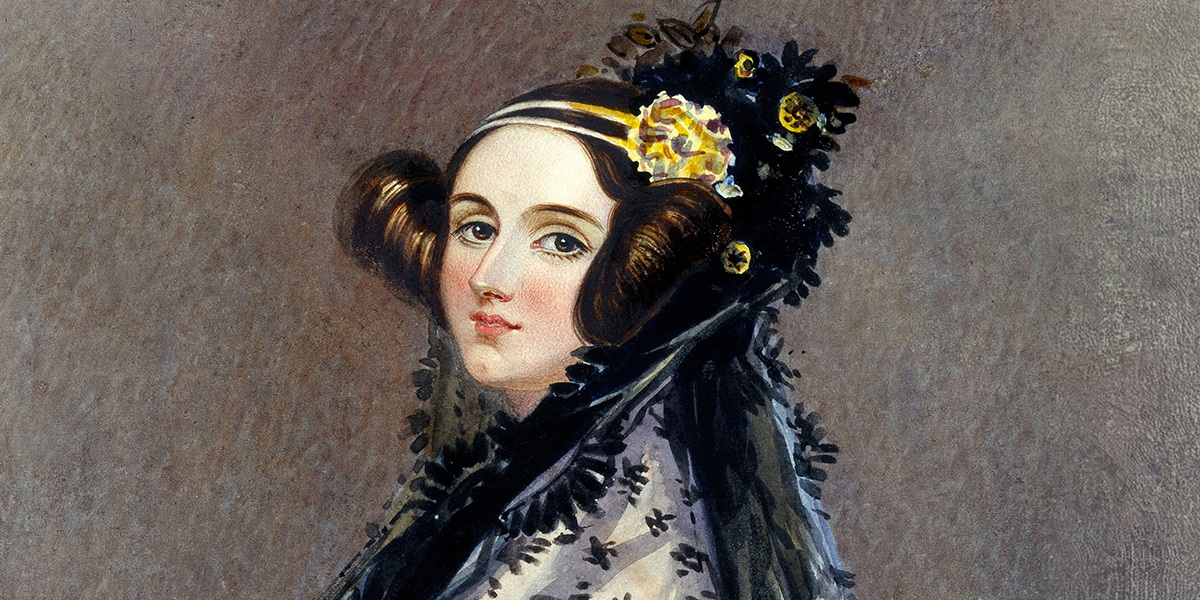
Ada Lovelace
Allison Morris, Chief Development Director
I’m not a lawyer, activist, or technologist; I’m a fundraiser and a lover of stories. And what storyteller at EFF couldn’t help but love Ada Lovelace? The daughter of Lord Byron – the human embodiment of Romanticism – Ada was an innovator in math and science and, ultimately, the writer of the first computer program.
Lovelace saw the potential in Charles Babbage’s theoretical General Purpose Computer (which was never actually built) and created the foundations of modern computing long before the digital age. In creating the first computer code, Lovelace took Babbage’s concept of a machine that could perform mathematical calculations and realized that it could manipulate symbols as well as numbers.
Given the expectations of women in her time and the controversy of what work should be attributed to Lovelace as opposed to the man she often worked with, I can’t help but be inspired by her story.
Your donations empower EFF to do even more.
Women in tech deserve more and brighter spotlights. At EFF, we’ve had the honor of celebrating some of our heroes at our annual EFF Awards, including many women who are leading the digital rights community. For International Women’s Day, we also highlighted the contributions of just a few of these recipients from the last decade, whose work to protect privacy, speech, and creativity online has had a global impact.
