


Close Menu
    Facebook X (Twitter) Instagram
    Wifi PortalWifi Portal
    • Blogging
    • SEO & Digital Marketing
    • WiFi / Internet & Networking
    • Cybersecurity
    • Tech Tools & Mobile / Apps
    • Privacy & Online Earning
    Facebook X (Twitter) Instagram
    Wifi PortalWifi Portal
    Home»Cybersecurity»Residential proxies evaded IP reputation checks in 78% of 4B sessions
    Cybersecurity

    Residential proxies evaded IP reputation checks in 78% of 4B sessions

    adminBy adminApril 2, 2026No Comments3 Mins Read
    Facebook Twitter LinkedIn Telegram Pinterest Tumblr Reddit WhatsApp Email
    Google disrupts IPIDEA residential proxy networks fueled by malware
    Share
    Facebook Twitter LinkedIn Pinterest Email

    Residential proxies evaded IP reputation checks in 78% of 4B sessions

    Researchers warn that residential proxies used to route malicious traffic are a big problem for IP reputation systems, as there is no clear distinction between attackers and legitimate users.

    This occurs because residential proxies are too short-lived, uninvolved, or systematically rotated, preventing defense systems from cataloging them in time.

    Cybersecurity intelligence platform GreyNoise determined this after examining a massive dataset of 4 billion malicious sessions targeting the edge over a three-month period.

    Roughly 39% of those sessions appear to originate from home networks, most certainly part of residential proxies, but 78% of them are invisible to reputation feeds.

    “The data reveals a pattern that challenges a core assumption of network defense: that you can tell attackers from legitimate users by where the traffic comes from,” explains GreyNoise.

    According to the company, most residential IPs are used once or twice, and then vanish, with attackers rotating them with others, keeping the pace at a level that reputation systems will not flag them.

    About 89.7% of residential IPs are active in malicious operations for under a month, with only 8.7% lasting 2 months, and 1.6% persisting for 3 months.

    Those that are kept alive for longer seem to carry a specialization according to the researchers, being SSH-focused and using Linux TCP stacks.
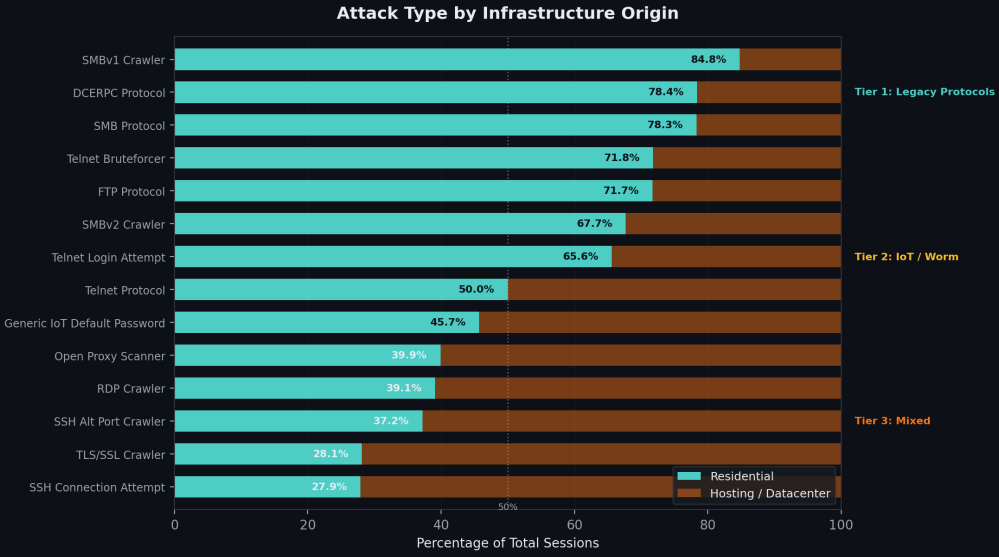
    Type of activity
    Type of activity per source type
    Source: GreyNoise

    Diversity is another factor that complicates flagging and blocking, as GreyNoise’s data shows the residential IPs participating in attacks belong to 683 internet service providers.

    Another reason for their stealthiness is that they are primarily used for network scanning and reconnaissance, with only 0.1% involved in actual exploits, the researchers say.

    A small percentage (1.3%) targeted enterprise VPN login pages, while some limited cases also involved residential IPs to path traversal and credential stuffing attempts.

    Regarding the source of the residential proxies, GreyNoise says China, India, and Brazil are major contributors, with traffic from the IPs following human sleep patterns, dropping by a third at night, when most people power off their devices.
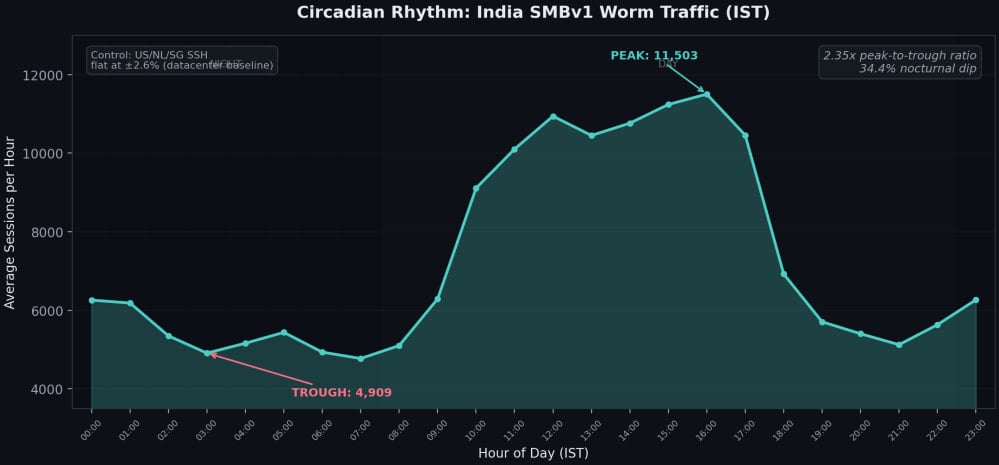
    Activity from India-based proxies
    Activity from India-based proxies
    Source: GreyNoise

    The researchers report that residential proxy traffic is generated by two distinct, non-overlapping ecosystems: IoT botnets and infected computers.

    In cases involving the latter, the proxies come from SDKs in free VPNs, ad blockers, and similar apps, which enroll user devices in bandwidth-selling schemes.

    GreyNoise has also highlighted the resilience of these networks using the example of IPIDEA, one of the world’s largest residential proxy networks, which was recently disrupted by Google Threat Intelligence Group (GTIG) and partners.

    The disruption reduced its proxy pool by roughly 40%, but in the period that followed, datacenter traffic increased, indicating that demand can be absorbed by others when needed and that lost capacity is quickly replaced.
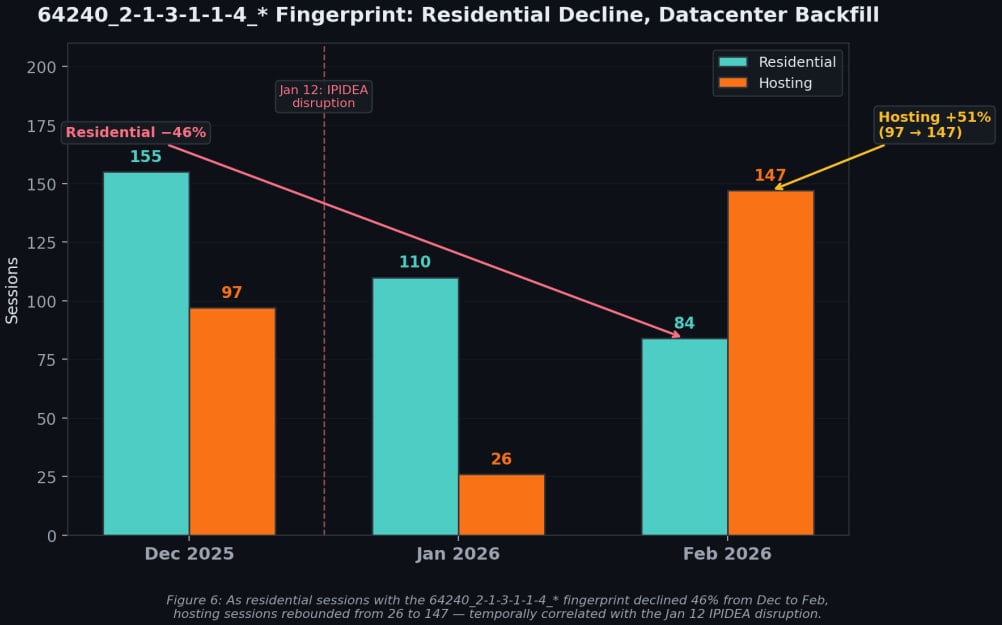
    Effect of IPIDEA disruption and ecosystem's response
    Effect of IPIDEA disruption and the ecosystem response
    Source: GreyNoise

    GreyNoise says residential proxying evasion tactics require abandoning IP reputation as a primary signal and focusing instead on behavior.

    The researchers suggest detecting sequential probing from rotating residential IPs, blocking clearly illegitimate protocols like SMB from ISP space, and tracking device fingerprints that survive IP rotation.


    tines

    Automated pentesting proves the path exists. BAS proves whether your controls stop it. Most teams run one without the other.

    This whitepaper maps six validation surfaces, shows where coverage ends, and provides practitioners with three diagnostic questions for any tool evaluation.

    Checks evaded Proxies Reputation residential sessions
    Share. Facebook Twitter Pinterest LinkedIn Tumblr Telegram Email
    Previous ArticleLlms.txt Was Step One. Here’s The Architecture That Comes Next
    Next Article Google might say no more to Android rollbacks on the Pixel 10 with a patch
    admin
    • Website

    Related Posts

    Operation PowerOFF identifies 75k DDoS users, takes down 53 domains

    April 17, 2026

    Data Breach at Tennessee Hospital Affects 337,000

    April 17, 2026

    [Webinar] Find and Eliminate Orphaned Non-Human Identities in Your Environment

    April 17, 2026
    Add A Comment
    Leave A Reply Cancel Reply

    Search Blog
    About
    About

    At WifiPortal.tech, we share simple, easy-to-follow guides on cybersecurity, online privacy, and digital opportunities. Our goal is to help everyday users browse safely, protect personal data, and explore smart ways to earn online. Whether you’re new to the digital world or looking to strengthen your online knowledge, our content is here to keep you informed and secure.

    Trending Blogs

    The New Google Pixel 10a Is Already $50 Off

    April 17, 2026

    Operation PowerOFF identifies 75k DDoS users, takes down 53 domains

    April 17, 2026

    Taylor Sheridan’s next Paramount movie is based on a video game, not Yellowstone

    April 17, 2026

    Data Breach at Tennessee Hospital Affects 337,000

    April 17, 2026
    Categories
    • Blogging (63)
    • Cybersecurity (1,356)
    • Privacy & Online Earning (170)
    • SEO & Digital Marketing (832)
    • Tech Tools & Mobile / Apps (1,622)
    • WiFi / Internet & Networking (227)

    Subscribe to Updates

    Stay updated with the latest tips on cybersecurity, online privacy, and digital opportunities straight to your inbox.

    WifiPortal.tech is a blogging platform focused on cybersecurity, online privacy, and digital opportunities. We share easy-to-follow guides, tips, and resources to help you stay safe online and explore new ways of working in the digital world.

    Our Picks

    The New Google Pixel 10a Is Already $50 Off

    April 17, 2026

    Operation PowerOFF identifies 75k DDoS users, takes down 53 domains

    April 17, 2026

    Taylor Sheridan’s next Paramount movie is based on a video game, not Yellowstone

    April 17, 2026
    Most Popular
    • The New Google Pixel 10a Is Already $50 Off
    • Operation PowerOFF identifies 75k DDoS users, takes down 53 domains
    • Taylor Sheridan’s next Paramount movie is based on a video game, not Yellowstone
    • Data Breach at Tennessee Hospital Affects 337,000
    • Gen Z Workers Pick Human-Only Output Over AI-Assisted
    • The USB trick that bypasses your smart TV’s 100Mbps Ethernet limit
    • Firefox Nightly for Developers 151.0a1 APK Download by Mozilla
    • [Webinar] Find and Eliminate Orphaned Non-Human Identities in Your Environment
    © 2026 WifiPortal.tech. Designed by WifiPortal.tech.
    • Home
    • About Us
    • Contact Us
    • Privacy Policy
    • Terms and Conditions
    • Disclaimer

    Type above and press Enter to search. Press Esc to cancel.