


It used to be simple.
You started a blog, probably on WordPress, and got to work.
Now it’s not so clear. You’ve got Substack and beehiiv if you want to build through email. You’ve got Medium, LinkedIn, and even long-form posts on X if you want distribution baked in.
Everyone’s publishing, but not in the same place anymore.
Blogging isn’t one thing now. It’s spread across a handful of platforms that all work a little differently.
And once you see how they fit together, choosing the right one gets a lot easier.
Owned platforms (you control everything)
If you strip all of this down, this is the option where you’re building something that lives outside of any one platform.
Your site. Your domain. Your content.
In most cases, that means a self-hosted WordPress site. You buy a domain name, pay for hosting, install WordPress, and go from there. It’s the most traditional version of blogging, and it’s how Smart Blogger was built.
You control everything. How your site looks. How it works. What happens to your content over time.
But you’re also responsible for everything.
You’re paying for hosting. You’re setting things up. You’re figuring things out as you go, especially early on.
And when it comes to getting readers, nothing is built in.
Most of your traffic will come from Google (or Bing) search or from whatever distribution you create yourself. Which sounds fine, until you realize how long that can take. New sites rarely get traction right away, and there’s nothing pushing your work in front of people while you wait.
You’re starting from zero, and it takes time.
For some writers, that’s exactly the point. They want a home base. A place everything else can point back to that isn’t tied to a platform’s rules or changes. (Of course, you’re still at the mercy of Google’s algorithms. But that’s a discussion for another day.)
For others, it can feel slow.
If you’re thinking long-term, though… this is usually where everything else leads back to.
How to get started (without overthinking it)
If you go this route, try not to overcomplicate it… especially at the beginning.
Pick a domain name you’re comfortable using long-term. It doesn’t have to be perfect. Register it with Namecheap or GoDaddy and move on.
Get reliable hosting. There are a lot of solid options, and the differences don’t matter nearly as much as people think when you’re just starting. We use SiteGround. WP Engine, Rocket.net, and Kinsta are all good too. I’d avoid Bluehost, HostGator, or anything owned by EIG.
Install WordPress and keep things simple. For themes, GeneratePress and Astra both have solid free options. Don’t fall into the trap of installing a bunch of plugins. A clean design, a way to publish, and a way to capture emails is enough.
That last part matters more than most people realize, by the way.
Even if your traffic is small, start collecting emails early. Use something like Kit or another service so you’re not relying entirely on Google or Bing to bring people back to your site.
Everything else can come later.
All-in-one platforms (freedom from setup, with limits)
This is where a lot of writers are starting now.
Instead of setting up a site, you open an account with something like Substack or beehiiv and start writing.
What you publish shows up as a post (like a blog), and you can choose to send it out as an email to your subscribers at the same time.
That’s really the shift here. With something like WordPress, you have the freedom to control everything, but you also have to set everything up yourself.
With these platforms, it’s the opposite.
Most of what you need is already there. Publishing, email, basic design, subscriber tools, even some built-in discovery. You don’t have to think about hosting or plugins or how everything connects. And you don’t have to pay for anything either. You just write, publish, and send.
The tradeoff is that you’re working inside their system.
You don’t control how everything looks or functions. You’re not shaping the platform, you’re using it. You can take your email list with you if you leave, but you’re not taking the full setup with you the way you would with your own site.
So it’s a different kind of freedom.
Less control, but also a lot less to worry about.
Substack vs. beehiiv (which one should you pick?)
Most people don’t need to overthink this.
If you want the simplest possible setup, go with Substack. It’s easy to use, takes almost no time to get started, and has some built-in discovery features that can help people find your work early on.
One thing I like about Substack is how often it evolves. I have a friend who’s been building a Substack course for months, and every time he gets close to finishing it, they roll out something new that forces him to update it. As of this writing, they’ve started introducing drip campaigns, with a wider rollout expected later this year. Once that happens, one of the last “yeah but” objections people have had about Substack (raises hand) goes away.
With beehiiv, you get more control over how things look and function, more flexibility on the backend, and more room to grow into it if you want to treat your newsletter like a business. It’s still easy to use, just not quite as stripped down as Substack.
Both platforms have their fans, and both will get the job done.
If you want my take, I’d go with Substack. It’s where more of the momentum seems to be right now, and I’d be surprised if it’s not still a major player five years from now.
But my preference aside…
Pick one and start writing. You can always switch later if you outgrow it or change your mind.
What about Medium?
A lot of people think of Medium as an all-in-one platform too, and as the owner of one of its larger publications for writers, I’d be remiss not to mention it.
Medium does overlap with Substack and beehiiv in some ways. You can publish posts (“stories”) that live on their own pages. People can follow you. You can even have your stories emailed to readers who opt in for updates.
And it has some advantages too.
To my eye, the writing and reading experience is nicer on Medium. And then there’s its ace in the hole: publications. You might only have a handful of followers, but if you get accepted into a publication with a large audience, your work can reach far more people than it would on its own. That’s a real upside, and it’s something Substack and beehiiv don’t really replicate.
But the newsletter side of Medium isn’t in the same league as Substack or beehiiv. Same goes for discovery. If Medium has features there, I’ve missed them.
And while Substack and beehiiv are trending up, Medium isn’t what it was a few years ago.
It’s still useful, especially as a supplemental channel, but I wouldn’t recommend writers use it as their home base.
Feed-based platforms (short lifespan, long game)
Social platforms like LinkedIn and X play a different role than everything else we’ve talked about.
You’re not building a home base here. You’re showing up where people already are. But at first, that mostly means writing things no one sees.
You post something, it sits there for a few hours, maybe a day, and then it disappears into the feed. If it doesn’t catch on early, it usually doesn’t catch on at all. There’s no long tail like you get with search traffic, and no built-in way to reach people later like you have with an email list.
So for a while, it can feel like you’re putting in effort for nothing.
And just posting consistently isn’t enough. You have to be active… commenting, replying, sharing other people’s work, getting your name in front of people in ways that don’t involve your own posts. It’s slow, and there’s no guarantee anything will take off. But if you stick with it, you start to build a following.
Used well, it becomes a support system for everything else you’re building — your site, your newsletter, whatever you’re actually trying to grow.
You test ideas here. You work on your writing here. You stay visible here. And once you’ve built an audience that pays attention, everything else gets easier.
Where should you spend your time?
You don’t need to be everywhere. You shouldn’t be everywhere, if I’m being honest (at least not at first).
If your writing ties into your work or expertise, LinkedIn is usually the better place to start. The audience is already there, and strong posts can spread within that network if they resonate.
If you prefer something more open-ended, X gives you more flexibility. It’s less structured, more conversational, and tends to reward consistency over time.
If you have the time and energy, there’s nothing wrong with doing both. Some people write once and adapt it for each platform. Just don’t spread yourself so thin that you stop showing up consistently anywhere.
And these aren’t the only options, of course. Depending on what you’re doing, other platforms might make more sense. The specifics matter less than the role they play.
Just remember: this isn’t where your content lives.
Pick one (or two), show up consistently, interact with people, and use it to support what you’re building elsewhere.
Borrowed platforms (build authority on someone else’s stage)
Sometimes, the best platform for your work is someone else’s.
Why? Because it can mean instant credibility.
Once you’re published on a site like Smart Blogger, Forbes, or Business Insider, people look at you differently.
Yesterday, you were just you — a talented, attractive writer living in obscurity. But then, after having your work published on a well-known website, you’re seen as a subject matter expert in your field.
Now, back in the day, people called this “guest blogging.” Many still do (I still do). But whether you call it guest blogging, guest posting, or simply writing a piece of content for another site, building your authority by borrowing someone else’s platform is a strategy still used by many writers today… even if it isn’t talked about as much as it was a decade ago.
Why it works (and why it worked for me)
By putting your words in front of an audience that already exists — one that already cares about the topic — you can accelerate whatever you’re building. More people discover your site, your Substack, your X profile… whatever you want them to find.
Before I wrote my first guest post for Smart Blogger, the only people who viewed me as an authority on writing or blogging were my wife and maybe one of our cats.
Then I received an email.
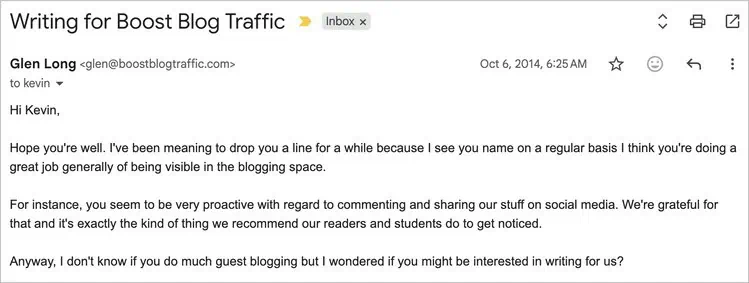
Jon’s editor, the talented Glen Long, invited me to write a guest post for Smart Blogger (formerly known as Boost Blog Traffic).
That guest post…
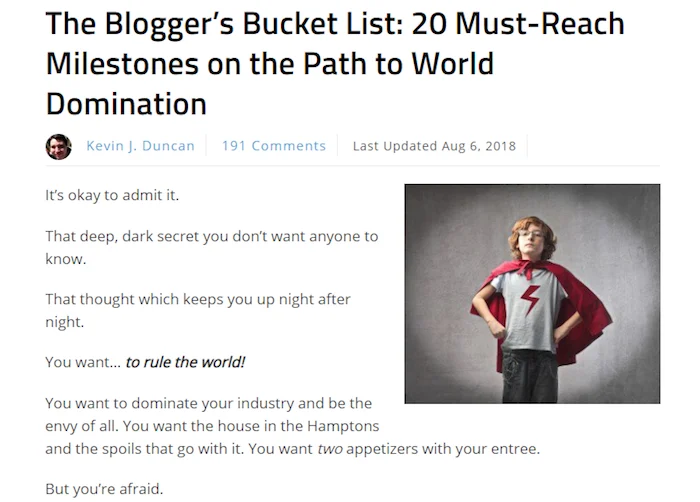
Led to another…
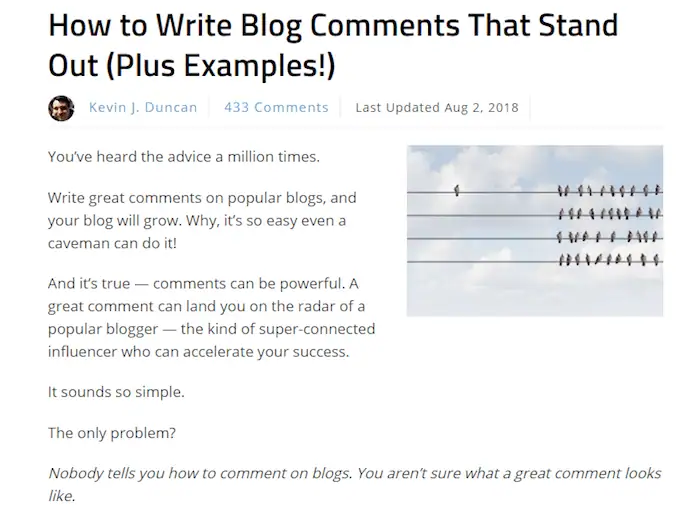
Which led to another…
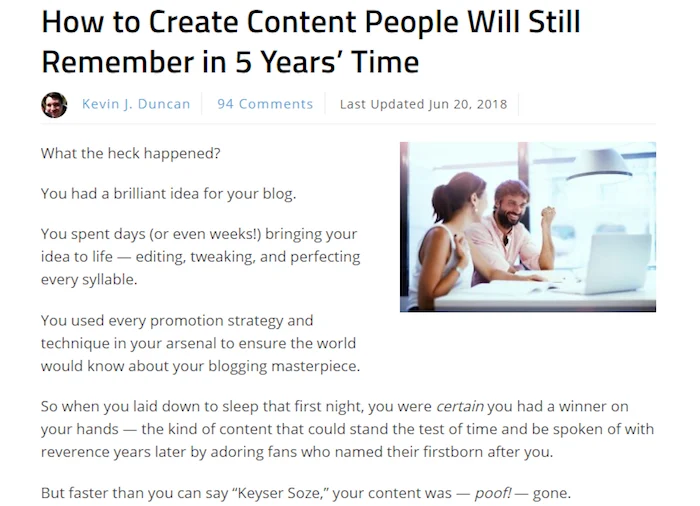
It led to opportunities I wouldn’t have had otherwise. Writing for other companies. Being quoted in articles. It eventually led to me being hired as Editor-in-Chief for Smart Blogger (and later Head of Content at Kindlepreneur).
And while it didn’t send floods of traffic to my site or large crowds chanting my name in the streets, guest blogging did something that would have taken me considerable time to do on my own:
It legitimized me.
How to approach it
Start with sites you already read and respect. If you’d be proud to have your work published there, it’s probably a good fit.
Some will have clear submission guidelines. Others won’t. Either way, the bar is usually high, and it should be.
Because this cuts both ways.
A strong guest post can open doors. A weak one can close them just as quickly.
You’re borrowing someone else’s audience, yes… but you’re also borrowing their reputation.
So if it’s easy to get your work published on a particular site, it’s worth asking whether borrowing their audience is actually a good thing.
What blogging looks like now
Blogging didn’t die. It’s still here, just spread out across a handful of platforms.
What used to live in one place now lives across a mix of tools that all do different things. Some are where your content lives. Some are how people find it. Some are just a way to get in front of people who don’t know you yet.
Once you see that, the question stops being “Which platform should I use?”
It becomes:
Where should this live?
Where should I share it?
And how do these pieces work together?
Answer those, and the platform question tends to take care of itself.
Editorial Note: This guide reflects how blogging works today — across platforms like WordPress, Substack, Medium, LinkedIn, and X — and is updated regularly as the landscape evolves.
