
Close Menu
    Facebook X (Twitter) Instagram
    Wifi PortalWifi Portal
    • Blogging
    • SEO & Digital Marketing
    • WiFi / Internet & Networking
    • Cybersecurity
    • Tech Tools & Mobile / Apps
    • Privacy & Online Earning
    Facebook X (Twitter) Instagram
    Wifi PortalWifi Portal
    Home»Privacy & Online Earning»Supreme Court Agrees With EFF: ISPs Don’t Have To Be Copyright Enforcers
    Privacy & Online Earning

    Supreme Court Agrees With EFF: ISPs Don’t Have To Be Copyright Enforcers

    adminBy adminMarch 26, 2026No Comments3 Mins Read
    Facebook Twitter LinkedIn Telegram Pinterest Tumblr Reddit WhatsApp Email
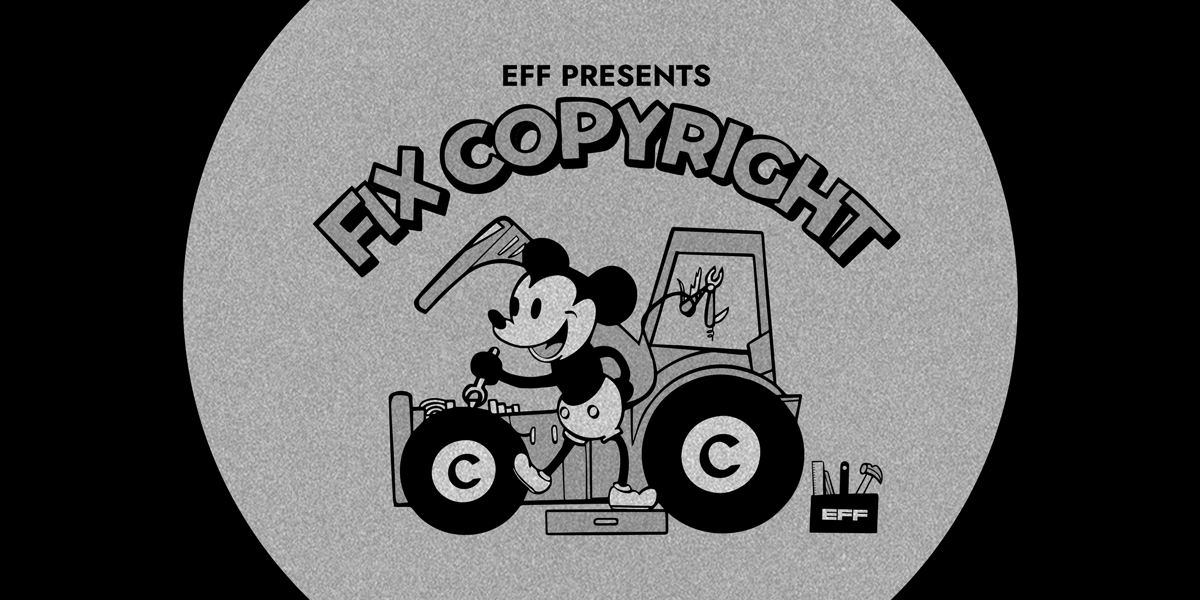
    EFF Presents "Fix Copyright", a design featuring a cartoon mouse hacking his tractor.
    Share
    Facebook Twitter LinkedIn Pinterest Email

    If your ISP can be liable for huge amounts of money for not terminating your access to the internet because of accusations that you—or someone in your household or college network—has committed copyright infringement, that is dangerous. We live in a world where high speed internet access is a necessity for participation in everyday life. That’s why liability for ISPs for their customers’ actions should not be expanded.

    Last fall, EFF filed an amicus brief urging the U.S. Supreme Court to reject an expansive theory of secondary copyright liability that threatened to impose massive damages on internet service providers and other technology companies simply for offering widely used services. Yesterday, the Court agreed.

    In Cox v. Sony, the Court reversed a Fourth Circuit decision that had upheld a billion-dollar verdict against internet provider Cox Communications. Writing for the majority, Justice Thomas explained that contributory liability is limited to two situations: when a defendant actively induces infringement, or when it provides a product or service that it knows is tailored for infringement.

    This framework closely tracks the approach EFF urged in our amicus brief. As we explained, courts should look to patent law for guidance in defining the boundaries of secondary copyright liability. Patent law recognizes liability where a defendant actively induces infringement, or distributes a product knowing that it lacks substantial non-infringing uses. The Court’s opinion adopts that same basic structure.

    EFF also emphasized the broader public interest at stake in preserving these limits. Expansive theories of secondary liability do not just affect large internet providers. They can chill innovation, threaten smaller technology companies, and undermine the development of general-purpose tools that millions of people rely on for lawful speech, creativity, education, and access to information. When liability turns on generalized knowledge that some users may infringe, service providers face pressure to over-police user activity or withdraw useful services altogether.

    The Court also made clear that mere knowledge that some customers use a service to infringe is not enough. Copyright holders must show that the provider intended its service to be used for infringement. That intent can be established only through active inducement or by showing that the service is specifically designed for unlawful uses—not simply because the service provider failed to take affirmative steps to prevent infringement.

    Applying this standard, the Court held that Cox could not be liable. There was no evidence that Cox encouraged or promoted infringement. The record instead showed that Cox implemented warning systems, suspended service, and in some cases terminated accounts in an effort to discourage unlawful activity.

    Nor was Cox’s internet access service tailored to infringement. The Court emphasized that general-purpose internet connectivity is capable of substantial lawful uses. Treating the provision of such services as contributory infringement would improperly expand secondary liability beyond the limits recognized in prior Supreme Court decisions.

    The Court also rejected the Fourth Circuit’s broader rule that supplying a service with knowledge it may be used to infringe is itself sufficient for liability. That theory conflicts with decades of precedent warning against imposing copyright liability based solely on knowledge or a failure to take additional preventive steps.

    EFF is pleased with yesterday’s opinion. We will continue to advocate for the public’s ability to build, use, and innovate with new technologies.

    Link to our amicus brief: 
    https://www.eff.org/document/us-s-ct-cox-v-sony-eff-et-al-amicus-brief

    Link to the opinion:
    https://www.supremecourt.gov/opinions/25pdf/24-171_bq7d.pdf

    Agrees Copyright Court dont EFF Enforcers ISPs Supreme
    Share. Facebook Twitter Pinterest LinkedIn Tumblr Telegram Email
    Previous ArticleGoogle Adds New Performance Max Controls And Reporting Features
    Next Article [Webinar] Stop Guessing. Learn to Validate Your Defenses Against Real Attacks
    admin
    • Website

    Related Posts

    Stop New York’s Attack on 3D Printing

    April 16, 2026

    EFF pushes back on Google data scandal response: ‘Google screwed up’

    April 16, 2026

    How Push Notifications Can Betray Your Privacy (and What to Do About It)

    April 16, 2026
    Add A Comment
    Leave A Reply Cancel Reply

    Search Blog
    About
    About

    At WifiPortal.tech, we share simple, easy-to-follow guides on cybersecurity, online privacy, and digital opportunities. Our goal is to help everyday users browse safely, protect personal data, and explore smart ways to earn online. Whether you’re new to the digital world or looking to strengthen your online knowledge, our content is here to keep you informed and secure.

    Trending Blogs

    Google AI Mode in Chrome now lets you search deeper with fewer tabs

    April 17, 2026

    The New Google Pixel 10a Is Already $50 Off

    April 17, 2026

    Operation PowerOFF identifies 75k DDoS users, takes down 53 domains

    April 17, 2026

    Taylor Sheridan’s next Paramount movie is based on a video game, not Yellowstone

    April 17, 2026
    Categories
    • Blogging (63)
    • Cybersecurity (1,356)
    • Privacy & Online Earning (170)
    • SEO & Digital Marketing (833)
    • Tech Tools & Mobile / Apps (1,622)
    • WiFi / Internet & Networking (227)

    Subscribe to Updates

    Stay updated with the latest tips on cybersecurity, online privacy, and digital opportunities straight to your inbox.

    WifiPortal.tech is a blogging platform focused on cybersecurity, online privacy, and digital opportunities. We share easy-to-follow guides, tips, and resources to help you stay safe online and explore new ways of working in the digital world.

    Our Picks

    Google AI Mode in Chrome now lets you search deeper with fewer tabs

    April 17, 2026

    The New Google Pixel 10a Is Already $50 Off

    April 17, 2026

    Operation PowerOFF identifies 75k DDoS users, takes down 53 domains

    April 17, 2026
    Most Popular
    • Google AI Mode in Chrome now lets you search deeper with fewer tabs
    • The New Google Pixel 10a Is Already $50 Off
    • Operation PowerOFF identifies 75k DDoS users, takes down 53 domains
    • Taylor Sheridan’s next Paramount movie is based on a video game, not Yellowstone
    • Data Breach at Tennessee Hospital Affects 337,000
    • Gen Z Workers Pick Human-Only Output Over AI-Assisted
    • The USB trick that bypasses your smart TV’s 100Mbps Ethernet limit
    • Firefox Nightly for Developers 151.0a1 APK Download by Mozilla
    © 2026 WifiPortal.tech. Designed by WifiPortal.tech.
    • Home
    • About Us
    • Contact Us
    • Privacy Policy
    • Terms and Conditions
    • Disclaimer

    Type above and press Enter to search. Press Esc to cancel.