

Some of us only switch phones when our old one breaks past the point of being usable at all, but most people like to upgrade every now and then, whether it’s for a better camera, performance, or some other new feature. But when you do that, you then have to answer the question of what to do with your old phone. Do you just trade it in? Throw it out and contribute to e-waste?
Another (and potentially better) option is to repurpose it to do something else, like turning it into a remote for all the devices in your smart home. Yes, it’s possible, and it’s all thanks to Home Assistant.

I turned an old phone into a Home Assistant dashboard for my desk
It’s actually really useful, and super easy to do, too.
Home Assistant brings your devices together
Ecosystem barriers don’t matter

It would be great if every smart home device played well with a specific ecosystem, whether it’s Apple’s HomeKit, Google Home, or Amazon Alexa. But most devices want to have an internet connection and use their own ecosystem, which can usually support some of those options, and it’s a mess. Making these things work properly requires a bunch of apps and accounts.
Thankfully, Home Assistant can fix almost all of that and elevate your smart home experience that much more. My smart home is somewhat simple and we only have a handful of devices, but they’re also devices I never really expected to be usable under a single interface, and Home Assistant makes it possible.
I can control both my LIFX and Xiaomi light bulbs, manage playback on my Google Cast-enabled devices, control my LG TVs with a remote, and even see the ink levels on my printer, which I definitely didn’t expect considering it’s a 2014 model. This all comes together under one interface, and it’s wonderful.
But where does your phone come into play?

5 useful Home Assistant automations I wish I had in my life sooner
From energy tracking to turning off devices when not in use, Home Assistant helps improve my life by automating my smart home.
Turning your phone into a remote
Creating a custom dashboard

Naturally, Home Assistant has a smartphone app you can use to control your home, but if you want to turn your phone into a remote, you may want to do a little more than the basics. For one thing, it’s probably worth setting Home Assistant as your default “launcher”, so it’s the first thing you see when you unlock the phone (on that note, maybe removing any unlock method from the phone is also helpful). Home Assistant isn’t listed as a launcher app by default, but you can enable this by going into the app’s settings, and then you can replace your home launcher with it.
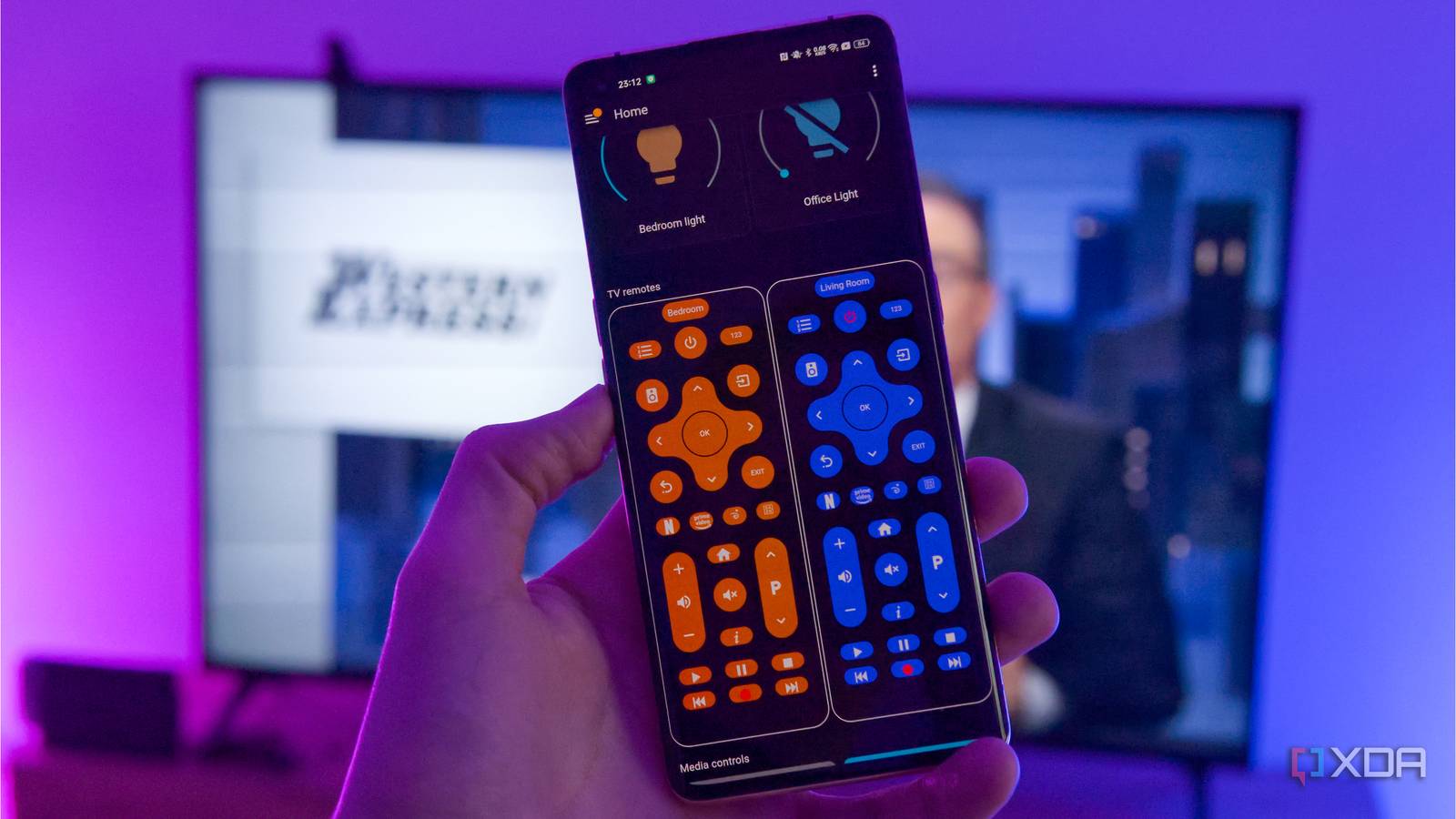
After that, it’s a good idea to design a dashboard specifically to use with your phone. I’ll be honest, even though I’ve had Home Assistant for over a year now, I never configured a nice dashboard for it, and that definitely discouraged me from using it more. But this time, I created a new dashboard and properly set it up with all my devices.
At the top of my dashboard, I put the two smart lights we have in the house right now. While they’re from different brands, you really wouldn’t know it from looking at the cards here, and that’s really cool. In fact, they have different features, too, since only one supports RGB, but that only becomes apparent when I long press them to see more info. One thing to pay attention to is what kind of cards you’re adding. There are specific light cards that include brightness control directly on the dashboard, but there are also button cards that only turn lights on or off.

For my TVs, I have an integration from the Home Assistant Community Store (HACS) simply called LG WebOS Remote Control, and it’s exactly what it says. Since these are smart TVs, they’re connected to the internet and I can fully control them here. In some ways, this is even faster than using my actual remote, since using the TV’s UI is usually pretty slow. These cards let me open apps or choose an HDMI input without waiting for the TV’s menu to open, so it’s great.
I also plan to add a Chromecast TV remote to the dashboard for my living room TV which has a Chromecast plugged in. This makes it easier to control both the TV and the Chromecast with a single device, without juggling remotes. You can do this with the Android TV Remote integration for Home Assistant, but if you don’t want to set things up manually, you can also use the Chromecast Google TV Remote integration from HACS to automatically set up a remote that looks just like the physical remote with functioning buttons.
Finally, I added a section for media controls so I can see what’s playing on my smart speakers, displays, and TVs with Google Cast and play/pause easily.

This Home Assistant integration makes your dumb washing machine smart
Turning dumb appliances into smart objects.
You can get even more inventive
Home Assistant goes much deeper

All of this is already great, but as I’ve mentioned, my setup is fairly simple. You can definitely do even more with your smart home depending on how many devices you have and what kind of workflows you need.
For myself, the furthest I went was creating a way to cast YouTube videos to devices like my Chromecast or my Nest Hub. The Google Cast integration lets you do this by creating a script, but at first, you might think you have to create a specific script for each video, since the media ID to be cast needs to be specified in the script.
Thankfully, and with the help of my colleague Adam Conway, I created a text helper in my dashboard that lets me enter a YouTube URL, then I modified the example script to use RegEx to parse the media ID from that URL. Now, I can just copy a YouTube URL and play it on my TV or Nest Hub using my phone and Home Assistant. Of course, if you do it this way, you do need a way to access the YouTube app or website to grab the link, but this is more useful with my primary phone than with a dedicated smart remote like this anyway.

I turned my old phone into a sound sensor, and it’s my smartest Home Assistant trigger
Making our home smarter with old tech.
Home Assistant is a win all around
Repurposing your old phone as a remote for your smart home is just one of the benefits of using Home Assistant. As I’ve already touched on, it’s amazing that it can bring all your smart devices under one ecosystem and make them easily controllable, as well as reduce your dependence on cloud services that manufacturers want you to use. Plus, since the Home Assistant server doesn’t require powerful hardware, it’s also a great way to repurpose an old computer.

- OS
-
Windows, macOS, Linux
- iOS compatible
-
Yes
- Android compatible
-
Yes
