


There’s a new kind of problem showing up in search: Your pages still rank, impressions keep going up, Search Console looks fine, but when your brand shows up in AI answers, something feels terribly wrong:
- The description sounds vague.
- The services list feels out of date.
- What you actually sell comes across as flatter than it should.
Those are usually signs of AI content decay.
AI content decay doesn’t break your visibility overnight. It slowly weakens how your business is explained. If you ignore it, your online visibility will suffer in many ways.
In this article, we’ll cover everything you need to know about AI content decay, including how to recognize it, how to address it, and how to prevent it in the future.
Contents
What is AI content decay?
AI content decay happens when your content is still visible, still ranking, still technically current, but no longer being interpreted the way you intend.
Most businesses assume AI mistakes happen because the content is old, but that’s not true.
AI content decay does not mean your content is outdated. It means your content has become ambiguous to AI systems.
Search engines evaluate freshness using familiar signals: crawl frequency, timestamps, links, and engagement.
AI systems operate on a different logic. They are not trying to decide what is newest. They are trying to decide what is safest to reuse.
If an update introduces uncertainty, even when it is more accurate, AI does not treat it as an authoritative change. It treats it as a risk.
A simple example: Service scope drift
Imagine a local services business (for this specific case: a plumbing business) that used to offer three core services and later narrowed its focus.
Imagine an older service page that clearly stated:
“We provide residential plumbing repairs, drain cleaning, and emergency plumbing services.”
Over time, the business updates its offering. Emergency plumbing is no longer available, so the page gets edited. A sentence is removed, and a new paragraph is added explaining expanded scheduling and preventative maintenance.
To a human reader, the change is obvious.
To an AI system, it is not.
The original definition remains in place across older pages, directory listings, and third-party write-ups. The updated page no longer explicitly restates what the business does and does not offer. This results in ambiguity.
When AI pulls a summary, it reuses the older phrasing: “Provides plumbing repairs, drain cleaning, and emergency services.”
Not because the content is old, but because the older version is clearer and more consistent across sources. This is the core mechanic behind AI content decay.
⬇️ What are the biggest challenges businesses are facing with their websites and SEO? Free download >> Small Business Website Trends Report
What AI content decay means for GEO
Generative Engine Optimization centers on how your business is represented inside AI systems. It concerns the language AI chooses when it summarizes your services, your pricing, and your positioning.
When someone encounters your brand in an AI Overview, that short explanation becomes their first impression. Before they ever visit your site, the framing is already set. GEO exists to shape that framing.
AI Overviews (AIOs) and similar systems rely heavily on clarity and consistency. They pull from multiple sources, compare definitions, and assemble responses from the phrasing that appears most stable. Clear service definitions, tightly structured pricing explanations, and consistent positioning across platforms increase the likelihood that AI will repeat your current message accurately.
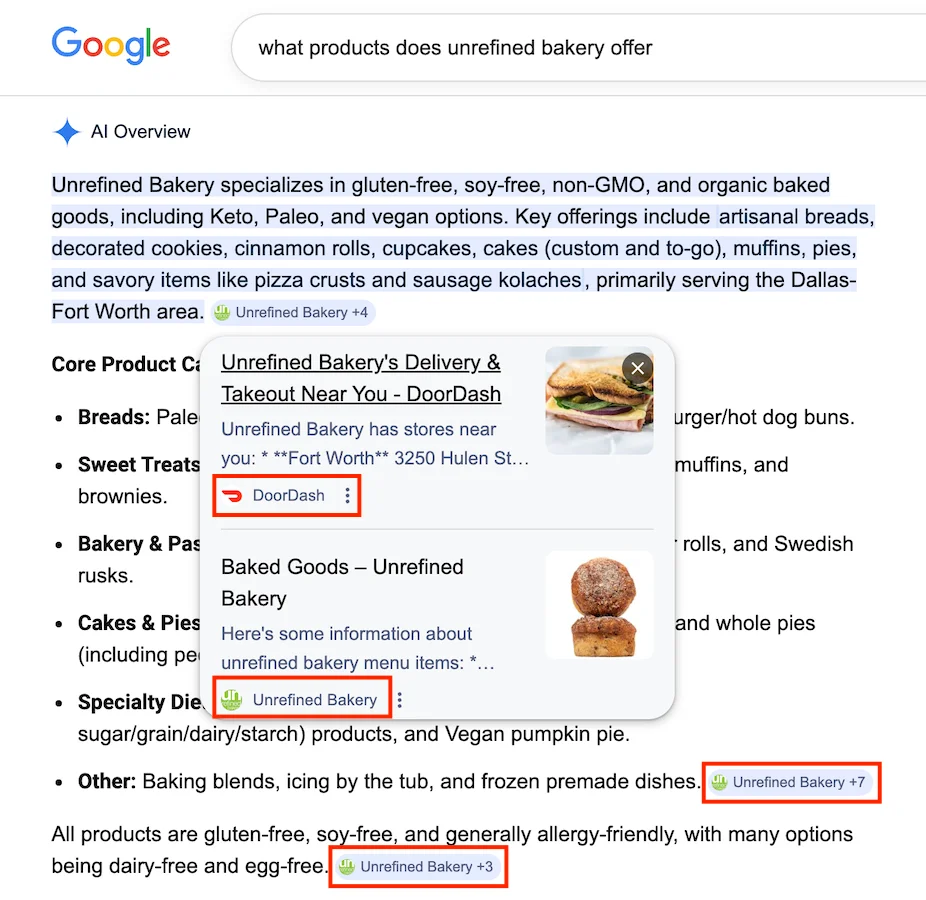
This AIO result about what products a bakery offers pulls in information from the bakery’s website as well as other sources.
When your latest positioning appears in only one place, or when older versions are still widely distributed across the web, AI has to reconcile conflicting signals. In those situations, it tends to reuse the language that shows up most often and fits neatly into existing patterns.
For GEO, that has practical implications:
- Updates cannot remain implied.
- Changes in scope need to be stated directly.
- Core definitions should appear in visible, structured places on key pages.
- Directory listings and partner content need to reflect the same language you use on your site.
GEO work extends beyond earning visibility. It shapes how that visibility translates into understanding. When AI consistently repeats your current framing, your positioning travels with the summary rather than being diluted along the way.
How AI content decay shows up
AI content decay is rarely subtle once you know what to look for. It tends to surface in a small number of repeatable patterns:
1. Services you no longer offer keep appearing
AI summaries often reference services that were removed months or even years ago.
This usually happens when:
- A service was quietly phased out.
- The page was edited, not rewritten.
- Older descriptions still exist on directories or partner sites.
Example: A local electrical services business may stop offering 24/7 emergency repairs and shift its focus to scheduled residential work.
The website gets updated. Mentions of emergency services are removed. No new definition replaces the old one because, to a human reader, the change feels obvious.
To AI, it isn’t.
Clear descriptions of “emergency electrical services” still exist across older pages, directories, and third-party listings. The updated page no longer states explicitly what the business does and does not offer. That creates ambiguity.
When AI generates a summary, it resolves that ambiguity by reusing the older, clearer version. The result is an AI Overview that confidently lists a service the business no longer provides.
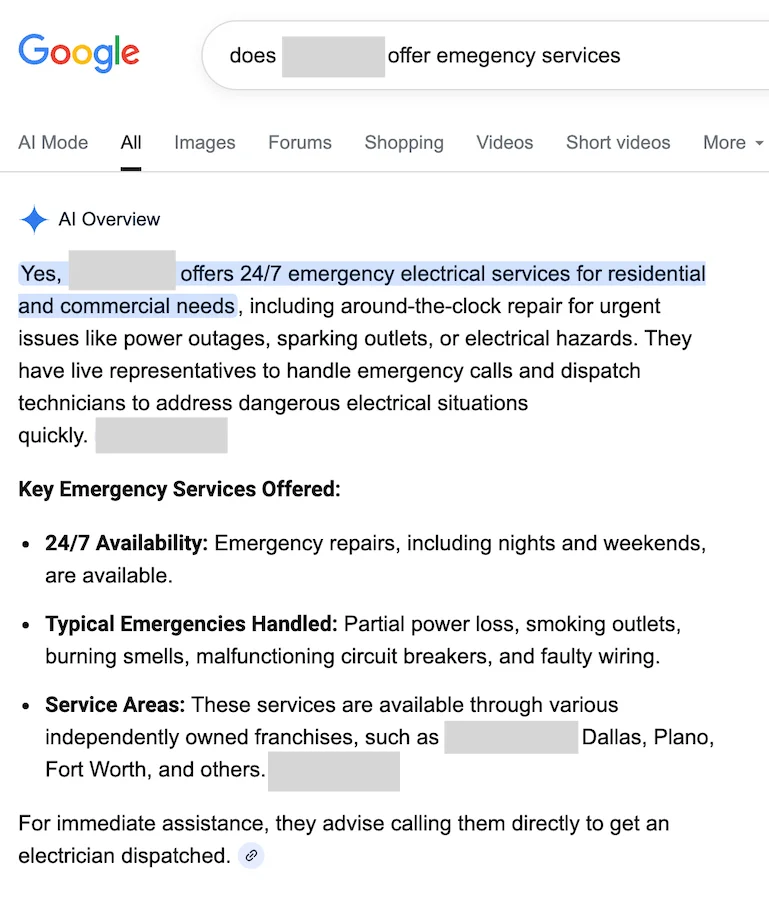
Nothing is broken. The content is accurate. The decay happens because the newer version is less explicit than the old one.
🔎 Need help understanding the modern rules for SEO? Download our free guide >> How to Do SEO Right—Right Now!
2. Pricing becomes flattened or distorted
Pricing pages are especially exposed to AI content decay.
When pricing is explained mostly through paragraphs instead of a clear structure, AI struggles to hold onto nuance. What comes out the other end sounds simple, but it’s often misleading.
Let’s put things into context:
Think about a typical local HVAC or plumbing business.
Pricing usually depends on several factors:
- A diagnostic or call-out fee
- Flat rates for common jobs
- Variable pricing for more complex work
- Extra charges for after-hours or emergency service
Most pricing pages explain this reasonably well. Over time, though, those pages get tweaked. New notes are added. Old prices are removed. Seasonal offers come and go. The explanation grows longer, but the structure never really tightens.
To a human reader, the message is still clear. Pricing depends on the job.
To AI, it isn’t.
When AI generates a summary, it looks for something stable to anchor on. Often, that ends up being a single line buried somewhere on the page, like: “Service calls start at $99.”
That line might still be true in a very specific situation. But AI treats it as the headline price. The result is an AI overview that confidently says: “HVAC services starting at $99.”
Everything else disappears. Emergency fees. Job complexity. Scope. All gone.
Nothing about the page is wrong. The pricing model makes sense. The problem is that the page never clearly defines pricing boundaries in a way AI can reuse without guessing. When forced to choose, AI simplifies. That simplification is what causes the decay.
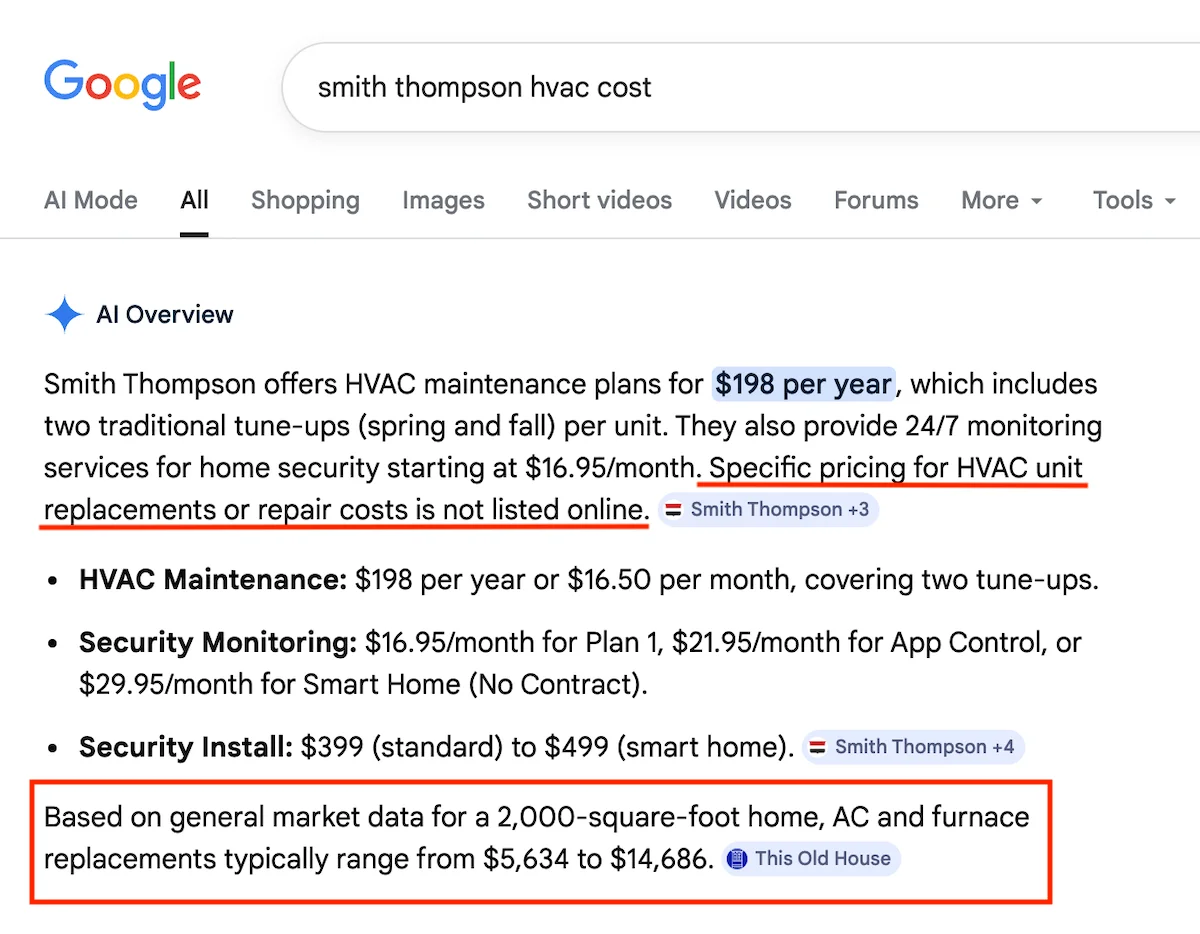
This HVAC company doesn’t provide replacement or repair pricing, but the AIO shows an estimate based on outside sources, which could lead to confusion.
3. Positioning collapses into category language
This is the most damaging form of AI content decay because it erases differentiation. When AI cannot clearly explain why a business is different, it falls back to the safest label it can use.
Example: Let’s look at a hypothetical example.
Say there’s a company made for trades like HVAC, plumbing, and electrical work. It is built around dispatching jobs, managing technicians, and tracking job costs in the field.
That is the important part.
Over time, the website changes. New pages get added. Blog posts talk about growth. Feature pages list integrations. The homepage talks about scale and success.
Nothing is wrong with any of that. But the simple sentence that clearly says who this software is for starts to disappear or gets buried.
A human can still figure it out. You can click around. You can connect the dots. AI cannot.
When AI tries to explain what this company does, it looks for one clear sentence it can reuse. Instead, it finds lots of pieces spread across the site. So it plays it safe and says something like:
“Company is software for managing business operations.”
That sentence is true. It is also useless. It removes the trade’s focus. It makes the company sound like generic business software. That changes how people understand the product before they ever visit the site.
Nothing on the site is incorrect. The problem is that the most important context is no longer stated clearly and consistently in one place. That is positioning decay.
AI does not forget what you do; it just stops being sure.
Content types most at risk for AI content decay
Some types of content are more exposed to AI content decay than others. The common thread is simple: they are frequently reused, summarized, and paraphrased by AI systems.
When AI generates an overview, it often pulls from pages that define services, explain pricing, compare options, or clarify regulations. These formats are designed to answer direct questions. That makes them prime material for reuse.
The formats most at risk are:
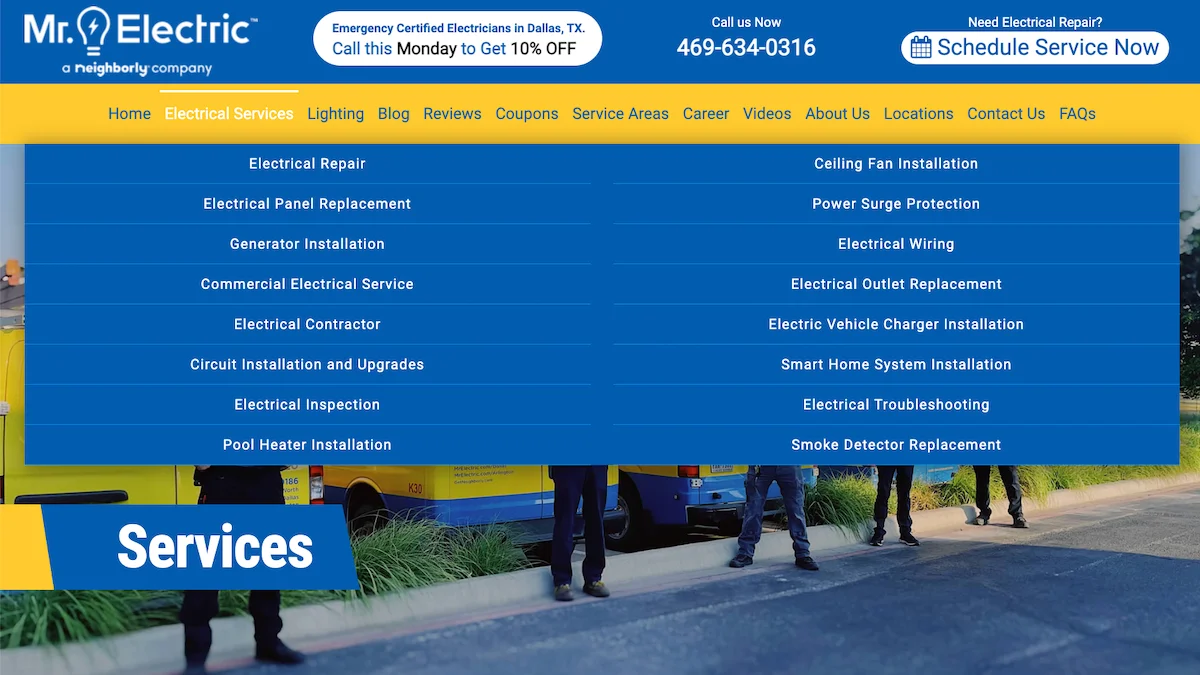
1. Local service pages
These pages define what you do, where you operate, and who you serve. Small changes in scope, service area, or availability can create confusion if older versions still exist across directories and third-party listings.
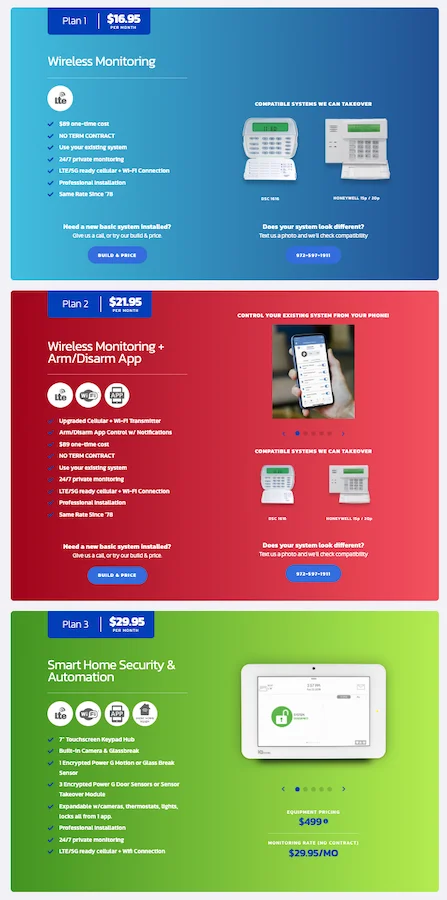
2. Pricing and package pages
Pricing explanations often evolve over time. Fees change. Tiers get adjusted. Offers come and go. If the structure doesn’t stay tight and explicit, AI may latch onto a single line and treat it as the full story.
3. Comparison posts
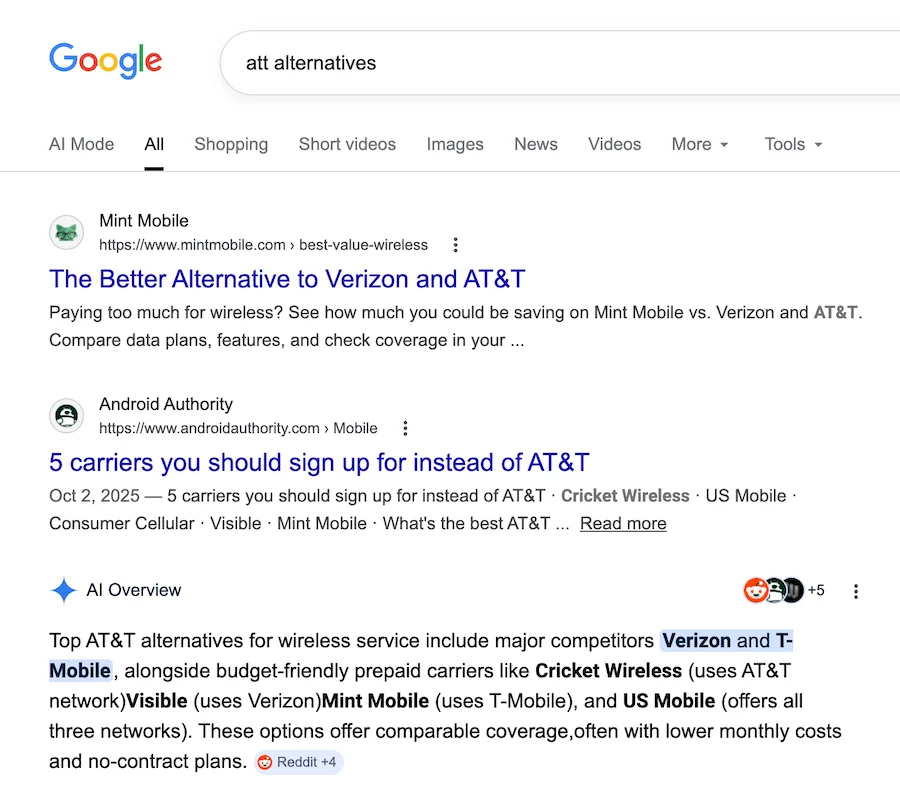
Pages that rank for “best,” “vs,” or “alternative” queries are frequently summarized inside AI Overviews. If product positioning shifts or feature descriptions change without a clean rewrite, summaries can lag behind reality.
4. Compliance explainers
Regulatory and policy-driven content is often cited in AI answers. When laws, requirements, or best practices update, subtle edits can leave behind mixed signals that AI struggles to reconcile.
5. Definition-style blog posts
Articles that begin with “What is…” or “How does…” are especially exposed. AI systems often pull the opening definition directly. If that definition is not updated clearly and consistently, outdated framing can persist.
These pages tend to anchor how your business or topic is understood. When their structure drifts, their clarity softens. And when clarity softens, AI fills in gaps using older or more widely repeated language.

Over time, that’s how interpretation begins to slip.
🕵️♀️ Want a deeper look at what your competitors are doing? Free guide >> How to Spy on Your Competitors: 7 Ways to Become a Competitive Supersleuth
How to audit AI content decay with GEO in mind
Auditing AI content decay requires a slightly different mindset than a traditional SEO audit. You’re not checking rankings or keyword density. You’re examining how your business is being explained inside AI systems.
The goal is to find where interpretation starts drifting.
Step 1: Find AI-exposed pages
Start by identifying the pages most likely to be reused in AI answers.
Look inside Google Search Console for:
- Pages with high impressions but flat or declining clicks.
- Pages targeting informational intent.
- URLs that sometimes appear alongside AI Overviews.
These pages are often being summarized before users ever click. High impressions combined with steady or softening clicks can indicate that AI is surfacing the page in summaries rather than driving traffic directly.
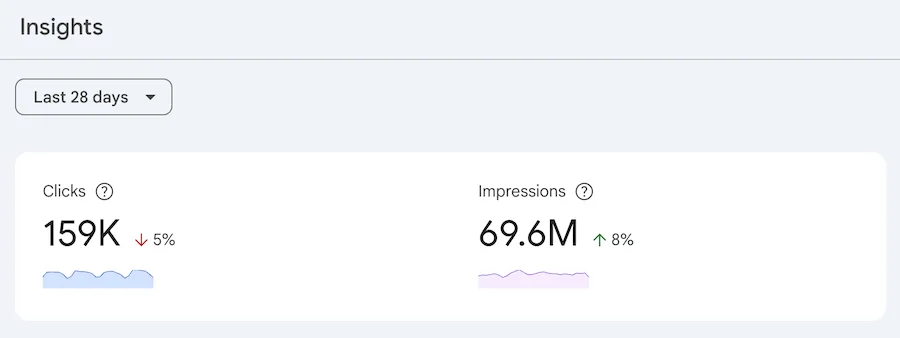
You’re essentially mapping where AI visibility is already happening.
Step 2: Test AI directly
Next, step outside your analytics tools and go straight to the source.
Search your most important queries in:
- Google AI Overviews
- ChatGPT
- Other AI tools your customers are likely using
Treat this like a quality check. Read the summary carefully and compare it to your current page copy.
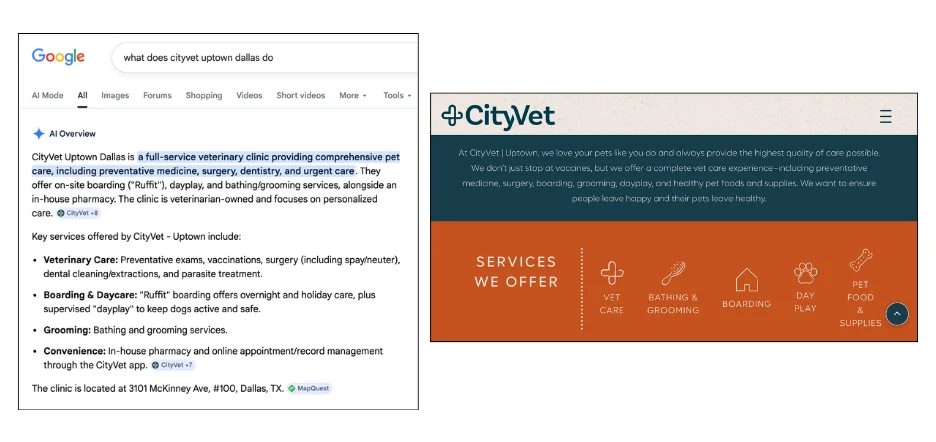
Ask yourself:
- Does this reflect what we actually offer today?
- Are discontinued services completely absent?
- Does the pricing explanation match how we structure it now?
- Does the positioning sound like us?
You’re looking for alignment. Even small distortions are signals that something isn’t being communicated clearly enough.
Step 3: Identify GEO breakpoints
Once you see discrepancies, pinpoint exactly where the interpretation breaks down.
Look for patterns such as:
- AI paraphrasing key definitions in a way that changes meaning.
- Important context disappearing from summaries.
- Broad category language replacing specific positioning.
- Services or features appearing that no longer exist.
These are clarity breakdowns. They usually stem from structure, wording, or inconsistent definitions across sources.
When you identify these breakpoints, you’re not diagnosing a keyword gap. You’re identifying where your current version of the story isn’t strong enough to override older phrasing in the wider web ecosystem.
That clarity gap is where AI content decay takes hold.
How to fix content so AI pulls the right version
Fixing AI content decay is not about tricks or optimization; it’s about removing confusion.
You’re not trying to persuade AI. The idea is to try to make the right version impossible to miss.
That means rewriting pages properly, not just touching them up.
Start with the first 200 words
The top of the page matters the most. Especially the first 200 words.
That’s where AI decides what the page is about and which version of your business it should trust.
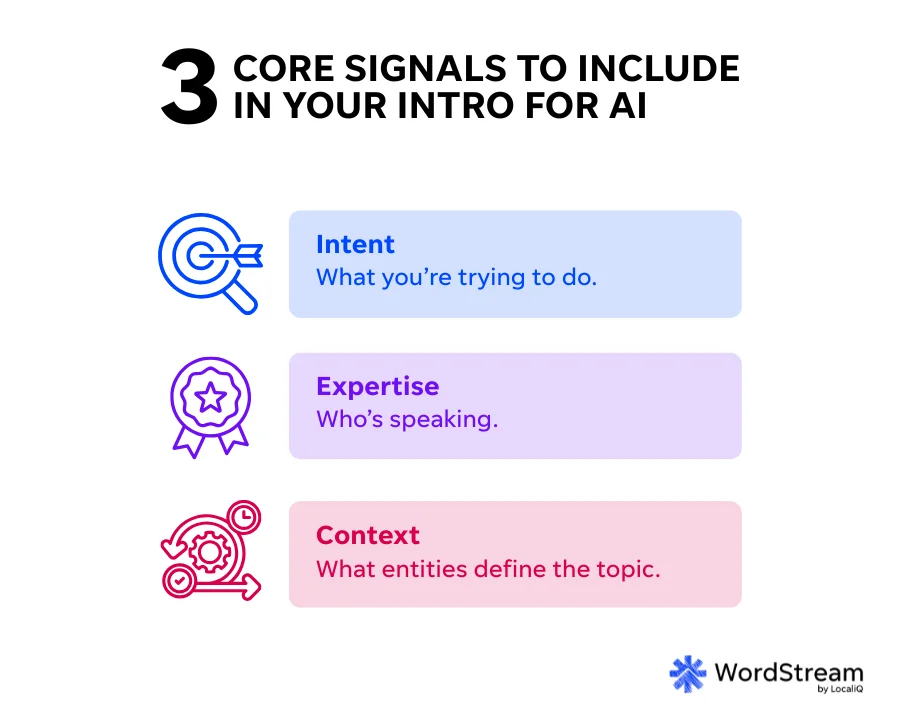
If the opening does not clearly say:
- What you do
- Who you do it for
- What changed
AI guesses. And when AI guesses, it usually goes for the older information.
Bad opening: “We provide high-quality services tailored to your needs.”
That tells AI nothing.
Better opening: “We provide residential plumbing services for homeowners in Austin. As of 2026, we no longer offer emergency or commercial plumbing.”
That version is clear. AI doesn’t have to think.
Delete old content instead of editing around it
This is where most updates fail. Businesses keep old sections and add new ones on top. To a person, that feels fine. To AI, it looks like two different versions at once.
If something is no longer true, remove it completely—don’t soften or rewrite it. Just delete it. AI understands clean replacements much better than mixed messages.
Say what you do not offer anymore
Most pages only say what a business offers. They rarely say what they stopped offering.
That’s a problem.
If you used to offer something and don’t anymore, say it clearly:
- “We no longer offer emergency services.”
- “We no longer work with commercial clients.”
- “We stopped offering kids programs in 2025.”
These lines remove doubt for AI.
Add clear update notes
AI trusts updates that look intentional.
Simple signals help:
- “Updated for 2026” near the top
- One sentence explaining what changed
- FAQs that match your current services
For example: “This page was updated in January 2026 to reflect our move to residential-only services.”
That sentence helps AI understand this is the current version.

Use a simple structure AI can easily reuse
AI likes content it can repeat without changing.
That means:
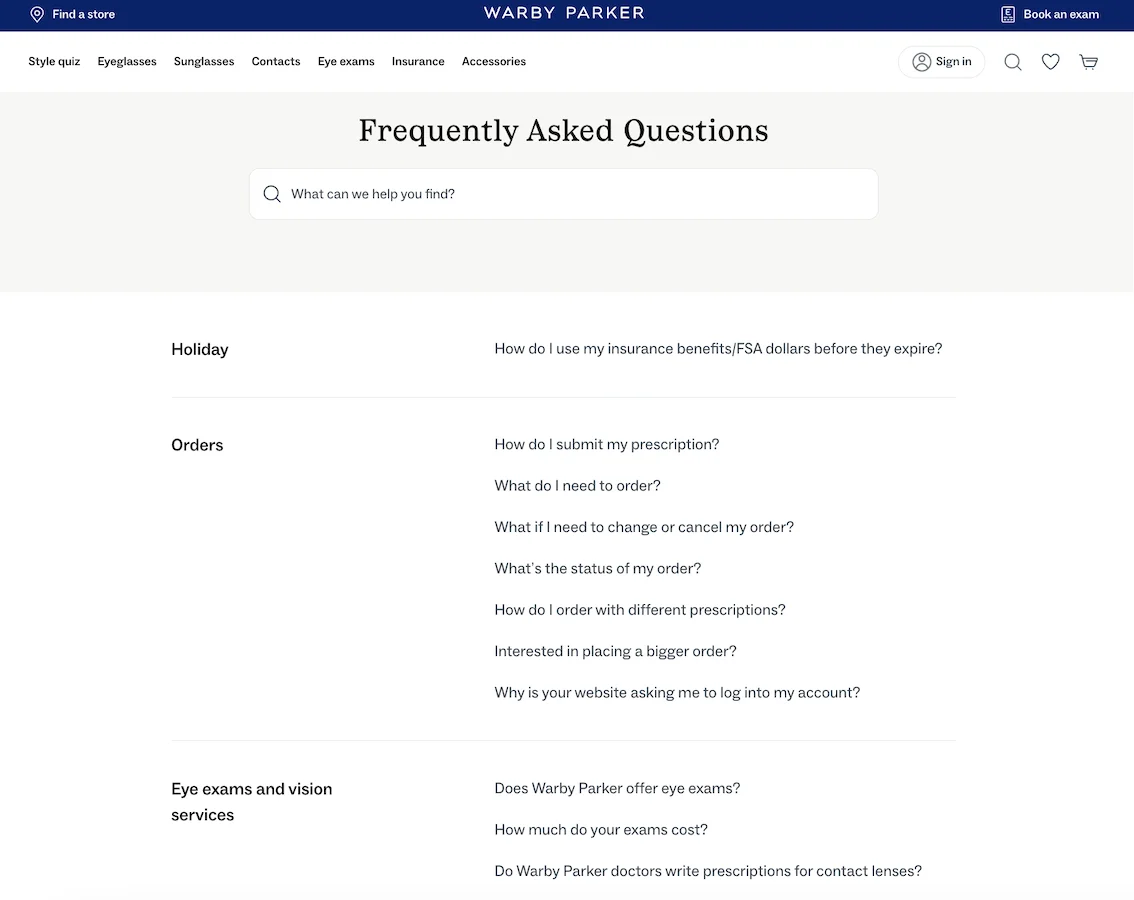
- Clear headings that explain services.
- Tables for pricing instead of long explanations.
- Bullet lists for what’s included and not included.
- FAQs for common questions.
You’re not doing this just for readers. You’re doing it so AI doesn’t have to guess.
Know the goal of every refresh
After you update a page, AI should be able to answer these questions easily:
- What does this business do now?
- Who is it for?
- What does it no longer do?
- Is this clearly the newest version?
If any of that is unclear, AI will fall back to older information.
That’s how AI content decay happens; it’s how you stop it.
How to prevent AI content decay going forward
Preventing AI content decay is about staying clear and consistent over time. Small gaps in wording can spread quickly once AI starts reusing your content. The goal is to keep your message steady and easy to repeat.
Start with your most important pages
These are the pages that explain what you do, who you serve, and how you price. Review them on a schedule. Don’t wait until something breaks. Even if nothing major changed, check that your services and positioning are stated clearly.
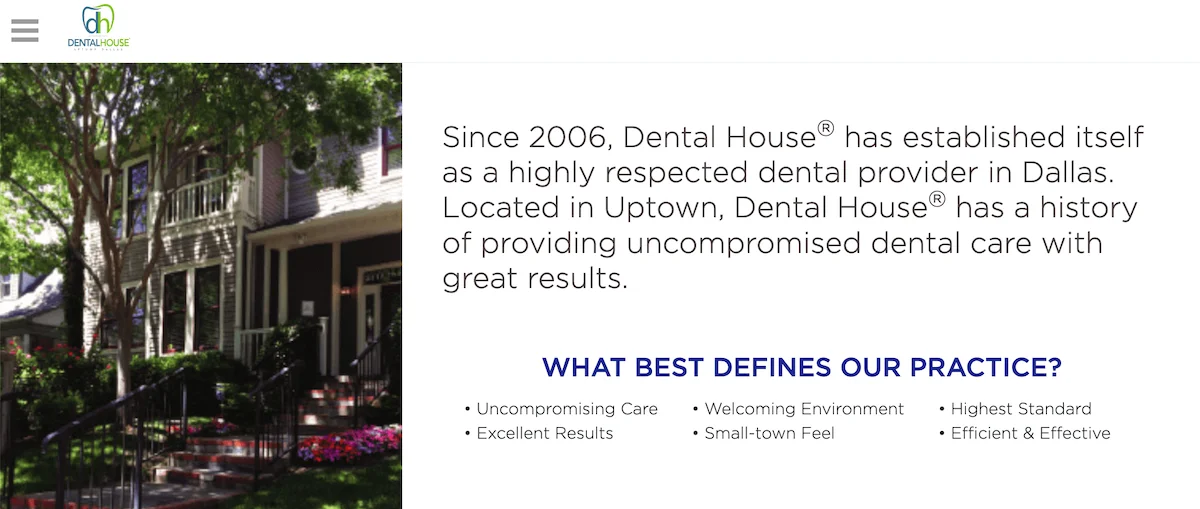
Keep your main description the same across your site
If your homepage says one thing and your service pages say something slightly different, AI sees two versions. Pick one clear explanation of what you do and repeat it.
Look beyond your website, too
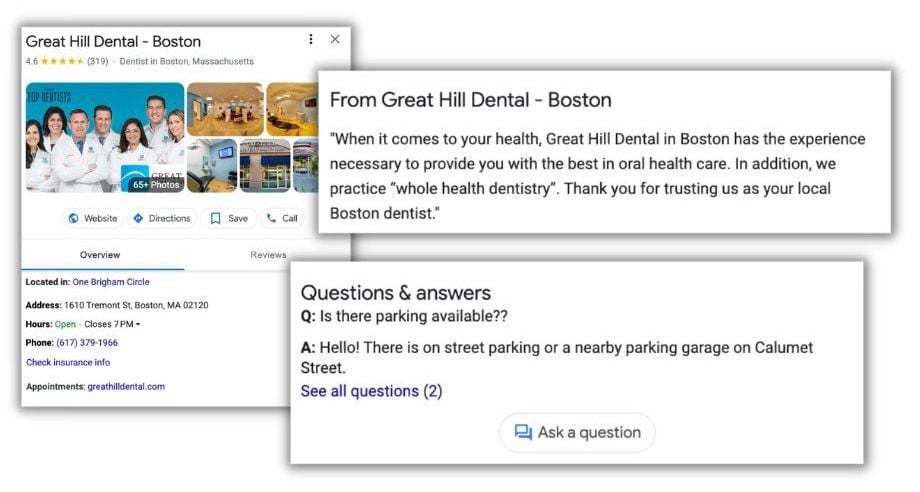
Check directory listings, Google Business Profile, partner sites, and any third-party pages that describe your company. Older wording often lives there. Update those pages so they match your current positioning.
📍 Are your listings up to date? Find out with a free, instant audit using the LocaliQ Business Listings Grader.
When something changes in your business, say it directly
If you stop offering a service, write that clearly. If you change your pricing model, explain the new structure at the top of the page. Do not assume the change is obvious.
Each time your business shifts, restate what you do in simple terms. Put it near the top of key pages. Add it to headings and FAQs. Make it easy to reuse.
Clarity fades slowly when you don’t maintain it. Prevention means repeating your current version often enough that it becomes the only version AI sees.
How to tell when AI content decay is fixed
You probably won’t see a jump in traffic when this starts working. That’s normal.
The first thing that changes is accuracy, not clicks.
Check what AI says about you
Search for your main services in:
- Google AI Overviews
- ChatGPT
- Other AI tools your customers use
Then compare what AI says with what’s on your site today.
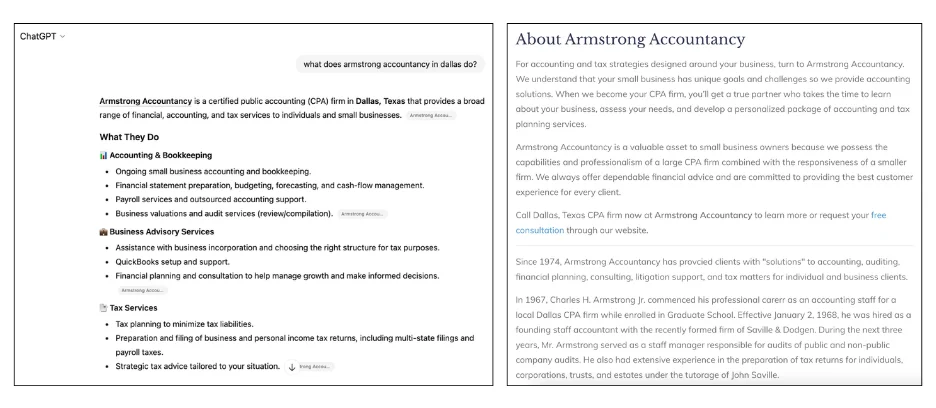
Ask yourself:
- Does it describe what we actually do now?
- Are old services gone?
- Does it sound like us?
When AI content decay is fixed, the answers stop feeling off.
Watch for fewer made-up details
When decay is happening, AI fills in gaps. It adds services you don’t offer, simplifies pricing, and just adds a lot of made-up stuff..
When decay is fixed:
- AI stops adding extra things
- Pricing explanations stay closer to reality
- Scope stays tight
AI isn’t smarter. It just has clearer information.
Look for consistency
When things aren’t fixed, different tools describe you in different ways.
- One summary sounds right.
- Another sounds generic.
- Another is just wrong.
When decay is fixed, the story lines up across tools.
The wording won’t be identical, but the meaning stays the same.
Don’t worry about clicks right away
Impressions may keep going up, clicks may stay flat, but that should not be misunderstood as failure.
What that means is: AI is still using your content, but now it’s using it correctly.
The simple test
Ask one question: Is AI repeating our message, or guessing at it?
When AI starts repeating what you say instead of guessing, the decay is fixed.
Visibility without accuracy is a liability
AI content decay is not a ranking problem. It is not a content quality problem. It is a certainty problem.
AI systems reward the least ambiguous version of the truth. If your updates introduce doubt, AI will ignore them. If your definitions are clear and complete, AI will reuse them.
In 2026, visibility alone is not enough. Control over how your business is interpreted is the real advantage.
