

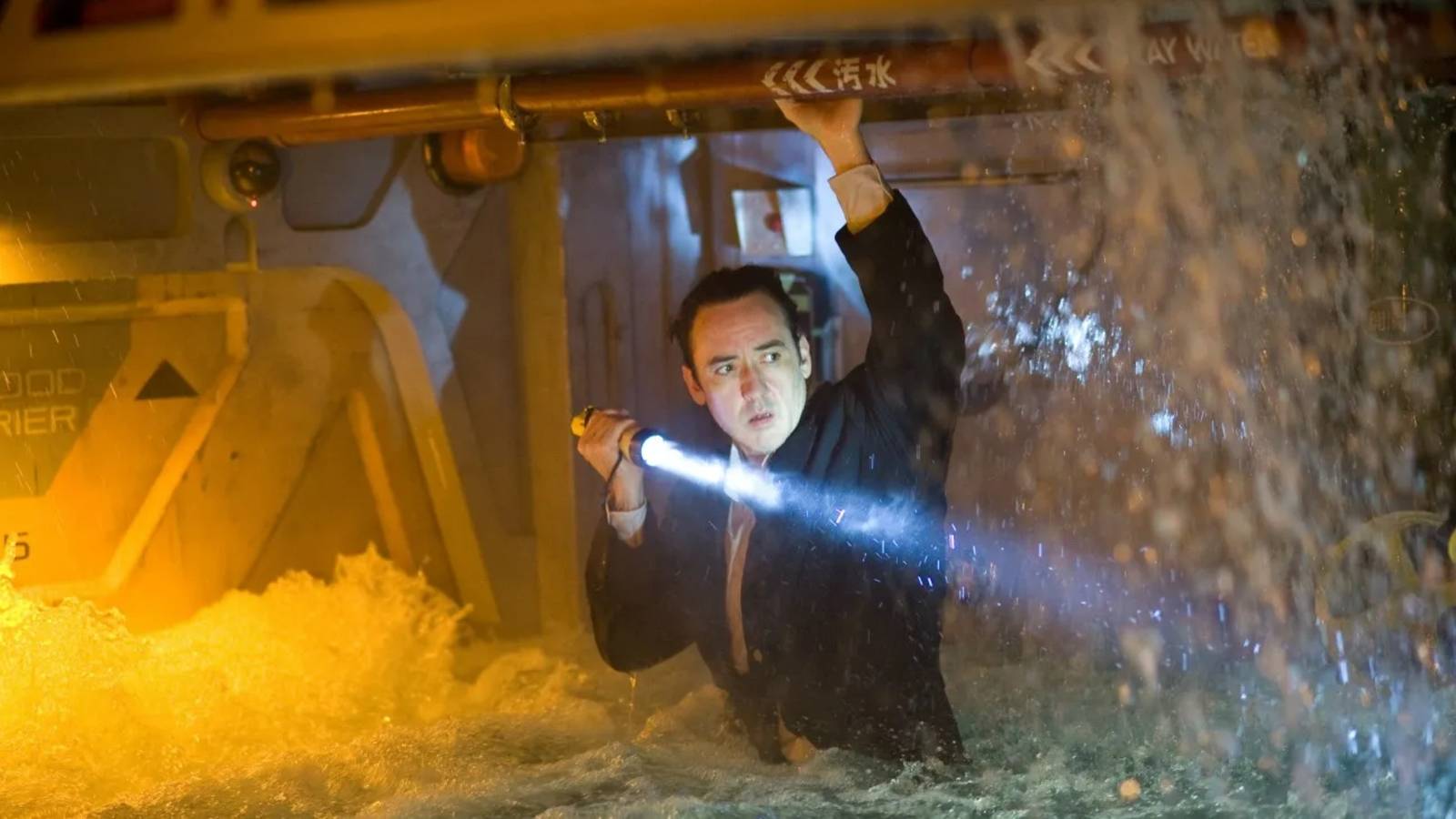
In 2011, NASA scientists met at the jet propulsion laboratory in California to do something very important: name the most and least scientifically plausible movies ever made, with the aim of nudging Hollywood towards doing a better job of depicting science. They decided that the most scientifically plausible movie ever made was Gattaca, the 1997 film about a future where gene editing had become commonplace. As for the least plausible, the choice was easy: 2012.
Somewhat confusingly, 2012 came out in 2009; Sony really missed a branding opportunity there. It was about, simply, how the world would end in 2012 thanks to a cavalcade of disasters, each less scientifically plausible than the last.
The spectacular silliness of 2012
How to get everything about science wrong in one movie
Sony gathered a pretty impressive cast for this nonsensical box office success; 2012 grossed $757 million on a budget of $200 million. John Cusack plays a struggling writer, Amanda Peet is his ex-wife, Woody Harrenson is a fringe scientific conspiracy theorist, Danny Glover is the president, Chiwetel Ejiofor is the president’s advisor, and Thandiwe Newton is the president’s daughter. The lot of them are dealing with a massive wave of natural disasters, all of which begin when neutrinos start heating the Earth’s core.
And right away, we come to the first big implausibility of the film. Neutrinos are subatomic particles with no electric charge and almost no mass. The sun gives off a lot of them. Neutrinos pass through the Earth harmlessly, so the idea of them suddenly heating the planet’s core makes no sense. In 2012, this is explained away by saying that these particular neutrinos are mutated, but that doesn’t make the notion any less silly.
Anyway, in the movie, the heating core leads to the Earth’s crust shifting rapidly, causing all manner of earthquakes, tsunamis, and volcanic explosions. This bit likely had scientists choking on their popcorn out of indignation, as the Earth’s plates can move maybe a few centimeters in a year, not thousands of miles in a few days. And if something like that were to happen, the Earth’s crust would melt and the oceans would boil, making the Earth completely unlivable. In the movie, our characters just have to wait things out until they calm down.

The forgotten sci-fi show that quietly predicted our world 14 years ago
A corporate-controlled surveillance state? Technology so useful it makes us complacent? Crazy talk, I tell you.
And all of this was based on a misreading of the Mayan calendar. By one reading, the Mayan calendar ends in the year 2012, which people took as a sign that the world itself would come to an end in 2012. But in reality, the calendar just showed one cycle ending in 2012, and another one beginning.
So the movie is based on a misunderstanding from the start, and just keeps digging from there.
NASA took this one personally
The scientists surely got tired of people worried about 2012

The conspiracy theory that the world would end in 2012 because the Mayan calendar said so gained a lot of traction in the 2010s, which was surely why Sony decided to make a movie out of it. But you get the idea that NASA was annoyed. According to CNET, they put up a special website right around the time the movie came out answering questions people had about the looming apocalypse. The website itself doesn’t seem to exist any longer, but we still know what the irritated scientists wrote on it.
“Impressive movie special effects aside, December 21, 2012, won’t be the end of the world as we know,” the page read. “It will, however, be another winter solstice…Our planet has been getting along just fine for more than 4 billion years, and credible scientists worldwide know of no threat associated with 2012.”
Although the movie cooked up a plot about mutant neutrinos destroying the Earth, some feared that the 2012 apocalypse could come to pass thanks to some kind of planetary alignment event, something else this NASA was quick to shoot down. NASA senior research scientist Don Yeomans got the last word: “I for one love a good book or movie as much as the next guy. But the stuff flying around through cyberspace, TV, and the movies is not based on science.”
I can imagine these scientists getting so frustrated they put up this website so they could point to it the next time someone asks them how to prepare for 2012.
NASA vs disaster movies
This was not a good period for scientific literacy in the movies
2012 was directed by Roland Emmerich, who also directed disaster movies like Independence Day and The Day After Tomorrow. Looking at NASA’s list, you get the idea that they had an especial hatred for the genre: they list the second and third most scientifically implausible movies as The Core and Armageddon, both of which are in this vein.
I think most people know not to expect scientific rigor when going into these kinds of movies, but most of us don’t know exactly how tremendously implausible they are. It’s got to be difficult for NASA scientists, who study this stuff, to see this kind of thing get so popular.
Alternatives
If you’re looking for a movie that sticks a little closer to actual science, you have options. There are also quite a few sci-fi TV shows out there that try to keep things realistic.
That said, NASA also appreciates the role imagination plays in creating great science fiction, even if that fiction is horribly implausible. As one of their favorite sci-fi movies, the scientists name Woman in the Moon, a 1929 silent film about a trip to the Moon. The movie gets a lot of things wrong (like that there’s air on the Moon), but it was 1929, so they have an excuse for not knowing better, unlike the people behind 2012. And Woman in the Moon also get a lot right, like forecasting how real space-bound rockets would have to take off from the Earth decades before an actual craft was finally sent into space.

- Release Date
-
October 10, 2009
- Runtime
-
158minutes
- Director
-
Roland Emmerich
