


A recent survey of local SEO experts found two interesting data points about citations:
- Citations were viewed as less important than in prior years for local map organic search rankings.
- Citations are viewed as critical for AI search, making up three of the top five AI search visibility factors in the survey.
My company has helped build thousands of local citations over several years.
In my experience, most small businesses don’t really understand the process for getting and managing citations, and don’t fully understand the impact they have on local SEO (and now AI search).
Some points of confusion:
- Many people don’t know whether citations impact map listings, organic listings, AI search, or all three.
- Most people aren’t sure how many citations they need to build, or how frequently they need to build them.
- Citations are often confused with updating information across data providers and “NAP” consistency.
- Citations are sometimes confused with links and link building.
And perhaps most importantly: Many small business owners aren’t sure whether they should contract out work on citation building or do it themselves (and if they should do it themselves, how to do it).
In this article, I’ll answer all of these questions and walk through how to build citations yourself.
If you’re not interested in the nitty-gritty and just want an answer to “how should I handle citations for my small business” you can skip ahead to the last section, where I’ll answer that for you based on budget and how competitive your industry and area are.
Additionally, we built some free tools to help with the citation-building process.
Contents
What are local citations?
A local citation is an online mention of a business. In the context of local SEO, this typically refers to a structured listing on an external website that includes the business name, address, and phone number (NAP).
These are usually business listings at any of a variety of sites, most frequently directory-style websites. They come in different flavors such as:
- General local business information across all types of businesses (e.g., Yellow Pages, Yelp)
- Industry-specific (e.g., a directory of home remodeling companies across the US)
- Location-specific (e.g., a directory of small businesses in Mississippi)
Local citation examples
So, let’s say we own a home remodeling business in Oxford, Mississippi. We can get our business listed on general sites like the Yellow Pages:
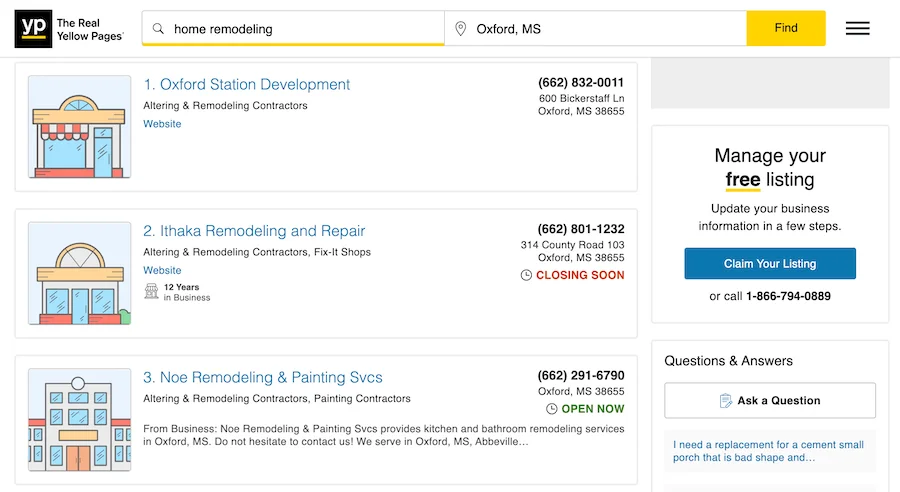
Chamber of commerce, government or travel directories, or other town/city, county, or state directories:
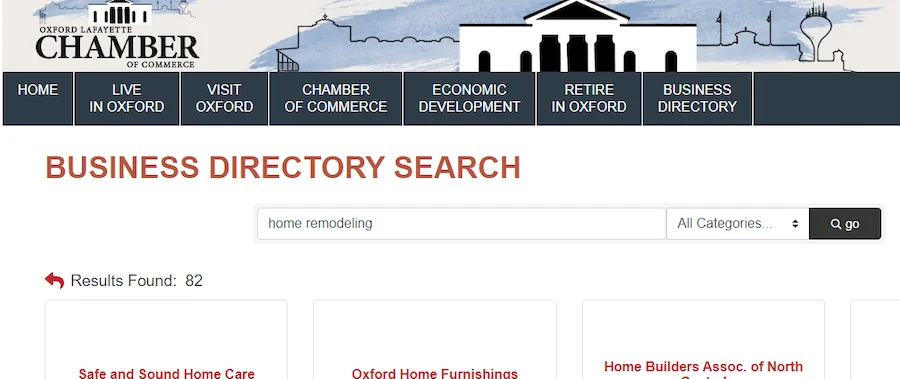
Or we could find directories focused on construction or resources for homeowners:

🚀 Free guide >> 10 Tangible & Free Ways to Get on the First Page of Google
How much do local citations cost?
The citation market has a lot of different players and a wide range of pricing and quality. We did a deep dive to research over 50 different local citation providers to get a sense of the range of costs. You can get more information in the interactive pricing guide we built below, but a few key takeaways:
- The price spread is large: The cheapest per-citation cost ($0.13 for bulk freelance packages of 500+) is roughly 36X less than the most expensive manual service ($4.73 per citation for white-label hybrid packages with GBP optimization).
- The “sweet spot” seems to be 50–150 citations at $1–2 each.
- Freelance services are cheaper but may not offer additional items like a NAP consistency audit, photos/videos with submission, etc.
- Most of the volume discounts plateau after the first step up.
Cheapest
$0.13
per citation
Median
$1.33
per citation
Highest
$4.73
per citation (excl. cleanup)
Plans Analyzed
53
across service types
The Volume Discount Curve
Cost per citation drops sharply as package size increases — but the cheapest per-citation price isn’t always the best value.
Key takeaway: Manual services at 50–100 citations hit the sweet spot of $1–2 per citation with quality verification. Budget freelance options dip below $0.50 but often lack NAP auditing and quality checks. SaaS tools charge more per listing but include ongoing management and sync.
Price Ranges by Service Model
How different approaches to citation building compare on cost
Per citation · Bulk packages of 50–500 · Quality varies widely
Per citation · One-time packages of 35–300 · Includes audit & report
Per citation · Includes photo/video citations, social media, NAP audit · 5–14 day turnaround
Per listing/month · Ongoing sync, review monitoring, GBP integration · Listings removed if you cancel
Per citation · White-label ready, duplicate checks, GBP/Bing optimization included
Own vs. rent: Manual and freelance citations are
one-time purchases you keep forever.
SaaS listings are rented — cancel your subscription and the listings disappear.
Factor this into your true cost calculation.
| Type ▼ | Model ▼ | # Citations ▼ | Total Price ▼ | Per Citation ▼ | Includes ▼ |
|---|
If you’re considering the cost of getting citations built for your business, there are a few factors to keep in mind:
- Are citations being built once, or are new citations being added regularly/monthly?
- Are citations maintaining NAP data consistency with new and existing listings?
- Is the service provider checking for duplicates as they build citations?
- Are you getting login credentials?
- Are they comprehensively filling out your profiles with information, videos, photos, etc.?
- What are the volume discounts, and are they worth it?
Once you know some of the typical pitfalls, you know the right questions to ask a vendor so that you can find the right mix of service quality and price.
Alternatively, you can think about the cost to build citations yourself–how much time and effort would it take for you to hand this process off, and is that worth it versus the cost of a service provider?
Are local citations links? Is citation building the same as link building?
Many local citations that you build will include links to your website, but some will not.
The focus in building citations is not solely to get links, it’s to have your business listed in key directories where legitimate small businesses frequently appear, and in local and industry directories to help signal to Google that your business is noteworthy and trustworthy when it comes to your business focus and location.
That said, building citations will typically lead to an increase in the number of links to your website, as many sites will allow you to include a link.
👀 Looking for more ways to drive people to your site? Free guide >> 25 Ways to Increase Traffic to Your Website
Is building citations the same as NAP consistency?
NAP consistency refers to the consistency with which your business listings across the web and with major data providers is the same.
If your business has changed names, addresses, phone numbers, websites, etc. you may have inconsistent data in different listings on the web. This can hurt local rankings as it’s a signal to Google that your business may not be reliable and trustworthy.
Building citations generally refers to the practice of creating new local citations for your business which is not the same as updating your existing citations for consistency, but many vendors will simultaneously work on “cleaning up” any NAP inconsistencies (claiming your business profiles places where you may not have known they exist, updating them in instances where you, a vendor, or someone within your company may have created them before a change in business name, phone number, or physical address, etc.), and building out new citations.
What’s the difference between structured vs. unstructured citations?
Citations are sometimes referred to as “structured” or “unstructured.”
A structured citation is simply a citation that’s created on directory-style sites that have uniform (or structured) fields for information.
An unstructured citation is a citation that happens outside of a company or website profile, typically in an article or blog post. This may be a site getting listed in a listicle, an employee being quoted in an article, etc.
Local citations vs. data aggregators
Data aggregators are services that collect, verify, and distribute business information to hundreds of downstream directories, apps, and mapping services. It’s basically a bulk submission to several directories (creating many citations at once).
Some of the major data aggregators are:
- Data Axle (formerly Infogroup): Feeds data to a huge network including YP.com, CitySearch, and many local newspaper sites.
- Neustar Localeze: Supplies business data to search engines, GPS systems, and 911 databases.
- Foursquare: Powers location data for Apple Maps, Uber, Snapchat, and many other apps.
Data aggregators are often included with citation services, or you can go directly to these companies and typically pay a stand-alone one-off fee to get listed and syndicated.
How valuable are citations?
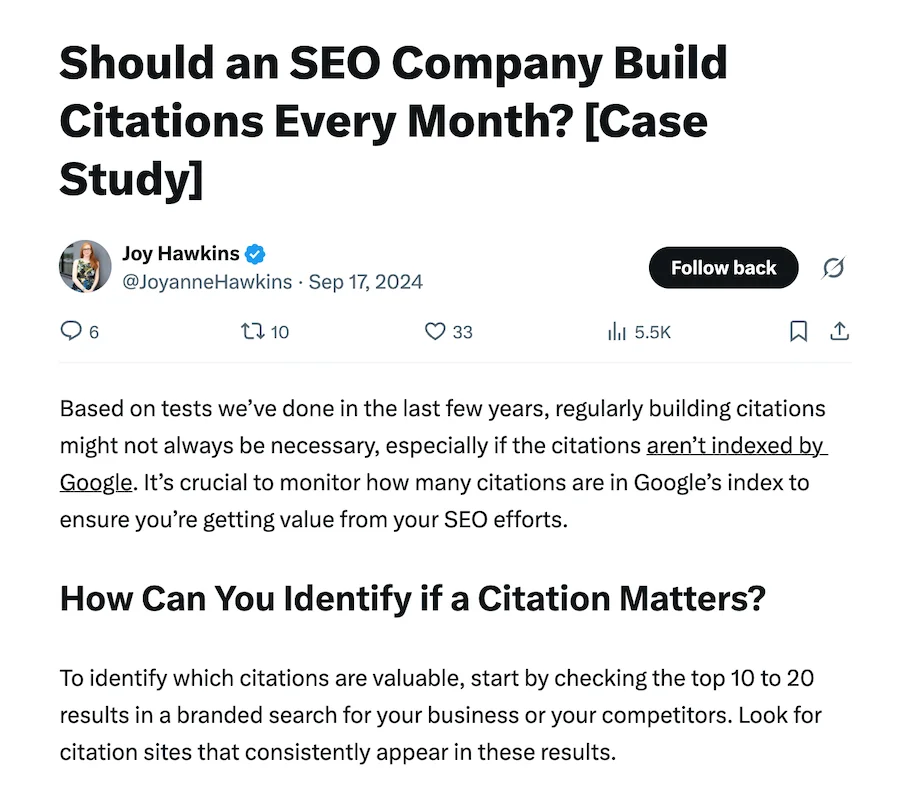
I recently came across two different tweets from folks who share a lot of good local SEO information on X (formerly Twitter) with different perspectives on citations.
And then this tweet and reply:
constant citation building is so underrated for maps rankings imo
— Cole | Dental + Local SEO (@AllGasSeo) October 23, 2024
In the first example, the case study did find that citations boosted organic rankings for a landing page, even though Maps rankings weren’t impacted. The responding tweet notes something that I’ve observed myself: Citations do have a direct impact on rankings in some cases.
So like with many SEO questions, the answer here is likely “it depends.”
A few things are true:
- Many practitioners have seen Maps rankings improve when building local citations, so they do likely have a positive impact here.
- The listings showing up for branded searches and listings that are indexed, as Joy points out in the case study cited above, are likely to have the largest impact.
- If you are in a low-competition vertical with limited resources, you’re likely best served sticking to those citations.
- If you are in a more competitive market, you’re likely best served to at least test building regular citations over time to determine their impact on both your maps and organic rankings.
You can test effectiveness by measuring the same things you would with local SEO campaigns in general: rankings, visibility, and leads across Google Maps, organic search, and AI search.
To the extent that you’re able, you can isolate the citation-building activity, measure leads and sales from these channels, and back out your ROI from citation building.
If you have too many activities running concurrently while you’re building citations (you’re building new content, updating Google Business posts, building links, etc.), you can measure search leads and sales generally while baking the cost of citations into your overall SEO and AI search investment.
How many local citations does my business need?
In terms of “how many” local citations your business needs, here are some guidelines:
- Every business should have citations on the 10-20 most important sites.
- A standard starting point is to build ~50 citations, particularly in a competitive market.
- If you’re in a very competitive market and want to test regular citation building, 10-25 is a standard range.
How can I build local SEO citations myself?
Building local citations is a time-consuming process, but a relatively simple one.
First, you want to start by making sure you have the right information to bring to the citation-building process, namely:
- Your company name: This seems simple enough, but you want this to be consistent with your Google Business Profile, and with your official company name or DBA name. If my company name is “Tom’s Construction” but I want to rank well for bathroom remodeling jobs in search results, just calling myself “Tom’s Construction & Bathroom Remodeling” can get me into trouble with Name, Address, Phone (NAP) consistency.
- Address: This is the physical address where a customer could theoretically show up to conduct business (not a virtual address or PO Box).
- Phone number: Whether you have a standard business number, or a standard call tracking number from a call tracking company, use that number everywhere. When you switch to a call tracking solution you need to update your citations, and if you’re using one currently you want to use that as you build new citations (for both consistency and tracking).
- Description: Have a brief and compelling company description ready to submit to third parties.
- URL: Use your website’s home page as you submit local citations.
- Categories: Have your categories ready (if you’ve optimized your GBP, you likely know these).
- Email: You usually want to set up an email dedicated to citations that someone will occasionally monitor, as you can sometimes get spam and cold outreach at these addresses.
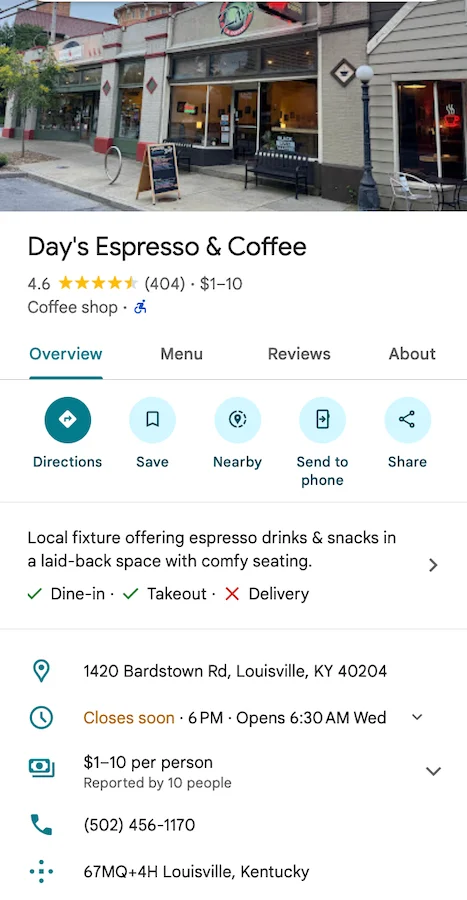
It’s a good idea to keep a spreadsheet handy and add fields that you run across as you’re building citations to your sheet, as they’ll often come up again. For instance, if a site asks you for an alternate phone number, plug what you submit there into your spreadsheet (or, in some cases, if the field is optional, you may want to just leave those blank).
You also want to be able to access the email you’re going to use and to be able to access the phone number you’re giving for verification across these citations.
Local citations audit
📍 Are your listings up to date? Find out with a free, instant audit using the LocaliQ Business Listings Grader.
How to find citation opportunities
Looking for ways to build citations? Follow these steps.
Get on the top citation sites
The simplest way to start here is to make sure you have the “major players” and most common citation sources covered first. Start with these:
From there, you can also get to 50+ local citations easily by leveraging lists like this top 50 citations by WhiteSpark, this one by BrightLocal, etc. (I’ll get more into how to evaluate different citations in a minute).
Submit your business information to data aggregators
While it’s not a direct citation, by having your data submitted to the major data aggregators you can then have those sites submit your data to multiple additional directories in turn. Here are the largest data aggregators:
If you submitted to these 11 places, you’d be off to a good start, and in some niches in some areas, you may even be ahead of some of your competitors. In even a moderately competitive industry/geography combination, though, all of your competitors will have these citations. How can you get more, impactful citations?
Look at competitor citations
The quality and impact a citation has will vary depending on your industry and geography. There are some ways to gauge likely impact here.
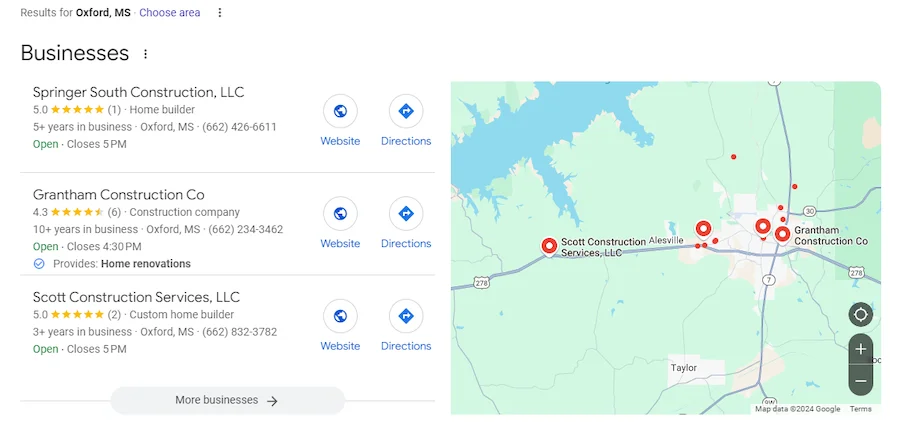
Start by looking at competitors. Think more about your SERP (search engine result page) competitors than your “real life” competitors. The company you think of as your closest competitor may not be the company you’re competing with for real estate in search engine results. When I search for Oxford, MS, home remodeling, I can see the first competitors I want to investigate in the Map pack:
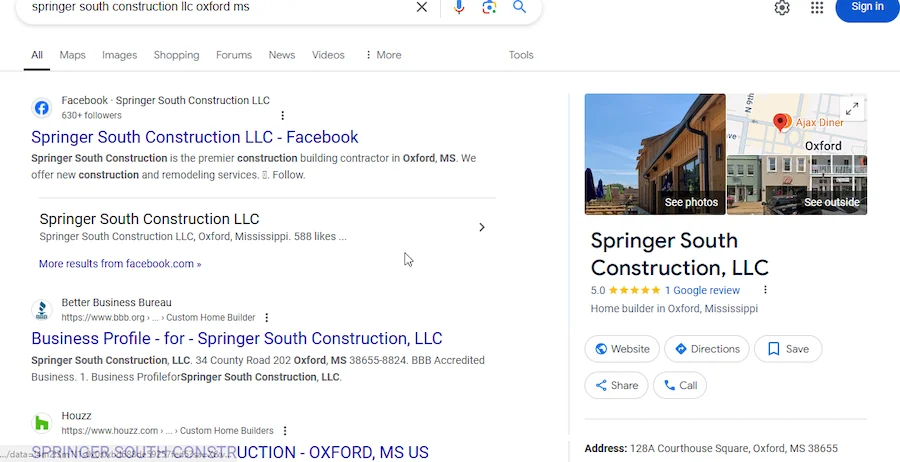
I type in the full name of the company with the geo-modifier to make sure I get the right results and look at the listings showing the highest for the company name:
Here is a second company:
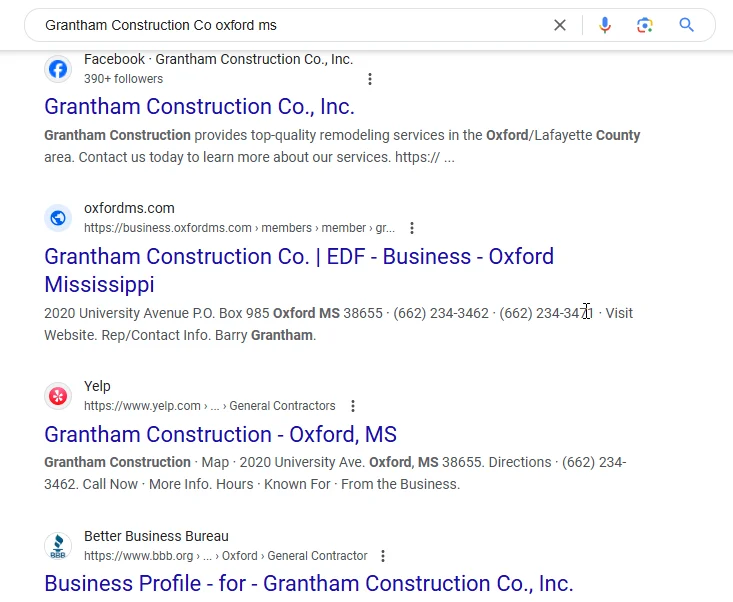
As you go through multiple competitors, you’ll quickly get insights like:
- Facebook popping up first for many queries.
- Houzz as a good possible source here.
- BBB and Chamber of Commerce listings as options.
You can use this as an exercise both to help prioritize citations if you have limited time and resources and to find new citation opportunities.
Once you have a sense of which competitor seems to be getting a lot of these types of citations (which you can usually tell just by looking at the search results above) you can then unearth more citation opportunities by going to Google.com and typing in “competitorwebsite.com:”
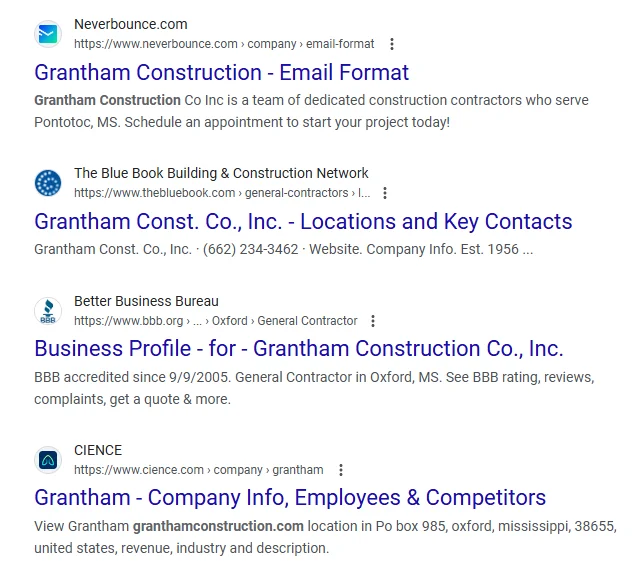
As you scroll through these results, you can really start to find some gems that may not show up just by searching for the competitor name:
This is a useful tactic as well because it allows you to:
- See which citations Google views as most relevant to your competitor’s site.
- Filter out other companies with a similar name in different areas.
- Find a list of citations that your competitor has that are all indexed by Google.
Use SEO tools
You can also use paid tools like Ahrefs or Semrush to look at the backlinks a competitor has to see which sites are linking to them, and paid local SEO tools like BrightLocal and WhiteSpark offer tools to find citations generally, and to look at competitor citations as well.
How to make sure your citations are indexed
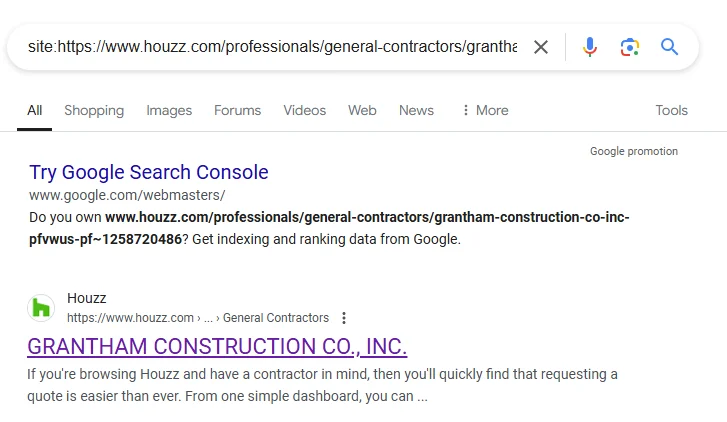
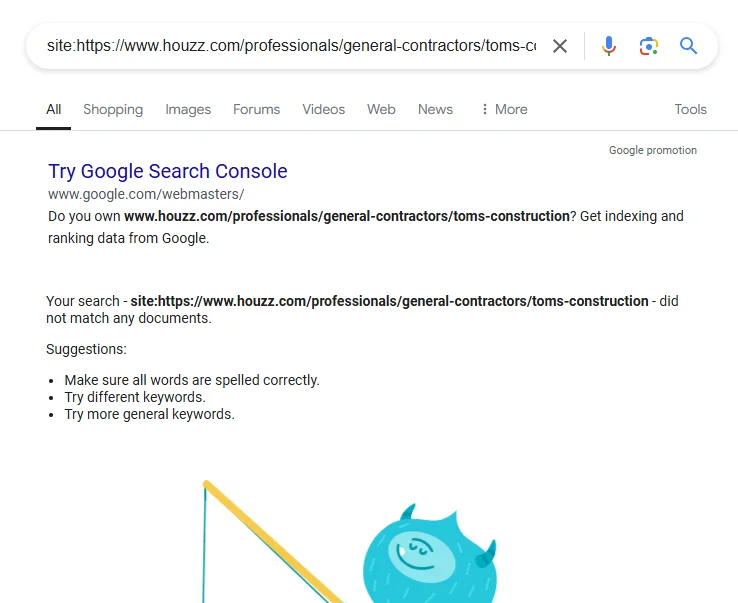
If Google doesn’t acknowledge your citations, there’s not really any value in having them. Checking to see if your specific citation is indexed is a good way to determine if the citation has been “counted” by Google.
To manually do this for one citation is pretty simple. Just go to Google and type in site:directory.com/toms-construction-listing. If you see your listing, that means it’s indexed:
If not, then your listing (or a competitor’s listing) likely isn’t indexed:
If you want to check your citations in bulk it’s a little trickier, but you can use some paid tools and services like URL Profiler or IndexCheckr.com.
If you find your URLs aren’t getting indexed, there are a few methods you can use to get them indexed:
- You can share a link to the profile on social media.
- You can use services like IndexMeNow or similar.
A couple of things to be aware of with indexing services:
- Often these services use things like social media profiles or low-quality link sources to force indexation of pages. For third-party profiles, that’s not usually an issue, but it’s not a great idea to fire this type of activity at your main website.
- They will occasionally fail to get your page indexed (usually they’ll refund in these instances), and it’s not uncommon that they get a page indexed, and then it later falls out of the index (which is why it’s a good idea to replicate citations that are already indexed, as it’s a signal that Google is likely to index and leave indexed your own citations)
If you’re in a particularly competitive industry and geography and you want to go beyond the core citations and your direct competitors’ best citations, there are a few ways to expand your citation reach:
- Look at the towns you service outside of your physical location and research those competitors for citations unique to those towns.
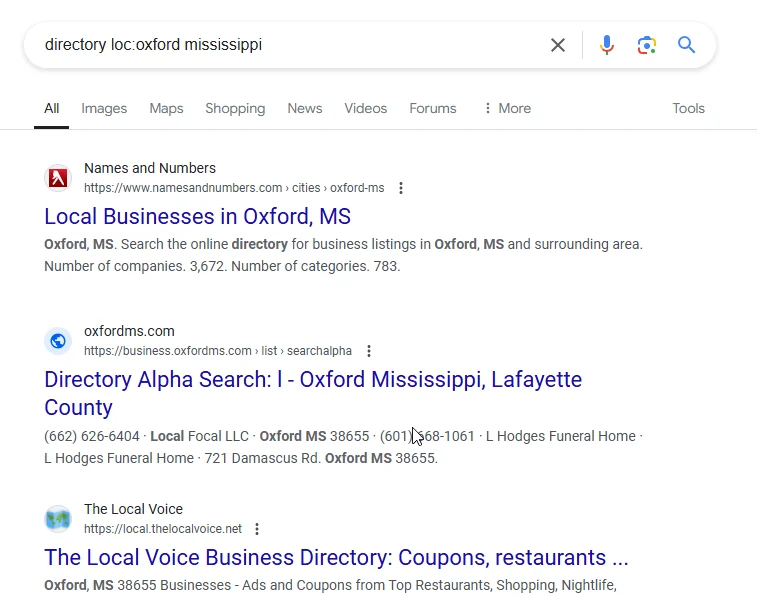
- You can also use the loc: site search operator in Google to find different types of directory or industry opportunities you may not have uncovered:
As with many tasks in your local business, however, you need to ask yourself the question: Should I be building these local citations myself in the first place?
🤔 What are the biggest challenges small businesses are facing? Find out that and more in our Small Business Marketing Trends Report.
Free local citation tools
First, you can use this interactive, weighted citation coverage calculator to track your progress in getting citations as you work through getting listings if you decide to tackle the process manually (these are weighted for the most important citations):
Grade: F
0 of 23 sites
Priority gaps:
Google Business Profile, Apple Maps (Apple Business Connect), Bing Places for Business, Facebook Business Page, Yelp
Is your NAP (Name, Address, Phone) consistent across all listings?
NAP inconsistency can hurt your local rankings. Audit and fix discrepancies before building new citations.
We also built this searchable and filterable citation directory where you can drill down to find important citations by category:
| Tier | Citation Source | Category | Cost | Notes |
|---|
And finally our interactive guide on citation tiers, NAP consistency, and ranking factors for local search based on our own experience and expertise as well as data from Whitespark’s search rankings survey:
Not all citations are equal. Click each tier to see which platforms matter most and why.
Tier 1
Essential Platforms
5 sites
★★★
Tier 2
Data Aggregators
3 sites
★★½
Tier 3
Major Directories
7 sites
★★
Tier 4
Industry & Niche
8 sites
★½
Tier 1 — Essential Platforms
These are the highest-authority citation sources. Google, Apple, and Bing use them directly for map results. Missing any of these is a major gap in your local presence.
Google Business Profile
Apple Maps Connect
Bing Places
Facebook Business
Yelp
Why these matter: Search engines treat these as primary verification sources. A complete, consistent Tier 1 profile is the foundation of local SEO.
Tier 2 — Data Aggregators
These feed your NAP data to hundreds of smaller directories automatically. Submitting here creates a cascade effect across the citation ecosystem.
Data Axle (Infogroup)
Neustar Localeze
Foursquare
Multiplier effect: A single aggregator submission can propagate your business data to 100+ downstream directories over 2–6 months.
Tier 3 — Major Directories
Widely recognized directories that strengthen your overall citation profile. These provide additional trust signals and backlinks.
Yellow Pages (YP.com)
Better Business Bureau
Manta
Angi (Angie’s List)
Superpages
Hotfrog
CitySearch
Tier 4 — Industry & Niche
Select the ones relevant to your industry. Niche citations carry outsized weight because they signal topical relevance to search engines.
TripAdvisor (hospitality)
Healthgrades (medical)
Avvo (legal)
Houzz (home services)
Cars.com (automotive)
OpenTable (restaurants)
Thumbtack (services)
Nextdoor
Pro tip: A single niche citation on a high-authority industry site can outweigh several general directories for relevance signals.
★ Niche citation impact varies significantly by industry relevance.
Citations are one piece of the local ranking puzzle. Here’s how they fit into the bigger picture, based on industry research.
#1 FACTOR
Google Business Profile
Proximity, categories, keyword in business name, and completeness of your GBP listing.
~32% of ranking weight
#2 FACTOR
Reviews
Review quantity, velocity, diversity, and how you respond to them.
~16% of ranking weight
#3 FACTOR
On-Page SEO
NAP on website, location pages, schema markup, title tags, and internal linking.
~14% of ranking weight
#4 FACTOR
Links
Quality and authority of inbound links, anchor text, linking domain relevance.
~13% of ranking weight
#5 FACTOR — CITATIONS
Citation Signals
NAP consistency, citation volume, quality of citation sources, and data aggregator coverage.
~11% of ranking weight
#6 FACTOR
Behavioral Signals
Click-through rate, mobile clicks-to-call, check-ins, and driving directions requests.
~8% of ranking weight
Key takeaway: While citations account for roughly 11% of local ranking weight, they have an outsized indirect impact — they feed your GBP verification, generate review opportunities, and create backlinks. The cumulative effect is significantly higher than the direct signal alone.
NAP (Name, Address, Phone) consistency across all citations is critical. Even small discrepancies confuse search engines and hurt rankings.
68%
of businesses have at least one NAP inconsistency across major directories
41%
of local businesses report incorrect info on at least one listing
16%
average ranking improvement when NAP inconsistencies are fixed
Common NAP Inconsistencies
Action step: Before building new citations, audit your existing ones. Search for your business name + phone number across Google, Yelp, and YP.com. Fix any discrepancies in suite numbers, abbreviations (St vs Street), and phone formats before expanding.
NAP Format Consistency Checklist
Bottom line this for me: What should I do in regards to local citations?
Here are your basic choices for building citations if you’re a small business owner:
- You can hire a contractor specifically for citation building.
- You can ask your SEO company to execute this task (likely if you have an SEO vendor, they’re doing this for you already in some capacity).
- You can do the work yourself on the cheap or with the use of a paid tool or multiple paid tools.
Things to consider here will be:
- Industry and location competition: If your competitors in Google Maps all have a couple of reviews, many don’t seem to be building citations, and generally, you know your industry/area isn’t competitive when it comes to SEO, you may not need to be consistently building citations. Just the key citations and some you find key competitors have may be enough.
- Resources: If you or an employee have both time and the ability to execute relatively simple data entry tasks and you’re cash-constrained, this may be a good task to hand off to someone in the company. If you don’t want to worry about handing this process off or completing it yourself, and you can spare a few hundred dollars to have citations built and updated, and then potentially a monthly fee to build more citations over time in a competitive market, it may be worth it to outsource this task.
Given the fact that citation building can have a significant impact on local SEO results, tends to be time-intensive to execute on your own, and is a relatively low-cost service compared to other marketing activities, it’s often the right choice to outsource. If you do hire an agency or contractor for this task, make sure:
- You understand the types and volume of citations you’re getting (ask about their process, and whether monitoring indexation and attempting to get citations indexed is included).
- They use an email you have access to and give you login information for any profiles they create on your behalf in a shared spreadsheet.
- They share the actual citations they’ve built with you in a shared document (which you can then check for indexation yourself!).
Want help building local citations? We can take this off your plate!
