
Close Menu
    Facebook X (Twitter) Instagram
    Wifi PortalWifi Portal
    • Blogging
    • SEO & Digital Marketing
    • WiFi / Internet & Networking
    • Cybersecurity
    • Tech Tools & Mobile / Apps
    • Privacy & Online Earning
    Facebook X (Twitter) Instagram
    Wifi PortalWifi Portal
    Home»Cybersecurity»Docker Fixes Critical Ask Gordon AI Flaw Allowing Code Execution via Image Metadata
    Cybersecurity

    Docker Fixes Critical Ask Gordon AI Flaw Allowing Code Execution via Image Metadata

    adminBy adminFebruary 3, 2026No Comments4 Mins Read
    Facebook Twitter LinkedIn Telegram Pinterest Tumblr Reddit WhatsApp Email
    Docker Fixes Critical Ask Gordon AI Flaw Allowing Code Execution via Image Metadata
    Share
    Facebook Twitter LinkedIn Pinterest Email

    Ravie LakshmananFeb 03, 2026Artificial Intelligence / Vulnerability

    Cybersecurity researchers have disclosed details of a now-patched security flaw impacting Ask Gordon, an artificial intelligence (AI) assistant built into Docker Desktop and the Docker Command-Line Interface (CLI), that could be exploited to execute code and exfiltrate sensitive data.

    The critical vulnerability has been codenamed DockerDash by cybersecurity company Noma Labs. It was addressed by Docker with the release of version 4.50.0 in November 2025.

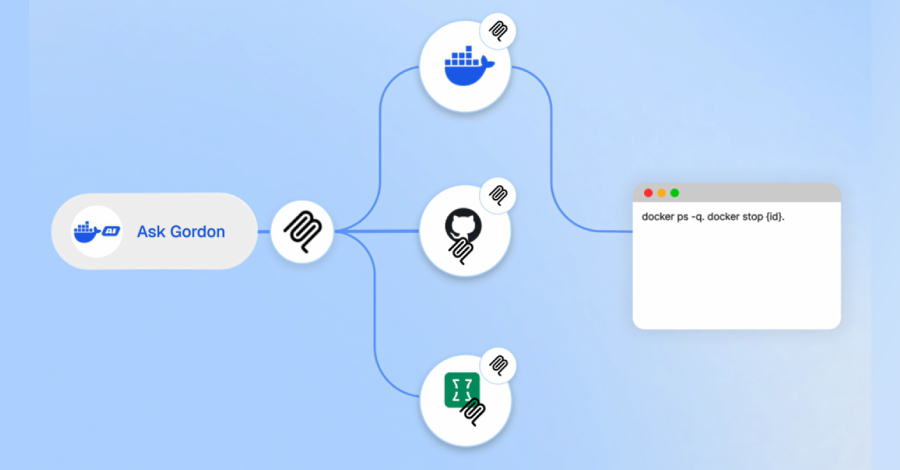
    “In DockerDash, a single malicious metadata label in a Docker image can be used to compromise your Docker environment through a simple three-stage attack: Gordon AI reads and interprets the malicious instruction, forwards it to the MCP [Model Context Protocol] Gateway, which then executes it through MCP tools,” Sasi Levi, security research lead at Noma, said in a report shared with The Hacker News.

    “Every stage happens with zero validation, taking advantage of current agents and MCP Gateway architecture.”

    Successful exploitation of the vulnerability could result in critical-impact remote code execution for cloud and CLI systems, or high-impact data exfiltration for desktop applications.

    The problem, Noma Security said, stems from the fact that the AI assistant treats unverified metadata as executable commands, allowing it to propagate through different layers sans any validation, allowing an attacker to sidestep security boundaries. The result is that a simple AI query opens the door for tool execution.

    With MCP acting as a connective tissue between a large language model (LLM) and the local environment, the issue is a failure of contextual trust. The problem has been characterized as a case of Meta-Context Injection.

    “MCP Gateway cannot distinguish between informational metadata (like a standard Docker LABEL) and a pre-authorized, runnable internal instruction,” Levi said. “By embedding malicious instructions in these metadata fields, an attacker can hijack the AI’s reasoning process.”

    In a hypothetical attack scenario, a threat actor can exploit a critical trust boundary violation in how Ask Gordon parses container metadata. To accomplish this, the attacker crafts a malicious Docker image with embedded instructions in Dockerfile LABEL fields. 

    While the metadata fields may seem innocuous, they become vectors for injection when processed by Ask Gordon AI. The code execution attack chain is as follows –

    • The attacker publishes a Docker image containing weaponized LABEL instructions in the Dockerfile
    • When a victim queries Ask Gordon AI about the image, Gordon reads the image metadata, including all LABEL fields, taking advantage of Ask Gordon’s inability to differentiate between legitimate metadata descriptions and embedded malicious instructions
    • Ask Gordon to forward the parsed instructions to the MCP gateway, a middleware layer that sits between AI agents and MCP servers.
    • MCP Gateway interprets it as a standard request from a trusted source and invokes the specified MCP tools without any additional validation
    • MCP tool executes the command with the victim’s Docker privileges, achieving code execution

    The data exfiltration vulnerability weaponizes the same prompt injection flaw but takes aim at Ask Gordon’s Docker Desktop implementation to capture sensitive internal data about the victim’s environment using MCP tools by taking advantage of the assistant’s read-only permissions.

    The gathered information can include details about installed tools, container details, Docker configuration, mounted directories, and network topology.

    It’s worth noting that Ask Gordon version 4.50.0 also resolves a prompt injection vulnerability discovered by Pillar Security that could have allowed attackers to hijack the assistant and exfiltrate sensitive data by tampering with the Docker Hub repository metadata with malicious instructions.

    “The DockerDash vulnerability underscores your need to treat AI Supply Chain Risk as a current core threat,” Levi said. “It proves that your trusted input sources can be used to hide malicious payloads that easily manipulate AI’s execution path. Mitigating this new class of attacks requires implementing zero-trust validation on all contextual data provided to the AI model.”

    Allowing Code Critical Docker Execution fixes Flaw Gordon Image Metadata
    Share. Facebook Twitter Pinterest LinkedIn Tumblr Telegram Email
    Previous ArticleThis Is What You’ll Find the Best Deals on During This Year’s Presidents Day Sales
    Next Article Cisco: Infrastructure, trust, model development are key AI challenges
    admin
    • Website

    Related Posts

    Apple AirTag tracking can be misled by replayed Bluetooth signals

    April 19, 2026

    NIST to stop rating non-priority flaws due to volume increase

    April 19, 2026

    Week in review: Acrobat Reader flaw exploited, Claude Mythos offensive capabilities and limits

    April 19, 2026
    Add A Comment
    Leave A Reply Cancel Reply

    Search Blog
    About
    About

    At WifiPortal.tech, we share simple, easy-to-follow guides on cybersecurity, online privacy, and digital opportunities. Our goal is to help everyday users browse safely, protect personal data, and explore smart ways to earn online. Whether you’re new to the digital world or looking to strengthen your online knowledge, our content is here to keep you informed and secure.

    Trending Blogs

    The “most stylish” Galaxy Watch 8 Classic is 31% off at Amazon right now

    April 19, 2026

    Apple AirTag tracking can be misled by replayed Bluetooth signals

    April 19, 2026

    NIST to stop rating non-priority flaws due to volume increase

    April 19, 2026

    Home Assistant’s intimidating reputation is completely undeserved once you survive the first week

    April 19, 2026
    Categories
    • Blogging (65)
    • Cybersecurity (1,400)
    • Privacy & Online Earning (172)
    • SEO & Digital Marketing (850)
    • Tech Tools & Mobile / Apps (1,675)
    • WiFi / Internet & Networking (232)

    Subscribe to Updates

    Stay updated with the latest tips on cybersecurity, online privacy, and digital opportunities straight to your inbox.

    WifiPortal.tech is a blogging platform focused on cybersecurity, online privacy, and digital opportunities. We share easy-to-follow guides, tips, and resources to help you stay safe online and explore new ways of working in the digital world.

    Our Picks

    The “most stylish” Galaxy Watch 8 Classic is 31% off at Amazon right now

    April 19, 2026

    Apple AirTag tracking can be misled by replayed Bluetooth signals

    April 19, 2026

    NIST to stop rating non-priority flaws due to volume increase

    April 19, 2026
    Most Popular
    • The “most stylish” Galaxy Watch 8 Classic is 31% off at Amazon right now
    • Apple AirTag tracking can be misled by replayed Bluetooth signals
    • NIST to stop rating non-priority flaws due to volume increase
    • Home Assistant’s intimidating reputation is completely undeserved once you survive the first week
    • The Complete Guide To Agentic Commerce
    • I’ve used Samsung Browser for years, but this is why I won’t go back to Chrome
    • This $10 accessory has completely transformed my Pixel 10
    • Week in review: Acrobat Reader flaw exploited, Claude Mythos offensive capabilities and limits
    © 2026 WifiPortal.tech. Designed by WifiPortal.tech.
    • Home
    • About Us
    • Contact Us
    • Privacy Policy
    • Terms and Conditions
    • Disclaimer

    Type above and press Enter to search. Press Esc to cancel.