

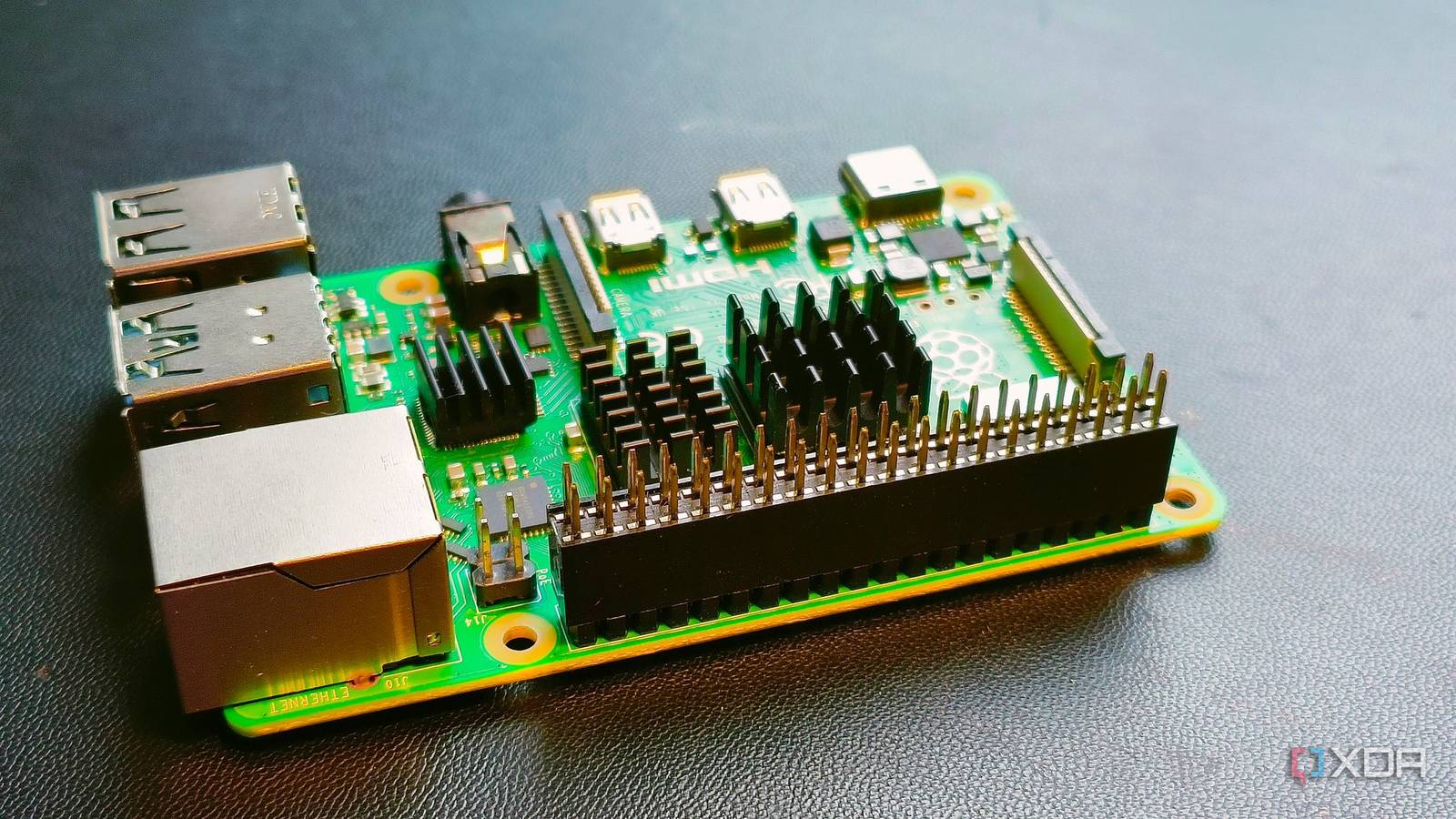
Thanks to its huge community of talented tinkerers and avant-garde coders, the Raspberry Pi ecosystem is brimming with useful projects. That said, popular projects like Raspberry Pi NAS, Pi-VPN, and even retro gaming setups can start to feel stale if you’ve been active in the DIY landscape. So, I’ve put together a list of unconventional projects you can build with your tiny tinkering machine.
AI assistant
Rabbit R1, but better

Ever wanted an open-source AI assistant that can respond to all your queries without sending the data to third-party servers? Turns out, there are a couple of ways of building your AI companion on something as weak as the Raspberry Pi. For a simple text generator, you could set up the low-parameter Ollama models – or even the DeepSeek R1:14b – on top of a lightweight distro.
But if you want a voice-controlled AI platform, OpenVoiceOS is worth checking out. While the response time still needs more refinement, it’s still a cool project to showcase the processing capabilities of newer RPi models. Better yet, you can pair it with a small display module and turn it into a cheaper, superior version of the Rabbit R1.

I turned my Raspberry Pi into an AI voice assistant with OpenVoiceOS
Temper your expectations
DIY Stream Deck
For all your streaming needs

For those unfamiliar with them, Elgato’s Stream Deck is a versatile control panel that lets you map shortcuts, macros, and apps to its programmable buttons. But if you’re not willing to drop hundreds of dollars on the Stream Deck, you can turn your Raspberry Pi into a makeshift control system.
Heck, you don’t even need to deal with complex circuits for this project. Thanks to the ingenious Stream-Pi project, all you have to do is connect a touchscreen display to the Raspberry Pi, install the necessary apps on your PC and SBC, and voila: you’ve got a Stream Deck alternative for your streaming and productivity tasks.
Jukebox
Audiophiles, rejoice!
With all the radio and music-streaming projects, Raspberry Pi is already a tinkering haven for audiophiles. But if you’re looking for an old-timey project that’s as functional as it is nostalgia-inducing, you might want to check out the Raspberry Pi-flavored Jukebox created by XDA’s SBC maestro, Jeff Butts.
Setting up the FruitBox package for the jukebox is pretty simple, and you’ve got quite a few skins to deck out your music-serving platform. You’re also free to pick between a simple touchscreen display-based music player or a more complex digital jukebox featuring hardwired buttons.
Guitar pedal
Jamming with an RPi-flavored pedal

From cranking up the distortion to making your Strat sound like an acoustic, pedals give you complete control over your guitar’s tone during jam sessions. But with most premium pedals costing an arm and a leg, your best bet is to turn your Raspberry Pi into a makeshift one.
There are a few ways you can build your Raspberry Pi pedal, but you should stick to GuitarML’s NeuralPi or rerdavies’ PiPedal if you don’t want the hassle of interfacing extra PCBs to the SBC.
Budget-friendly laptop
You’ll need the right combination of accessories and OS
The Raspberry Pi series has become increasingly powerful in recent times, with the newest RPi 5 possessing enough firepower to run several desktop apps. But what if you wanted to replace your daily driver with a Raspberry Pi setup? To test this wacky notion, I tried using my Raspberry Pi 5 with the Elecrow CrowView Note 14… and to my surprise, the project turned out better than I expected.

I tried using my Raspberry Pi as a laptop
With the right hardware and OS, even a Raspberry Pi can serve as solid daily driver
Since the Raspberry Pi OS has certain performance limitations, you’ll want to go with something more lightweight like DietPi or FydeOS. While the battery life is nothing to write home about, the setup works so well that I often use it for light computing tasks, including writing this article!
Bring your tinkering fantasies to life with the Raspberry Pi

If you’re still on the prowl for more underrated projects, I’ve got some other suggestions. For party-lovers out there, you’ll have a blast with a Raspberry Pi karaoke machine. In case you’re tired of emulating retro games, you can use the green system to run Android titles instead. A Raspberry Pi home server is another fun project, but considering the limited support for VMs, a Proxmox-themed RPi workstation isn’t very pragmatic.
